
Strategic Dialogue: Indonesia’s Carbon Market Outlook
COP31 Indonesia Pavilion, November 9, 2026, 11:15 am – 12:30 pm
Session Format
Duration: 90 minutes
1. Opening and Introduction — 10 minutes
2. Panel Discussion — 55 minutes
3. Interactive Q&A — 15 minutes
4. Closing and Key Takeaways — 10 minutes
Official Background
Indonesia’s carbon market is an important instrument for supporting national climate commitments, mobilizing climate finance, and encouraging investment in emission reduction activities. As Indonesia advances its carbon pricing framework and strengthens the implementation of domestic and international carbon trading, ensuring market integrity, transparency, regulatory certainty, and credible emission reduction outcomes is essential to building confidence among project developers, buyers, investors, and international partners.
This dialogue, titled “Indonesia’s Carbon Market Outlook: Enhancing Carbon Market Integrity, Transparency, and Cross-Sector Collaboration,” will provide a platform to discuss the current development and future direction of Indonesia’s carbon market.
The discussion will explore the alignment of carbon market policies, institutional roles, market oversight, carbon unit registration and traceability, and the conditions required to facilitate credible and sustainable carbon trading. Particular attention will be given to strengthening coordination between government institutions, financial market regulators, sectoral policymakers, and international stakeholders.
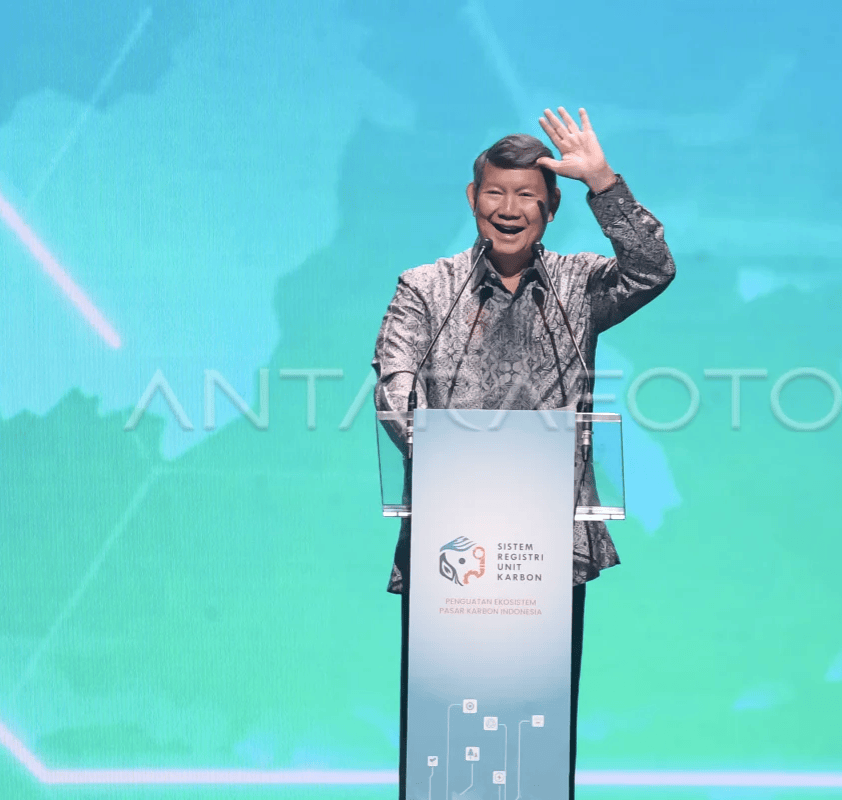
9 July 2026 https://www.antarafoto.com/view/2819419/peluncuran-sistem-registri-unit-karbon
The Ministry of Environment / Environmental Protection Agency (KLH/BPLH) will present Indonesia’s carbon pricing policy framework, the development of carbon market governance, and efforts to strengthen the integrity and transparency of carbon trading, including the role of the national carbon registry and the alignment of domestic and international carbon market mechanisms. The Financial Services Authority (OJK) will provide perspectives on carbon exchange supervision, market conduct, transparency, investor protection, and the development of a sound and trusted carbon trading ecosystem.
The Ministry of Environment / Environmental Protection Agency (KLH/BPLH) will present Indonesia’s carbon pricing policy framework, the development of carbon market governance, and efforts to strengthen the integrity and transparency of carbon trading, including the role of the national carbon registry and the alignment of domestic and international carbon market mechanisms. The Financial Services Authority (OJK) will provide perspectives on carbon exchange supervision, market conduct, transparency, investor protection, and the development of a sound and trusted carbon trading ecosystem.
The Coordinating Ministry for Food Affairs will contribute a cross-sectoral perspective on the role of food-related sectors in the development of Indonesia’s carbon market. The discussion will explore opportunities to integrate emission reduction initiatives, sustainable land and resource management, and low-carbon investment into sectoral development priorities. It will also examine the enabling conditions needed to strengthen the supply of credible carbon units and connect mitigation opportunities with potential buyers and financing sources.
The Coordinating Ministry for Food Affairs will contribute a cross-sectoral perspective on the role of food-related sectors in the development of Indonesia’s carbon market. The discussion will explore opportunities to integrate emission reduction initiatives, sustainable land and resource management, and low-carbon investment into sectoral development priorities. It will also examine the enabling conditions needed to strengthen the supply of credible carbon units and connect mitigation opportunities with potential buyers and financing sources.
To complement the national perspectives, an international carbon market expert, preferably from the International Emissions Trading Association (IETA), will share international experiences and market perspectives on carbon credit integrity, buyer expectations, international cooperation, and emerging practices in cross-border carbon trading. This contribution will help identify opportunities for Indonesia to strengthen international market confidence while ensuring that carbon trading remains aligned with national priorities and applicable regulatory requirements.
To complement the national perspectives, an international carbon market expert, preferably from the International Emissions Trading Association (IETA), will share international experiences and market perspectives on carbon credit integrity, buyer expectations, international cooperation, and emerging practices in cross-border carbon trading. This contribution will help identify opportunities for Indonesia to strengthen international market confidence while ensuring that carbon trading remains aligned with national priorities and applicable regulatory requirements.
Ultimately, the dialogue aims to establish a shared understanding of Indonesia’s carbon market outlook and identify practical pathways to enhance governance, transparency, market participation, and cross-sector collaboration.
By bringing together national policymakers, financial regulators, sectoral coordinators, and international market representatives, the session will contribute to positioning Indonesia’s carbon market as a credible mechanism for mobilizing investment, supporting emission reductions, and advancing sustainable development.
Ultimately, the dialogue aims to establish a shared understanding of Indonesia’s carbon market outlook and identify practical pathways to enhance governance, transparency, market participation, and cross-sector collaboration. By bringing together national policymakers, financial regulators, sectoral coordinators, and international market representatives, the session will contribute to positioning Indonesia’s carbon market as a credible mechanism for mobilizing investment, supporting emission reductions, and advancing sustainable development.
Objective and Output
1. Present the current development, policy direction, and institutional framework of Indonesia’s carbon market, including efforts to strengthen market integrity, transparency, and regulatory certainty.
2. Discuss the roles of KLH/BPLH and OJK in carbon market governance, carbon unit traceability, exchange supervision, market transparency, and investor protection, in accordance with their respective mandates.
3. Explore opportunities for cross-sectoral collaboration, particularly in identifying credible emission reduction projects and mobilizing investment in sectors coordinated by the Coordinating Ministry for Food Affairs.
4. Exchange international perspectives on carbon credit integrity, buyer confidence, international carbon trading, and potential cooperation under relevant international mechanisms.
5. Identify practical measures to improve market participation, connect credible carbon supply with buyer demand, and strengthen Indonesia’s engagement with international carbon markets.
Expected Outcomes
- A shared understanding of Indonesia’s carbon market policy framework, institutional responsibilities, and future development priorities.
- Key recommendations for strengthening carbon market integrity, transparency, traceability, and effective market oversight.
- Identification of cross-sectoral opportunities for carbon mitigation projects, investment mobilization, and engagement with potential buyers.
- Insights into international market expectations and potential pathways for cooperation and cross-border carbon trading, subject to applicable regulations and authorization requirements.
- Preliminary areas for collaboration among government institutions, financial market stakeholders, project developers, investors, and international partners.
Target and Audience
• Government policymakers and regulators involved in carbon pricing, climate change mitigation, and carbon market development.
• COP31 delegates, climate negotiators, and climate finance experts.
• Financial institutions, investors, carbon exchange participants, and potential carbon credit buyers.
• Carbon project developers, project proponents, and carbon credit suppliers.
• Representatives of food-related and other relevant economic sectors.
• International organizations, carbon market associations, technical partners, and development institutions.
• Academics, researchers, and civil society organizations working on carbon markets and sustainable development.
This post is based on https://indonesiaunfccc.com/session/ss6/.
Related:
- https://www.youtube.com/live/CoF3LJzhA9c?si=asiGp3pR6zg8HKC9
- https://www.tempo.co/lingkungan/motif-taman-nasional-way-kambas-dijadikan-badan-layanan-umum-2303873
- https://www.tempo.co/hukum/kebakaran-hutan-pelanggaran-ham-2304086
- https://www.tempo.co/internasional/australia-turki-akan-jadi-tuan-rumah-cop31-tahun-depan-2091755
- https://www.antarafoto.com/view/2819419/peluncuran-sistem-registri-unit-karbon
- https://www.antarafoto.com/view/2819433/peluncuran-sistem-registri-unit-karbon
What is COP?
The Conference of the Parties (COP) is the annual United Nations climate summit where nearly 200 countries negotiate and commit to actions addressing the climate crisis. COP31, the 31st such conference, will be hosted by Türkiye in Antalya — bringing together world leaders, scientists, civil society, and the private sector to shape the future of climate action.



Leave a Reply