Why Do Some Religious Groups Find It Difficult to Sympathize with Iran?
By Abdullah Sidiq Notonegoro, for Islami.co, April 8, 2026
The war between Iran and the United States and Israel is no longer merely a stage for displaying military power in the Middle East. Behind the roar of drones and the thunder of ballistic missiles, the battlefield has in fact shifted from physical combat on the ground to a fierce global struggle over competing narratives. In the online world and from our religious pulpits, the meaning of the war itself is being fought over.
Tragically, just as the conscience of the world has united in condemning acts of aggression and demanding justice for humanity, discordant voices have emerged in this country from certain radical groups. These groups—particularly those aligned with political Salafism—appear “numb” and unwilling to offer moral support to Iran simply because of narrow sectarian divisions.
This phenomenon should set off a loud alarm, sounding a warning about our national resilience. The ideological walls now being built within society are remarkably impenetrable and arrogant, especially among those who presumptuously act as though they are the “keepers of the keys to heaven.”
These groups are often trapped in a narrow, rigid way of thinking (jumud), or even seem deliberately to close their eyes to reality. As a result, they are unwilling to distinguish between the sacred duty to defend humanity on the geopolitical stage and the ripples of theological disagreement that properly belong to the internal affairs of the Muslim community.
Where sectarian fanaticism is placed above the duty to defend the oppressed, we witness a clear betrayal of the true meaning of universal justice.
Sectarianism That Oppresses Humanity
A review of a variety of social media platforms reveals an unmistakable problem: intense anti-Shia sentiment. In the view of these groups, Iran, a country whose population is predominantly Shia, does not represent “pure” Islam. Consequently, every political or military action taken by Iran—even when it is clearly confronting the Zionist war machine and the aggressor—is viewed with suspicion and hostility.
The narratives they spread on our social media platforms have grown increasingly inflammatory and divisive, damaging public reasoning through misleading oversimplifications. They casually dismiss the conflict as merely a “charade” or a “war between enemies of Islam”—a dangerously narrow-minded position that blinds them to the geopolitical reality that Iran’s role has a significant impact on restraining aggression in Palestine.
Rather than building bonds of solidarity for the sake of a far greater humanitarian goal, these groups are interested more in labeling anyone with a different perspective as an “infidel” or “heretic,” as though judging people’s faith were more important than showing solidarity with an oppressed nation.
In reality, the widespread dissemination of takfiri narratives—those that declare other Muslims to be unbelievers—can damage social empathy. They creates a condition of extreme in-group favoritism in which victims of war are no longer seen as suffering human beings, but as “enemies of the faith” who deserve disaster. This tension is no longer purely theological; it has become a political variable deliberately used as a catalyst for conflict (Rahmatul Ummah & Resky, 2024).
Labeling and the Demise of Critical Thinking
Ironically, the generalizations being made are highly irresponsible: anyone who supports Iran’s political position is branded or equated with a follower of Shia Islam. This shallow way of thinking automatically closes off space for objective discussion and undermines a basis for tolerance.
Our online worlds have also become trapped in the phenomenon of the echo chamber. People are willing to listen to only the voices of their own group and are systematically provoked into antipathy without a strong factual basis. Even more tragically, the situation is worsened by online persecution that silences critical voices. The climate of public discussion has become toxic and filled with fear.
If this labeling continues to spread, our nation’s online literacy will be profoundly damaged. Animus in cyberspace is a “time bomb” that has the potential at any moment to transform into actual conflict in the real world, threatening national unity.
It is time for Muslims in this country to think more intelligently and independently. We Muslims must be able to see the difference between preaching that promotes peace and provocation that is wrapped in religious language but intended to divide us.
Unity among Muslims will never be achieved as long as certain groups believe they have the right to judge the faith of others. Supporting anyone who resists oppression is a call of conscience that must transcend all schools of thought.
Inclusive education is no longer merely an option; it is an urgent necessity for building the intellectual resilience of the Muslim community. The impenetrable walls of takfirism must be torn down by emphasizing ukhuwah insaniyah—human solidarity—as well as ukhuwah wathaniyah—solidarity among fellow citizens.
Muslims—whether Sunni, Shia, or members of other sects and schools of thought—must recognize that internal division is, in essence, a free gift to aggressors, enabling them to strengthen their grip.
Therefore, through mosque pulpits, religious study gatherings, and in the online world, let us widely promote inclusive perspectives and reject identity-based exclusivity. This is an absolute necessity if we are to uphold human dignity, preserve the unity of the Muslim community, and safeguard the sovereignty of our nation.
Abdullah Sidiq Notonegoro is an academic at Muhammadiyah University of Gresik. He is active in the Muhammadiyah organization in East Java and the Gresik Regency branch of the Indonesian Ulema Council.
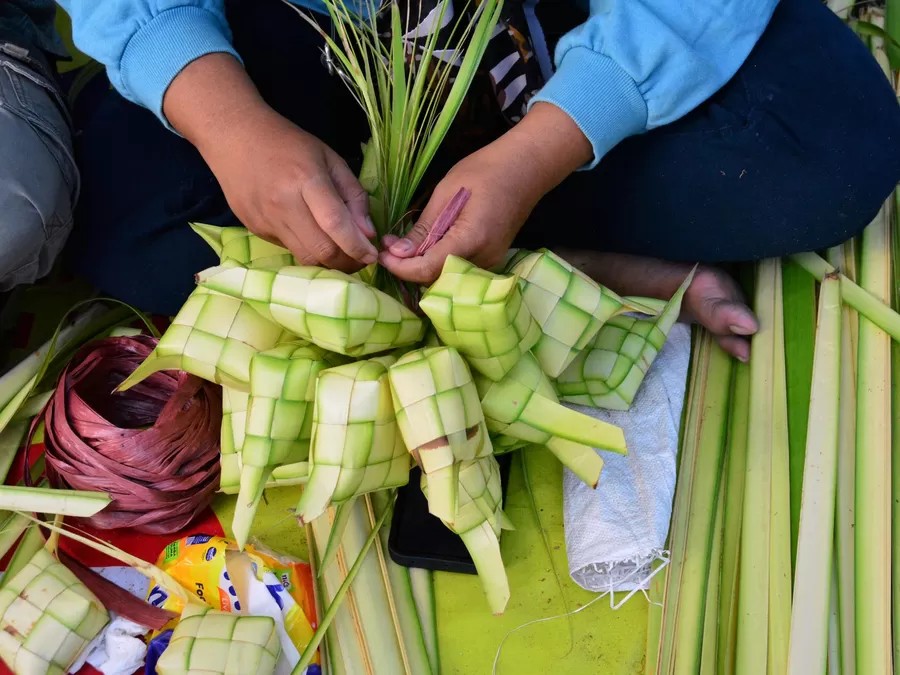
This post is based on https://islami.co/mengapa-ada-kelompok-beragama-yang-sulit-bersimpati-pada-iran. Featured image credit: Ketupat casings tied together and readied for sale. (Suara Merdeka/Nugroho DS).



Leave a Reply