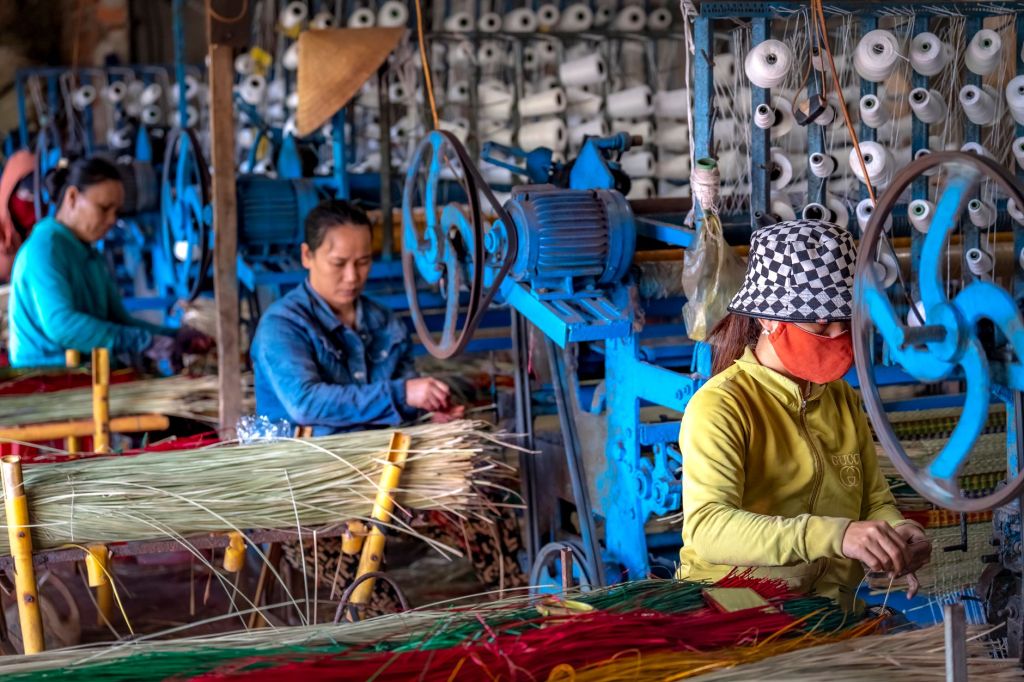
Indonesia Included in USTR Makes Findings and Proposes Action in Investigations into Failures to Take Action on Trade in Goods Made with Forced Labor
USTR Makes Findings and Proposes Action in 60 Section 301 Investigations Relating to Failures to Take Action on Trade in Forced Labor Goods
On June 02, 2026, the U. S. Trade Representative (USTR) issued a decision “under Section 301 of the Trade Act of 1974 that the acts … of 60 economies related to the failure to impose and effectively enforce a prohibition on the importation of goods produced with forced labor is unreasonable and burdens or restricts U.S. commerce, and are thus actionable under Section 301(b) of the Trade Act.”
“USTR has prepared a comprehensive report, Acts, Policies, and Practices of Various Economies Related to the Failure to Impose and Effectively Enforce a Prohibition on the Importation of Goods Produced with Forced Labor, that supports the findings in each investigation.”
The USTR decided that “the failure of each of the 60 investigated economies to impose and effectively enforce a forced labor import prohibition is unreasonable or discriminatory and burdens or restricts U.S. commerce, and thus is actionable under Section 301(b)(1) of the Trade Act.”
“In particular, the U.S. Trade Representative determined:
- The following 54 economies have failed to impose and effectively enforce a prohibition on the importation of goods produced with forced labor: Algeria; Angola; Argentina; Australia; the Bahamas; Bahrain; Bangladesh; Brazil; Cambodia; Chile; China, People’s Republic of; Colombia; Costa Rica; Dominican Republic; Egypt; El Salvador; Guatemala; Guyana; Honduras; Hong Kong, China; India; Iraq; Israel; Japan; Jordan; Kazakhstan; Kuwait; Libya; Malaysia; Morocco; New Zealand; Nicaragua; Nigeria; Norway; Oman; Peru; the Philippines; Qatar; Russia; Saudi Arabia; Singapore; South Africa; South Korea; Sri Lanka; Switzerland; Taiwan; Thailand; Trinidad and Tobago; Türkiye; United Arab Emirates; United Kingdom; Uruguay; Venezuela; and Vietnam.
- The following six economies have failed to effectively enforce a prohibition on the importation of goods produced with forced labor: Canada; Ecuador, the European Union; Indonesia; Mexico; and Pakistan.”
According to the decision, “The failure of each of the investigated economies to impose and effectively enforce a forced labor import prohibition is unreasonable because it: (1) undermines the universal aim of eliminating forced labor; (2) permits firms that avail themselves of forced labor to produce goods at lower cost and thereby distort market conditions for firms that do not use forced labor; (3) undermines the profitability of firms that do not use forced labor; and (4) contributes to the circumvention of existing forced labor import prohibitions.”
“The failure of each of the above-listed economies to impose and effectively enforce a forced labor import prohibition burdens or restricts U.S. commerce by subjecting U.S. producers to unfair competition from forced labor goods both in export markets and the U.S. market, and by displacing foreign goods produced without forced labor or forced labor inputs into the United States and other markets.”
Call for written comment
“The U.S. Trade Representative has also determined to propose responsive actions in these investigations. As set out in the Federal Register notice, the public is invited to provide written comments by July 6, 2026, on the proposed actions.”
Hearings into failure to enforce ban on goods produced using forced labor
USTR will hold hearings about the proposed actions on July 7, 2026. As set out in the Federal Register notice, interested persons are invited to submit requests to appear at the hearing by June 22.”
Related news:
- https://www.hcamag.com/ca/specialization/employment-law/canada-tables-tougher-forced-labour-import-bill/578932
- https://www.cov.com/en/news-and-insights/insights/2026/06/ustr-announces-findings-and-calls-for-comments-in-section-301-forced-labor-investigation
- https://fulcrum.sg/malaysia-should-channel-us-trade-representative-section-301-pressure-into-forced-labour-compliance/
- https://fulcrum.sg/neutrality-by-sector-malaysias-geoeconomic-alignment-under-anwar/
- https://fulcrum.sg/aseanfocus/small-states-big-stakes-aseans-narrowing-space-for-collective-agency/
In earlier news…
Indonesia–China partnership more fragile than it appears
By Klaus Heinrich Raditio, Driyarkara School of Philosophy, and Ardhitya Eduard Yeremia, Universitas Indonesia, East Asia Forum, East Asian Bureau of Economic Research (EABER), April 28, 2026
During the presidency of Joko Widodo, China became more central to Indonesia than at any point in the past. Widodo left office with China as Indonesia’s second-largest source of foreign investment. China also emerged as the largest export destination for Indonesia’s nickel-processing hubs that supported Indonesia’s ambition to build a downstream mineral industry.
Through these developments, Widodo transformed the Indonesia–China comprehensive strategic partnership from a largely diplomatic symbol into one underpinned by significant economic cooperation.
This impression appeared to deepen during the first year of Prabowo Subianto’s presidency. Jakarta seemed open to Beijing’s proposal for joint development in the South China Sea through a controversial joint statement. A 2+2 dialogue mechanism was established between their foreign and defence ministries in April 2025. Two months later, they inaugurated an integrated electric-vehicle battery manufacturing centre in Indonesia. Against this backdrop, some observers began to argue that Indonesia was ‘sleepwalking into strategic alignment with China’.
Yet the trajectory appeared to shift in the second year Prabowo’s presidency. In July 2025, the framework for a US–Indonesian reciprocal trade agreement was announced, with the Agreement on Reciprocal Trade signed in February 2026. Under the arrangement, US tariffs on Indonesian goods would decrease from 32 per cent to 19 per cent. Though the reduction was welcomed, the agreement was widely perceived in Indonesia as unfair. The decision raised questions about Indonesia’s bargaining power in negotiations with Washington while also casting uncertainty over the future of Indonesia–China strategic relations.
Three provisions of the agreement are particularly notable.
Article 3.3 on digital trade stipulates Indonesia must communicate with the United States before entering into a new digital trade agreement with another country that could jeopardize essential US interests. It represents a clear attempt by Washington to constrain Indonesia’s cooperation with China in the digital economy. China’s Digital Silk Road already has a strong presence in Southeast Asia, and Indonesia is among its key destinations in the region with Chinese firms accounting for 44 per cent of Indonesia’s e-commerce market.
Article 5.1 requires Indonesia adopt equivalently restrictive measures if the United States imposes trade restrictions on imports from a ‘third country’ for economic or national security reasons. This clause could constrain Indonesia’s economic engagement with China — Washington’s principal strategic competitor.
Article 6.1 deals with critical minerals. It requires Indonesia to restrict foreign-owned processing facilities’ excess production by ensuring conformity with Indonesia’s mining quota. And it bars foreign-owned industrial parks and processing facilities from receiving preferential legal entitlements.
While the language of ‘foreign-owned’ is nominally neutral, it obscures a specific reality — a substantial majority of Indonesia’s nickel processing facilities are backed by Chinese capital. The industrial parks in Morowali, Weda Bay and elsewhere were built on Chinese investment — the very foundation of the economic partnership that Widodo cultivated. Article 6.1 effectively subjects that foundation to new restrictions negotiated not with Beijing but with Washington.
Collectively, these provisions of the agreement restrict a wide spectrum of Indonesia’s engagement with China. Despite the comprehensive strategic partnership supposedly being at its strongest, Jakarta obliged to the provisions. Indeed, by agreeing to controversial provisions that could potentially target a ‘third country’, Indonesia appears willing to disregard China’s strategic interests.
This highlights a key difference between Widodo and Prabowo in managing relations with major powers. Widodo maintained close engagement with China but not necessarily at the expense of US–Indonesian relations. By contrast, Prabowo appears to accommodate US interests in a manner that risks undermining Indonesia’s strong engagement with China, albeit incidentally.
Despite the positive trajectory of the post-Suharto era and Widodo’s further deepening of economic ties, Indonesia–China relations still rest on a fragile foundation.
On the Chinese side, Beijing frequently emphasises multilateralism and engagement with the Global South, including through its vision of a ‘community of shared future’. Yet if China seeks to maintain Indonesia as a key partner amid growing geopolitical competition, it must ensure that the relationship rests on deeper and more solid foundations. A purely pragmatic partnership driven by short-term economic interests may prove insufficient… Read the whole piece at https://eastasiaforum.org/2026/04/28/indonesia-china-partnership-more-fragile-than-it-appears/. Ardhitya Eduard Yeremia is Assistant Professor at the Department of International Relations, Universitas Indonesia. Klaus Heinrich Raditio is Lecturer in Chinese Politics at the Driyarkara School of Philosophy, Jakarta. https://doi.org/10.59425/eabc.1777370400
Featured image credit: Greenpeace Indonesia activists unfurl banner “Nickel Mines Destroy Lives” as Deputy Foreign Minister Arief Havas Oegroseno delivers speech at the Indonesia Critical Minerals Conference 2025, Jakarta. https://www.greenpeace.org/indonesia/siaran-pers-2/63070/aktivis-greenpeace-aksi-di-konferensi-nikel-internasional/ and https://www.greenpeace.org/international/story/75271/greenpeace-pictures-of-the-week-23/ ©Dhemas Reviyanto/Greenpeace.
In related news:
- https://islami.co/bahaya-20-mei-2026-meninjau-ulang-perjanjian-art-indonesia-as/
- Criticism of the Indonesia-US Reciprocal Tariff Agreement [Catatan Kritis: Kesepakatan Tarif Timbal-Balik RI–AS 2025–2026: Menguatkan Ekstraktivisme, Menggerus Kedaulatan Indonesia], Mining Advocacy Network JATAM, 10 Maret 2026
- Key points of the Indonesia-US trade agreement, Reuters February 20, 2026
- Fact Sheet: Trump Administration Finalizes Trade Deal with Indonesia The White House February 19, 2026
- Indonesia-United States ART (2026), UN Trade and Development (UNCTAD), 19 February 2026, Full Text
- Indonesia-China Strengthen Technology & Energy Cooperation Amid Trump Tariff Hike, Annisa Nurul Amara, Bisnis.com, April 18, 2025
- Indonesia revokes nickel ore mining permits in Raja Ampat after protest, Stanley Widianto and David Stanway, Reuters, June 10, 2025
- False Green Narratives: The Real Impact of the Nickel Mining Behind Electric Vehicles, Nofi Yendri Sudiar, Kompas.com, June 10, 2025
- Indonesia’s President Prabowo witnesses signing of agreement between GEM and PT Vale Indonesia to build HPAL nickel plant, GEM Co Ltd News, Nov 12, 2024
- China Downstream: The Tentacles of Indonesia’s Nickel Oligarchy, Project Multatuli & Viriya Singgih, February 2, 2024
- https://usafacts.org/answers/what-is-the-average-us-tariff-rate-overall/countries/indonesia/
- https://www.ahp.id/understanding-the-new-u-s-indonesia-trade-agreement-and-what-it-means-for-businesses/
- https://www.rvia.org/news-insights/united-states-and-indonesia-sign-agreement-reciprocal-trade
- https://fulcrum.sg/neutrality-by-sector-malaysias-geoeconomic-alignment-under-anwar/





Leave a Reply