Utuy Tatang Sontani’s Impressions
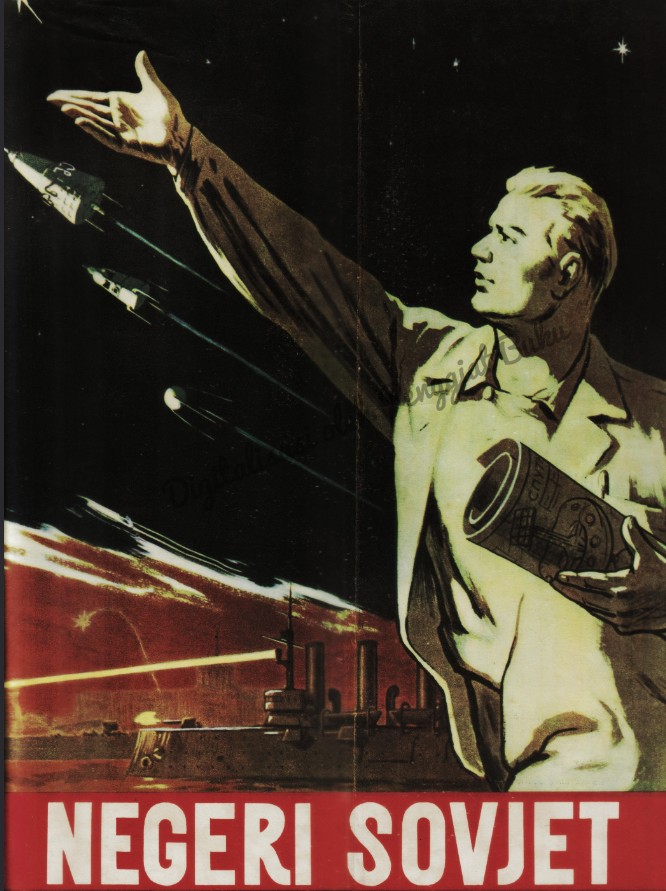
By S. Zacharov, Cultural Magazine “Negeri Sovjet”, 1958(?)
Utuy Tatang Sontani is a well-known Indonesian playwright who took part in the most recent Asia-Africa Writers’ Conference, which was held in Tashkent. He traveled in the USSR together with Ananta Tur and Dodong Djiwapradja, members of the Indonesian delegation. Utuy Tatang Sontani shared his impressions of his visit to the USSR with the journalists of “Negeri Sovjet.”
Speaking about the Afro-Asian Writers’ Conference in Tashkent, Utuy Tatang Sontani said that although there were certain difficulties because the delegates used different languages, the conference was successful. “In Tashkent,” he said, “we met many writers from Asia and Africa who are supporters of the ideals of their national cultures.” In his view, one of the conference’s most important outcomes was the agreement to introduce one another to each other’s literary works from various nations.
Utuy Tatang Sontani said that he was deeply moved by his meetings and by the exchange of ideas on literary matters with Soviet writers Tikonov, Kerbabajev, and Simonov.
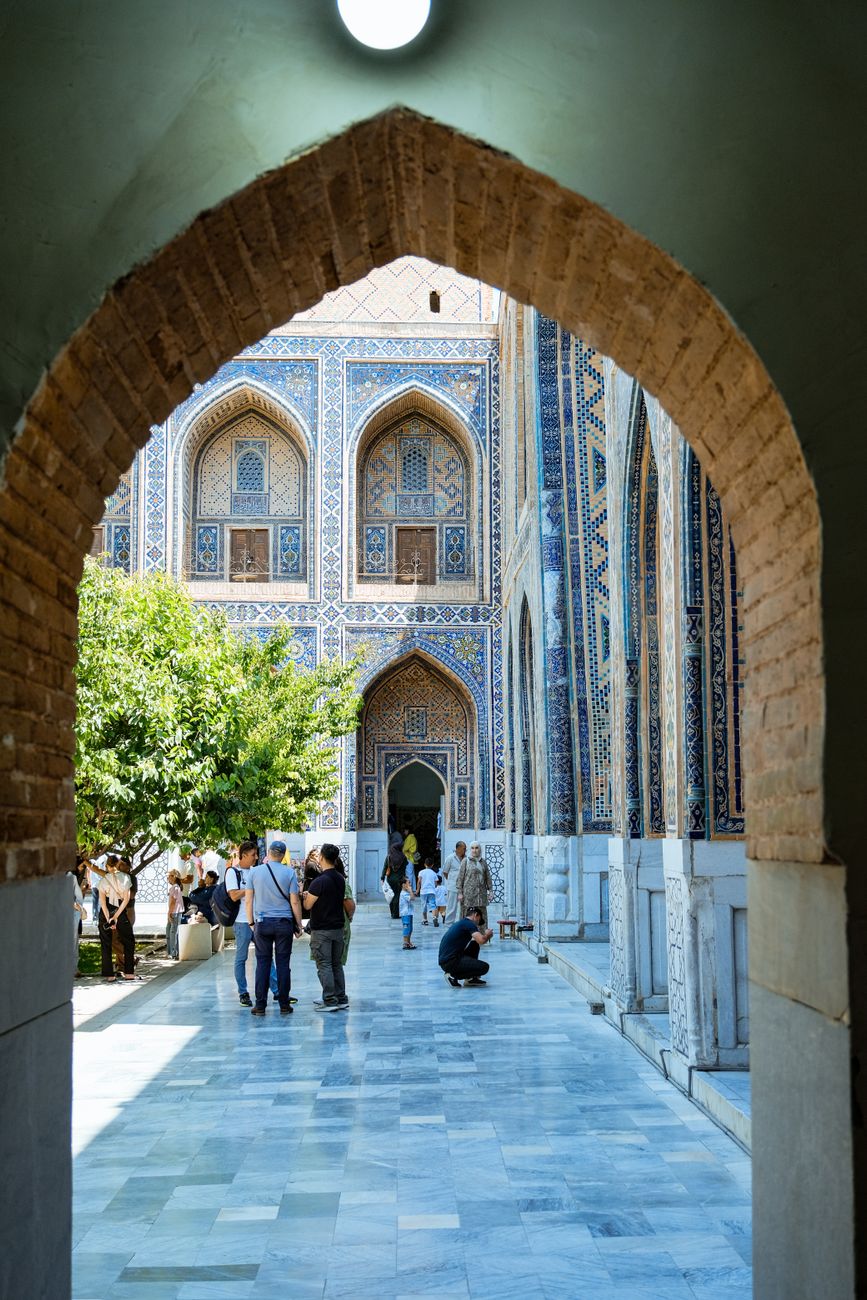
He also said that he would not forget the hospitality and reassuring attitude shown by the people of Tashkent to the conference participants. Concerning his impressions of his visit to Turkmenistan, Utuy Tatang Sontani said: “In Ashgabad, he saw large-scale cultural development. Ashgabad—hit by an earthquake.”
Utuy Tatang Sontani visited the “Shah-Senem” Opera and the “Aldar Kose” ballet at the Academic Opera and Ballet Theater in Ashgabad. “What I didn’t expect was seeing a theater out in the middle of the Karakum desert. The show demonstrated the ability of the people of Turkmenistan to create beautiful things,” Utuy Tatang Sontani said. “I particularly like national musical instruments,” he added, “and with those instruments they can perform the works and even concerts by modern composers—just as with Western instruments.”
In describing his visit to a collective farm in the Ashgabad region, Utuy Tatang Sontani said that for collective farmers it was more convenient to work together in sowing and planting, because if they worked on their own, they would not be able to overcome the desert.
“In the Republic of Uzbekistan and in Turkmenistan,” Utuy Tatang Sontani said, “I was truly amazed by the people’s faith in their own strength and by their activity across every field of life.”
Utuy Tatang Sontani stayed several days in Moscow, the capital of the Soviet Union. He toured the city, seeing Red Square and the Kremlin, and also visited the Lenin Museum, the Gorky Museum, and the home where Chekhov lived. Utuy Tatang Sontani said he was very pleased to see that Moscow’s architectural monuments are always preserved and cared for.
“I feel happy,” Utuy Tatang Sontani said, “that in Moscow I met the translators of play and storytelling—‘The Swan Lake House’—Rano Semuan and Jevgenia Zachatnikova, who helped make my work known to the Soviet people.”
Utuy Tatang Sontani then said that in his meeting with members of the USSR–Indonesia organization, he was greatly pleased to hear about the activities of this still-young organization. He was also pleased that several Indonesian literary works—among them “Siti Nurbaja,” “Lajar Terkembang,” and “Hikajat Abdullah”—are already ready to be translated and published in Russian in the Soviet Union.
Utuy Tatang Sontani visited the Union of Soviet Writers and was told about the work of this organization. He said that he was especially impressed by the assistance provided by the Soviet government to “this association.”
The Indonesian guest then watched the performance of “Danau Angsa” at the Stanislavsky and Nemirovich-Danchenko Theater. “Its music, its stagecraft, and its acting made an unforgettable impression.”
- Utuy Tatang Sontani, who is familiar with the works of the Russian writer A. P. Chekhov, visited the home where Chekhov lived. In this house, now turned into a museum, the guest learned many things about Chekhov’s works and his life in the house between 1886 and 1890. It was there that Chekhov wrote his famous stories, “The Steppe,” and his plays “Ivanov,” “The Bear,” “Proposals,” and others.
In the guestbook, Utuy Tatang Sontani wrote the following: “To me, Chekhov is a teacher in how he studies and depicts people as they truly are.”
“I am very pleased to see that the Soviet people love books,” Utuy Tatang Sontani emphasized. “Wherever they read—on the street and in the park, on buses and on the Metro. To support this passion for reading,” he added, “there are bookstalls everywhere.”
As a conclusion to the interview, Utuy Tatang Sontani said that he was deeply moved by the warm welcome the Soviet people and the other delegates gave him. 13
Sumber: Zacharov S. Kesan-kesan Utuy Tatang Sontani, (majalah kebudayaan) Negeri Sovjet 1958(?):13.
Bibliografi
- Aveling, H., & Sontani, U. T. (1979). Man and society in the works of the Indonesian playwright Utuy Tatang Sontani; And, Awal and Mira. Southeast Asia paper, no. 13. Honolulu: Center for Southeast Asian Studies, School of Hawaiian, Asian and Pacific Studies, University of Hawaii at Manoa. https://scholarspace.manoa.hawaii.edu/items/fddb31ed-39f5-4343-9748-7d60ced1a822
- Herman S. Sorotan on the play “Awal and Mira” by Utuy Tatang Sontani : paper. Bandung : Djurusan Bahasa dan Sastera Indonesia IKIP Bandung, 1964
- Na’imatur Rofiqoh. (2017, March 17). Pelukan…. Pengabar Masa Lalu. https://pengabarmasalalu.wordpress.com/2017/03/17/pelukan/
- Utuy Tatang Sontani, 1948, Bunga Rumah Makan. Pertundjukan watak dalam satu babak. B.P. 1650. 32 pp. 2nd. ed. 1954.
- Utuy Tatang Sontani, 1948, Suling. B.P. 1651. 92 pp.
- Utuy Tatang Sontani, 1949, Tambera. B.P. 1671. 279 pp. 2nd. ed. 1952. (Google Books)
- Utuy Tatang Sontani, 1951, Orang-Orang Sial. B.P. 1847. 119 pp. 2nd ed. Ban-dung 1963, with an additional story.
- Utuy Tatang Sontani, 1952, Awal dan Mira. Drama satu babak. B.P. 1887. (Earlier in Indonesia 2, 1951, p. 79-102).
- Utuy Tatang Sontani, 1953, Manusia Iseng (drama satu babak). Indonesia 4.8/9, p. 473-87.
- Utuy Tatang Sontani, 1953, Sangkuriang Indonesia 4.10, p. 594-601. Dajang Sumbi (drama 3 babak).
- Utuy Tatang Sontani, 1954, Sajang ada Orang Lain (drama satu babak). Indo-nesia 5.5/6, p. 261-80.
- Utuy Tatang Sontani, 1955, Dilangit Ada Bintang (Drama satu babak). Indo-nesia 6.2, p. 61-75.
- Utuy Tatang Sontani, 1955, Sang Kuriang. Seni 1, 11 and 12, p. 483-511 and 531-542.
- Utuy Tatang Sontani, 1957, Saat jang Genting (drama satu babak). Indonesia 8.3, p. 133-44.
- Utuy Tatang Sontani, 1963, Selamat Djalan, Anak Kafur (sandiwara satu babak). Bukittinggi-Djakarta. 59 pp. (Two stories, publ. earlier in Indonesia 7.8 and 8.3.)
- Utuy Tatang Sontani, 1964, Si Sapar. Sebuah novelette tentang kehidupan pe-narik betjak di Djakarta. Djakarta. 48 pp. (Internet Archive)
- Utuy Tatang Sontani, 1964, Si Kampeng. Djakarta. 36 pp.
- Wikipedia Contributors. (2026, July 26). Utuy Tatang Sontani. Wikimedia Foundation. Wikipedia. https://en.wikipedia.org/wiki/Utuy_Tatang_Sontani
- Zacharov S. Kesan-kesan Utuy Tatang Sontani . (majalah kebudayaan) Negeri Sovjet 1958(?):13.


Leave a Reply