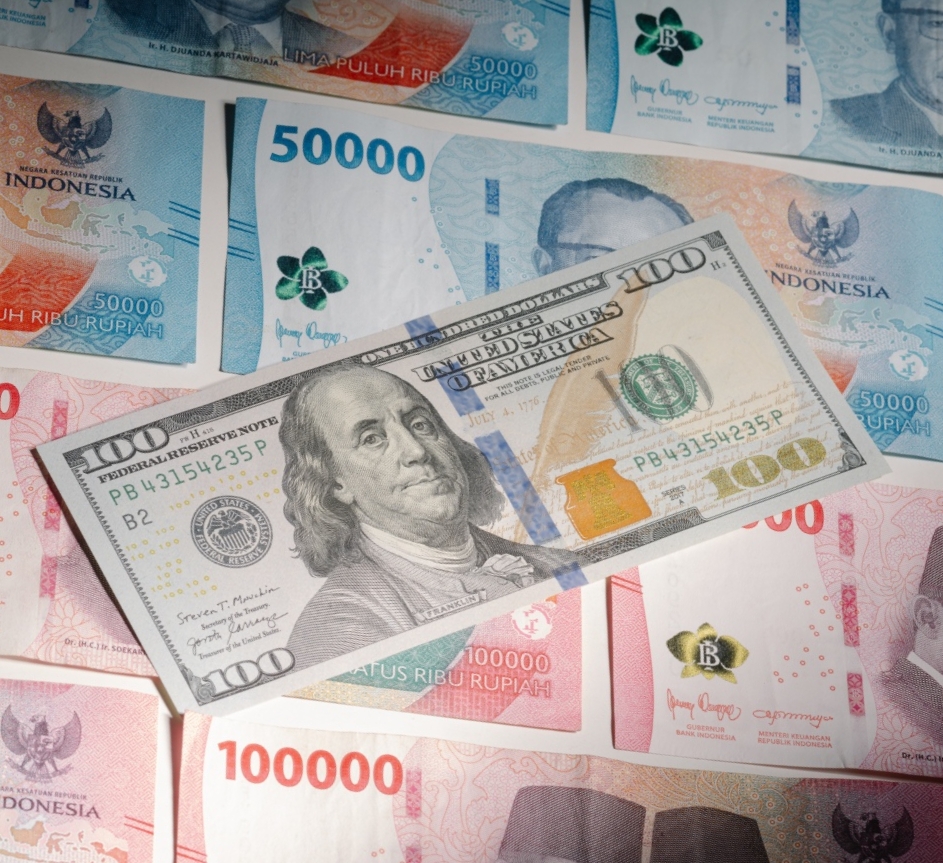
Who Can Stop the Rupiah Weakening?
Tempo.co’s “Jelasin Dong!” Podcast, May 9, 2026
TEMPO.CO — The rupiah’s exchange rate has been weakening steadily recently. Bank Indonesia and the Indonesian government are working to stem the currency’s decline to prevent it from falling further. The Jelasin Dong! podcast team has collected information on the various efforts underway to support the rupiah—including details on the nation’s dwindling foreign exchange reserves. How far will the rupiah fall, and what is the full story behind the difficulties facing Bank Indonesia and the government? Watch the latest episode of Jelasin Dong! to find out.
Stories From Indonesia Summary…
Why the Rupiah Is Weakening: Inside Bank Indonesia’s and the Indonesian Government’s Efforts to Stabilize the Currency
Based on Tempo.co’s Jelasin Dong! Podcast, May 9, 2026
Indonesia’s currency the rupiah has been sliding for months, concerning businesses and households and forcing Indonesia’s central bank, Bank Indonesia (BI), and the Finance Ministry into a tense policy balancing act aimed at defending the currency, preserving reserves, and avoiding holding back growth. Tempo.co’s Jelasin Dong! podcast gathered on‑the‑record interviews with officials, market participants and business leaders, plus reporting from insiders, to tease out some of the options and trade‑offs facing policymakers.
What’s driving the pressure
Global forces are the first, hard factor. A stronger U.S. dollar and higher global interest rates have challenged appetite for emerging‑market assets, prompting portfolio outflows that pull on the rupiah. “When yields abroad rise, investors demand higher compensation for holding Indonesian risk,” an economist interviewed on the program said.
Domestic factors compound the issue. Indonesia’s import needs, scheduled external debt repayments and persistent demand for foreign exchange create steady foreign exchange outflows. Traders and dealers cited on the podcast described episodes of heightened demand for dollars from importers and corporates with foreign exchange obligations, at times outstripping supply from exports and capital inflows.
A third, harder‑to‑quantify force is sentiment. Reports of reserve declines and visible BI interventions have, according to market participants on the show, amplified concerns — a feedback loop that can turn episodic weakness into a more sustained slide.
Reserves, interventions and limits
The Jelasin Dong! program reported that BI has actively intervened in the spot market, using foreign‑exchange reserves to buy rupiah and smooth sudden falls. Insiders told the show those interventions, together with large external payments and import cover needs, have contributed to a measurable drawdown in reserves.
BI officials on the podcast reiterated the central bank’s mandate to stabilize the rupiah while keeping inflation under control. But several analysts warned that reserves are finite. “Using reserves can calm markets in the short term, but sustained defense is costly,” one market analyst said. The program’s reporting stressed that as reserves trend lower, BI’s margin for prolonged intervention narrows, raising the stakes of each decision.
Monetary and fiscal trade‑offs
Policymakers face stark trade‑offs. Raising interest rates would likely attract inflows and support the currency, but at the cost of higher borrowing costs for households and firms and a potential drag on growth. Conversely, allowing a faster depreciation could ease external adjustment but risk stoking inflation and eroding purchasing power.
The Finance Ministry has coordinated with BI on a mix of measures to reduce foreign exchange pressure and preserve fiscal space. Officials interviewed on the episode described steps such as delaying nonessential expenditures, re-calibrating subsidies, and offering incentives to encourage onshore financing. Government spokespeople emphasized a preference for measured, targeted interventions to avoid politically fraught austerity.
Business realities: winners, losers, and hedges
Voices from the private sector on the Jelasin Dong! episode highlighted uneven impacts. Exporters generally welcome a weaker rupiah for competitiveness, though many cautioned that benefits are muted when export production depends on imported inputs. “We get a price advantage, but input costs sometimes rise proportionally,” an exporter representative said.
Import‑dependent manufacturers and retailers painted the opposite picture. Rising import bills squeeze margins and often translate into higher consumer prices. Several business leaders urged firms to reassess dollar exposure and to use hedging instruments where feasible.
Financial‑market participants stressed the role of portfolio flows. Foreign investors reducing exposure to Indonesian bonds have pushed yields higher, increasing government borrowing costs and feeding through to broader financial conditions.
Scenarios: managed adjustment to a sharper shock
Analysts on the program outlined three plausible paths.
A best‑case outcome would see a managed depreciation with limited reserve use, modest inflationary effects and minimal growth disruption.
The base case envisages continued gradual weakening with periodic interventions, leading to slightly higher inflation and slower activity.
A worst‑case scenario — triggered by a larger global shock or a sudden loss of confidence — could force a sharp devaluation, rapid reserve depletion and emergency measures such as restrictive capital controls or conditional external borrowing.
Officials on the show said they are preparing contingency plans, including discreet outreach to potential bilateral partners for currency swap arrangements and exploring short‑term multilateral facilities. Yet these options carry reputational and conditionality costs that officials are wary of publicizing.
Politics, communication and social impact
The podcast emphasized that technical solutions do not exist in a political vacuum. Any move that raises fuel or subsidy costs, or that tightens monetary policy sharply, risks a public backlash. “Policy choices have to balance economic efficacy and social acceptability,” a government adviser told Jelasin Dong!. That reality narrows the feasible set of policy responses, heightening the premium on careful communication to manage expectations.
Practical advice for households and firms
Jelasin Dong! offered pragmatic guidance. Households were urged to think about prioritizing essential spending and avoiding speculative foreign exchange exposure. Firms were advised to look at mapping currency mismatches, consider forward contracts to hedge exposure, and explore cost efficiencies for imported inputs. Investors were urged to consider monitoring sovereign yields and central‑bank statements for policy signals.
Sources and transparency
Contributors on this episode of the Jelasin Dong! podcast included hosts Goeda Rahma and Caesar Hanre Vanda Putra, BI spokespeople and Finance Ministry officials who provided on‑record comments. Market analysts, exporter and importer representatives, and anonymous insiders with operational knowledge of reserve use also contributed. Tempo.co labeled on‑record remarks accordingly and distinguished anonymous insider reporting where sensitivity required it.
All up
The rupiah’s weakness is the product of global headwinds, domestic foreign exchange needs and fragile sentiment. Bank Indonesia and the Indonesian government have used reserves, communication and fiscal adjustments to stem the slide, but those tools are finite and carry the risk of political costs. The coming months will test whether disciplined coordination, prudent fiscal choices and credible communication can secure a soft landing — or whether more disruptive adjustment will be forced by external shocks and dwindling buffers.
Named on‑record contributors referenced in this piece: Goeda Rahma; Caesar Hanre Vanda Putra; Bank Indonesia spokespeople (on record during the podcast); Finance Ministry representatives (on record during the podcast); market analysts and private‑sector representatives who spoke on the record in the Jelasin Dong! episode. Additional operational details were provided by insiders who requested anonymity.
Disclaimer
This summary is based on reporting and commentary from the Jelasin Dong! podcast episode “Siapa Kuat Menahan Pelemahan Rupiah | Podcast Jelasin Dong!” from May 9, 2026 and is general information for general purposes and is not financial, legal, or investment advice. Readers should consult licensed professionals before making decisions based any of the information in this summary. Things may also have changed since May 9, 2026.
Related
- https://www.bloomberg.com/opinion/articles/2026-05-12/indonesia-s-victory-lap-on-growth-is-hard-to-watch
- https://www.bloomberg.com/news/articles/2026-05-13/idr-usd-indonesia-pledges-smart-interventions-as-rupiah-at-record-low
- https://www.bloomberg.com/news/articles/2026-06-06/indonesian-officials-vow-again-to-stabilize-rupiah-draw-inflows
- https://aktual.com/harga-kedelai-meroket-produsen-tahu-tempe-menjerit-importir-malah-cuan-rp129-triliun-90-persen-impor-dari-as/
- https://www.bloomberg.com/news/articles/2026-06-11/idr-usd-why-the-rupiah-is-falling-and-what-it-means-for-indonesia-s-economy
- https://www.bloomberg.com/news/articles/2026-06-18/indonesia-raises-interest-rate-again-as-rupiah-defense-continues






Leave a Reply