China Downstream: The Tentacles of Indonesia’s Nickel Oligarchy, Part 5
By Project Multatuli & Viriya Singgih, February 2, 2024
Part 1 Part 2 Part 3 Part 4 Part 5
4. Bintangdelapan Group
Nickel Concession CnC: 27,144 hectares
Non-CnC Nickel Concession: 25,262 hectares
Operating Area: Central Sulawesi
Nickel Resources: N/A
Nickel Ore Production: 4.5 million tons (2016)
For President Joko Widodo’s administration, the Bintangdelapan Group plays a significant role in the success story of attracting Chinese investment to Indonesia, especially in the mining and nickel processing sectors.
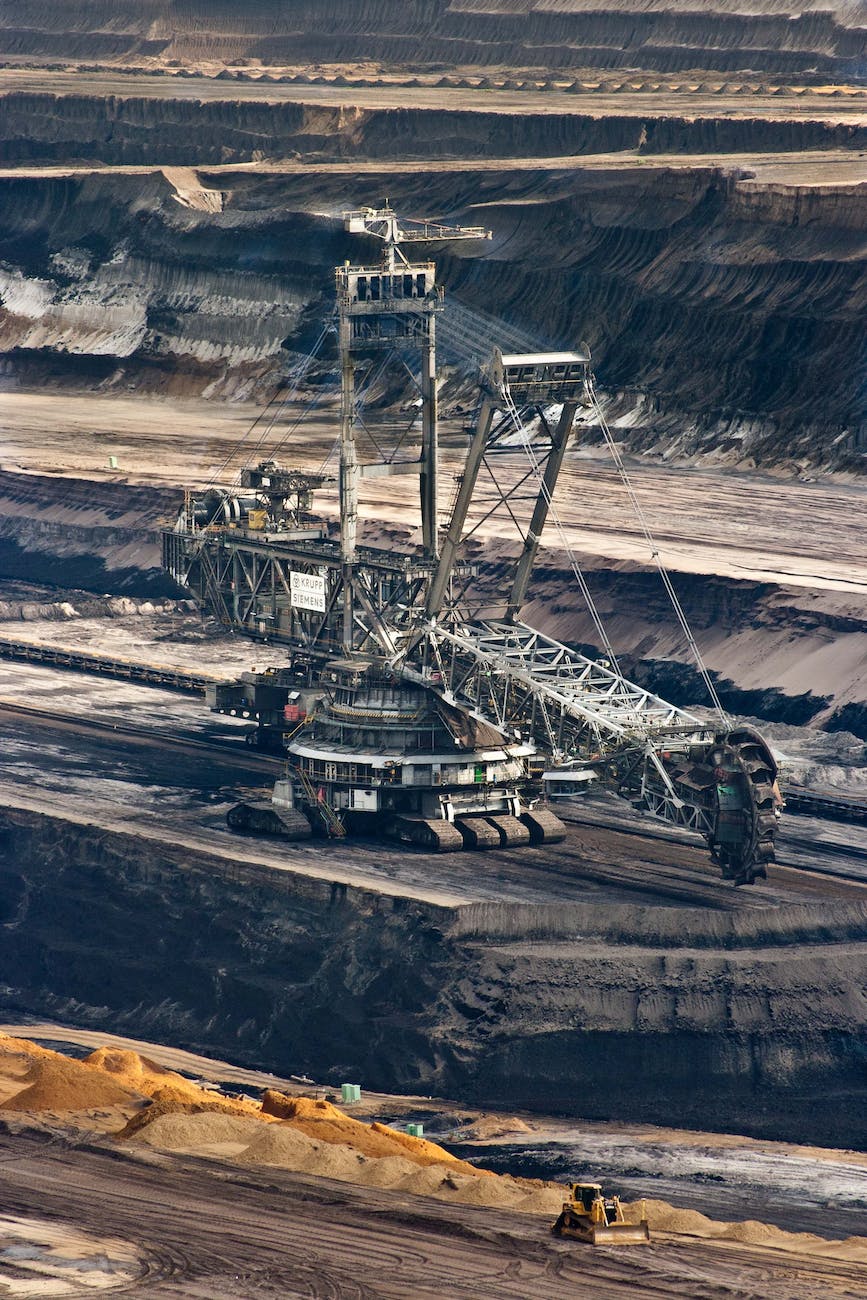
By the end of 2023, Bintangdelapan Group subsidiaries controlled at least six nickel mining concessions covering a total area of 52,406 hectares in Morowali, Central Sulawesi.

The group’s primary miner is PT Bintangdelapan Mineral with a concession of 20,765 hectares. There is also 6,379 hectares controlled by three different corporate entities: PT Kencana Nusantara Sakti, PT Kencana Bumi Mineral, and PT Nusa Mineral Semesta.
PT Bintangdelapan Energi also holds a permit to work on nickel in a 4,902-hectare site. This permit was actually suspended on February 18, 2022. It was part of the 2,078 mining business license (IUP) totaling 3.2 million hectares planned for revocation by the Indonesia Investment Coordinating Board (BKPM) in the January-April period of that year.
One reason for the revocation was that the mining business license holders were considered unproductive because they had never followed through with work plans and mining activities. Some had even used them as collateral at a number of banks.
PT Bintangdelapan Energi sued the Investment Coordinating Board in the Jakarta Administrative Court (PTUN) in June 2022, and was declared the winner in November. As a result, the Investment Coordinating Board had to revive the company’s mining business license. The Investment Coordinating Board filed an appeal, and then appeal in the superior court (cassation) in 2023, but to no avail.
However, as of January 2024, the company’s permit has not entered the official register of mining business licenses considered to meet government requirements (clean and clear status or CnC).
In addition, PT Bintangdelapan Wahana holds a concession of 20,360 hectares, also in Morowali. However, it overlaps with the operating area of several other miners, leading the related companies to commence legal proceedings against each other, and the permit for that area is now classified as non-CnC.
Morowali Industrial Area
The main boss of the Bintangdelapan Group is businessman Mr. Halim Mina. Directly and indirectly, he controls the majority of shares in the group’s nickel miners, and a portion of the shares in the joint entity PT Indonesia Morowali Industrial Park (IMIP), which manages the Morowali Industrial Area covering 4,000 hectares as of 2022.
Meanwhile, retired Lt. Gen. (Retd.) Sintong Panjaitan is listed as the commissioner in several key companies: PT Bintang Delapan Capital, PT Bintang Delapan Investama, PT Bintangdelapan Energi, PT Bintangdelapan Wahana, and PT Bintangdelapan Mineral.
Mr. Sintong also serves as commissioner of PT Adimitra Baratama Nusantara, a coal miner in East Kalimantan. This company is controlled by PT TBS Energi Utama owned by Coordinating Minister for Maritime Affairs and Investment Luhut Binsar Pandjaitan. PT TBS Energi Utama later partnered with PT GoTo (Gojek-Tokopedia) through the joint venture PT Energi Kreasi Bersama (Electrum) to build a domestic electric motorcycle factory in Cikarang, West Java.
Mr. Halim initially established the Bintangdelapan Group in 1994 as a vehicle for fertilizer trading businesses. Despite facing the Asian economic crisis in the late 1990s, his business continued to grow until in 2001, it acquired most of the shares of PT Dover Chemical, a petrochemical company where he had previously worked.
Mr. Halim ventured into mining after his company obtained exploration permits in Konawe, Southeast Sulawesi, in 2003. Four years later, six entities of the Bintangdelapan Group, including PT Bintangdelapan Mineral and PT Bintangdelapan Energi, secured concessions totaling 20,397 hectares from the then elected chief executive of the government of Konawe District. At that time, the district head had the authority to issue permits following the enactment of the 2004 Regional Government Law.
In January 2010, these six different permits were merged under the banner of PT Bintangdelapan Wahana.
Seven months later, the government changed the boundaries between Central Sulawesi and Southeast Sulawesi provinces, placing PT Bintangdelapan Wahana’s operating area in Morowali, in Central Sulawesi province. The authority to issue mining business licenses also shifted from the regent of Konawe District to that of Morowali District, who in July 2014 then revised the company’s concession area to 20,360 hectares.
Shortly thereafter, the company realized that its concession area overlapped with the operating areas of PT Persadatama Inti Jaya Mandiri, PT Daya Inti Mineral, PT Artha Bumi Mining, PT Daya Sumber Mining Indonesia, PT Morindo Bangun Sejahtera, and PT Hengjaya Nickel Utama. The problem was that PT Bintangdelapan Wahana’s permit was issued by the Konawe Regent in 2007, while the mining rights of the six other entities were issued by the Morowali Regent in the period 2008-2009.
As a result, the Morowali Regent revoked PT Bintangdelapan Wahana’s mining business licenses in November 2014. However, since October of the same year, the authority to determine the licenses had shifted back from the district heads (or regents) to the provincial governors due to the enactment of a new Regional Government Law. The Governor of Central Sulawesi province then overturned the Morowali Regent’s decision in December 2015. PT Bintangdelapan Wahana breathed a sigh of relief, but only temporarily.
In order to resolve the problem of overlapping concession land, the Central Sulawesi Governor reduced the operating area of each company in May 2016. As a result, PT Bintangdelapan Wahana’s area was reduced to only 12,300 hectares. This triggered various companies to commence legal proceedings against the governor while attacking each other.


This concession dispute dragged on. PT Bintangdelapan Wahana sued the Central Sulawesi Governor and related companies (except PT Hengjaya Nickel Utama) to the Cental Sulawesi provincial administrative court in Palu in August 2016. It petitioned for the cancellation of the reduction of the concession area and the re-issuance of the mining business license for the 20,360-hectare area. Over a year later, PT Bintangdelapan Wahana’s lawsuit was successful.
In July 2017, the governor and five other companies appealed to the Makassar Administrative Court, which again ruled in favor of PT Bintangdelapan Wahana. An appeal to the Supreme Court was rejected in March 2018, however a judicial review was granted in November 2021.
As a result, PT Bintangdelapan Wahana’s initial lawsuit was dismissed. However, the latter filed a second application of judicial review in January 2023, and won again four months later.
While the legal process was ongoing, the Bintangdelapan Group continued to expand its operations in Morowali.
In 2010, PT Bintangdelapan Mineral began producing and exporting nickel ore to Tsingshan Holding Group, a giant stainless steel producer from China. After the enactment of the 2009 Mineral and Coal Mining Law, which regulated the ban on the export of raw mineral including nickel ore commencing from early 2014, the Bintangdelapan Group saw a new opportunity. It invited Tsingshan to cooperate in establishing a processing plant in Morowali.
The government welcomed the plan. Bintangdelapan Group and Tsingshan then officially signed a cooperation agreement to build the Morowali Industrial Area on October 3, 2013, in Indonesia during a visit by Chinese President Xi Jinping.
Over 10 years, claims are made that the area has attracted investment of up to US$20.93 billion (IDR 324.4 trillion).
Three Industrial Clusters
There are 52 tenants who have built factories there, divided into three industrial clusters. Firstly, the stainless steel cluster with a production capacity of 4 million tons per year, with additional production of 3 million tons of hot-rolled coils (HRC) and 1.1 million tons of cold-rolled coils (CRC).
Secondly, the carbon steel cluster with a capacity of 4.8 million tons per year. Thirdly, the electric vehicle battery component cluster producing 120,000 tons of nickel-cobalt and 120,000 tons of nickel sulfide per year.
One of these tenants is PT Indonesia Tsingshan Stainless Steel (ITSS), whose smelter furnace exploded on December 24, 2023, killing at least 21 workers and injuring 38 others. This was just one of more than 20 workplace accidents that occurred in the Morowali Industrial Area throughout that year.
Tsingshan directly holds 51% of PT ITSS shares, and 29% indirectly through two of its units, Ruipu Technology Group and Tsingtuo Group. The remaining 20% is evenly divided between PT IMIP and Hanwa, a Japanese trading company.
Meanwhile, Tsingshan indirectly controls 66.25% of PT IMIP shares, which manages the Morowali Industrial Area. The remaining 33.75% is controlled by PT Bintang Delapan Investama, either directly or indirectly.

After successfully partnering with the Bintangdelapan Group, Tsingshan continued to expand its presence in Indonesia.
In 2017, two years after the first smelter in the PT IMIP area was inaugurated, Tsingshan signed a cooperation agreement with the French mining company Eramet S.A. to develop PT Weda Bay Nickel operations. The latter holds a concession covering 45,065 hectares in Central Halmahera and East Halmahera, North Maluku, with nickel ore resources reaching 634.9 million tons.
Weda Bay Industrial Area
From there, Tsingshan took control of 57% of Strand Minerals, which holds 90% of PT Weda Bay Nickel shares. Along with several partners from China, Tsingshan then built the Weda Bay Industrial Area in Central Halmahera in 2018. This area is managed by PT Indonesia Weda Bay Industrial Park (IWIP). It is estimated to have attracted investment worth US$15 billion (IDR 232.9 trillion) by 2024, and covered an area of approximately 5,000 hectares as of 2022.
As of 2023, Tsingshan controled 46% of PT IWIP shares through its subsidiary Perlux Technology. Two Chinese companies, Zhenshi Holding Group and Huayou Holding Group, indirectly hold 24% of PT IWIP shares each. The remaining 6% is held by Contemporary Amperex Technology (CATL), a Chinese battery manufacturer.
Tsingshan and Huayou have also invested in several nickel processing plants. They are building two smelters in the PT IWIP area, each using HPAL and RKEF technology, through their joint venture entities PT Huafei Nickel Cobalt and PT Huake Nickel Indonesia.
In the PT IMIP area, Huayou has another smelter claimed to be the world’s largest HPAL project. This smelter is managed by the joint venture company PT Huayue Nickel Cobalt. As of 2023, Huayou indirectly controled 57% of PT Huayue shares, Tsingshan controled 10%, and CMOC Group, a Chinese tungsten and molybdenum metal producer, controled 30%.
Tsingshan plans to sell 10% of its shares in PT Huayue to Nickel Industries, an Australian mining company. Nickel Industries holds 80% of PT Hengjaya Mineralindo shares, which holds a nickel mining concession covering 5,983 hectares in Morowali.
The remaining 20% is owned by the Adi Wijoyo family, which also has shares in the nickel mining companies PT Erabaru Timur Lestari and PT Genba Multi Mineral. These two companies hold concessions totaling 4,903 hectares in Morowali and North Morowali.
As of 2022, Nickel Industries has three RKEF smelters in the PT IMIP area and another in the PT IWIP area. Some of the saprolite nickel ore needed for the RKEF plant in the PT IMIP area is purchased from PT Hengjaya Mineralindo. The latter also supplies limonite nickel ore for the HPAL smelter owned by PT Huayue.
Nickel Industries has secured a deal in 2022 to sell limonite nickel ore produced by PT Hengjaya Mineralindo to PT QMB New Energy Materials, which operates an HPAL smelter in the Morowali Industrial Area. PT QMB New Energy Materials is a joint venture owned by PT IMIP, Tsingshan, CATL, the Chinese battery recycling company GEM, the South Korean battery raw material producer EcoPro, and Hanwa from Japan.
Tsingshan, Huayou, CATL, and GEM are also affiliated with PT Merdeka Copper Gold, a local mining company jointly owned by several national businesspeople, including Garibaldi “Boy” Thohir, Edwin Soeryadjaya, Sandiaga Uno, and Winato Kartono.
CATL holds 5% of PT Merdeka Copper Gold shares, which holds 50.03% of PT Merdeka Battery Materials shares. The latter is also controlled by Huayou, with an indirect ownership of 7.55% of shares.
PT Merdeka Battery Materials acquired 51% of PT Sulawesi Cahaya Mineral shares from J&P Group in March 2022. Tsingshan also indirectly controls 49% of PT Sulawesi Cahaya Mineral shares, which holds a concession for 21,100 hectares in Konawe with nickel resources reaching 1.14 billion tons.
Furthermore, PT Merdeka Battery Materials and Tsingshan have several joint venture entities operating three RKEF smelters producing low-grade ferronickel (NPI) and one plant producing high-grade nickel matte in the Morowali Industrial Area.
They also signed agreements with CATL and GEM in 2023 to build two new HPAL smelters, and are building another plant with Tsingshan to produce iron pellets, copper, gold and silver, sulfuric acid, and steam.
Beyond all this, Tsingshan and PT Merdeka Battery Materials intend to replicate the success of PT IMIP and PT IWIP by building a new industrial area in Konawe covering 3,854.37 hectares through a joint venture entity, PT Indonesia Konawe Industrial Park (IKIP).
The IKIP zone is expected to become a center for HPAL smelters whose nickel ore will be supplied by PT Sulawesi Cahaya Mineral. It should be noted that this project is different from the Konawe Industrial Area managed by PT Virtue Dragon Nickel Industrial Park.
Part 1 Part 2 Part 3 Part 4 Part 5
This article is based on https://projectmultatuli.org/cina-di-hilir-gurita-oligarki-nikel-indonesia/.
In related news:

 Stories From Indonesia
Leave a reply to Union Stages Solidarity Action for Victims of Smelter Furnace Explosions, Demands Improved OHS Standards, National Workers Union – Stories From Indonesia Cancel reply