Government response to furor over community screenings of documentary film “Pig Feast”: No one can ban by themself, Kompas.com
By Febrianto Adi Saputro and Jessi Carina for Kompas.com, May 13, 2026
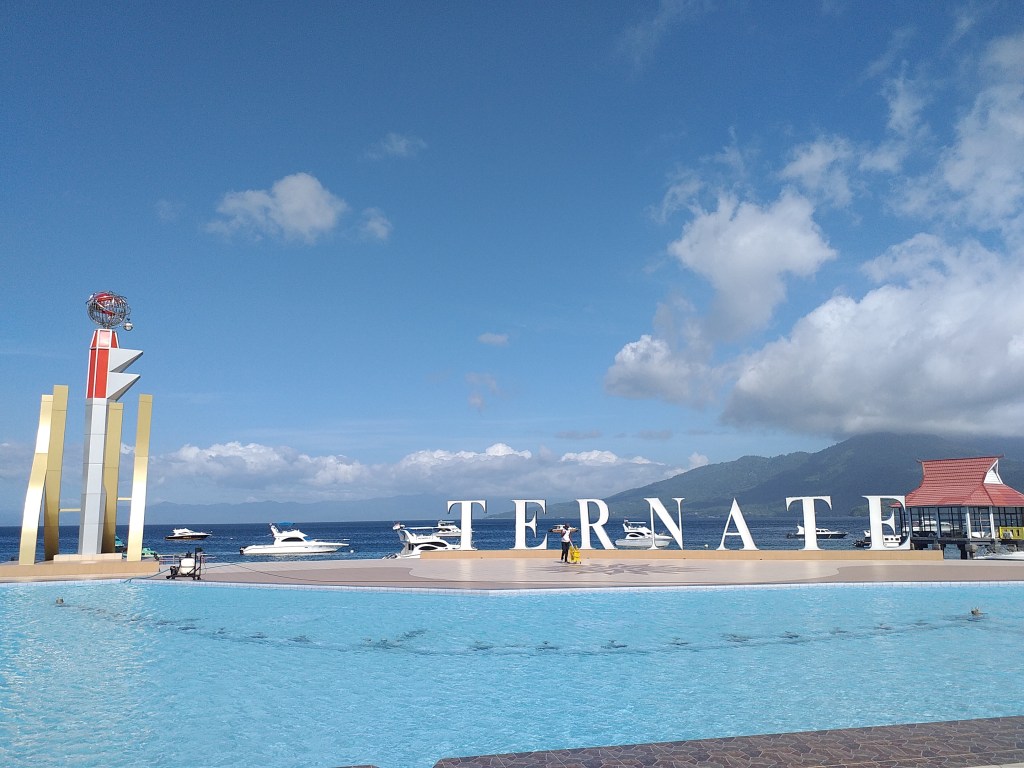
JAKARTA, KOMPAS.com – Bans of public screenings by community groups (known locally as “nobar”) of the recently released documentary film “Pig Feast” by director Dandhy Dwi Laksono have happened in several regions. In the city of Ternate in Indonesia’s North Maluku province, a screening by a community group of the film “Pig Feast” was broken up by Indonesian National Armed Forces (TNI) members. Meanwhile, a community screening at the University of Mataram (Uniram) on the island of Lombok was forcibly stopped after being broken up by campus security.
The reasons for the shut downs have been varied, ranging from permit issues to the film’s supposedly provocative content. The film “Pig Feast” is a documentary that explores the issues of conflict over land in Papua, indigenous communities, and the involvement of the security forces in national strategic development projects (PSN).
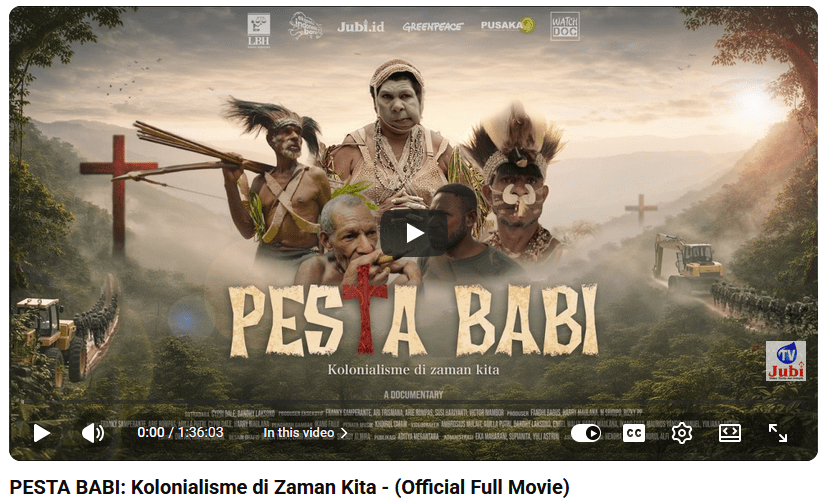
The 95-minute documentary is set in South Papua, specifically in Merauke, Boven Digoel, and Mappi regions. It depicts how tribal forests, a source of livelihood for the Marind, Awyu, Yei, and Muyu indigenous communities, have been cleared for large-scale national bioethanol and food resilience projects.
The title “Pig Feast” refers to a cultural tradition of the Muyu people called Awon Atatbon. The tradition relies on the sustainability of Papua’s forests and natural environment. For this reason, the title “Pig Feast” is also used as a metaphor, implying that forest destruction also threatens the cultural identity of indigenous communities.
Banning of public viewings has to be based on court decisions
Indonesia’s Minister for Human Rights Natalius Pigai responded to the bannings of public viewings of the documentary “Pig Feast.” He emphasized that banning public viewings cannot be done unilaterally. “The film can only be banned based on a court decision, according to the law,” Minister Pigai said, according to state wire service Antara, on Tuesday May 12, 2026. Pigai said that people with no legal authority are not permitted to ban film screenings in public spaces.
He said that films are human creative works that have to be respected and honored.
Pigai urged that groups who feel aggrieved should seek clarification. He also did not condone the various banning efforts. “Even if anyone in the film feels they have been accused of something, they should seek clarify, because there are ways to ask for clarification, or they can make their own film,” he stressed.
House of Representatives to look into the issue
Meanwhile, Indonesia’s House of Representatives (DPR) will follow up on the issue by seeking information from those involved. House Speaker Puan Maharani admitted to having heard about the controversy about the film’s title and content which some feel is sensitive.
“About the community screenings currently being discussed, I’ve heard that the film’s content and title are certainly sensitive. I don’t know what the film’s content is but we will look into it in the House,” Speaker Puan said at the Congress Building in Senayan, Jakarta, on Tuesday May 12, 2026. Speaker Puan emphasized the importance of taking steps to anticipate reactions if a work is thought to have the potentially to create a controversy.
However, she also reminded that any action taken has to be consistent with the relevant law. “If it does leads to a public outcry about a sensitive issue, it has to be be addressed appropriately. However, it has to be followed up appropriately, and so in the House we are going to ask the relevant commission for an explanation about the issue,” she said.
This post is based on https://nasional.kompas.com/read/2026/05/13/05394841/sikap-negara-respons-polemik-nobar-film-pesta-babi-pelarangan-tak-bisa.
Related:
- https://www.hrw.org/news/2026/06/11/indonesian-authorities-intensify-crackdown-on-documentary
- https://en.tempo.co/read/2106188/family-loses-contact-with-papua-activist-yasinta-moiwend
- https://www.tempo.co/tag/yasinta-moiwend
- https://en.tempo.co/read/2104517/the-army-is-not-an-entertainment-curator
- https://projectmultatuli.org/militerisasi-papua-tentara-non-organik-dalam-operasi-militer/
- https://theconversation.com/setahun-prabowo-mengulang-3-dekade-kegagalan-food-estate-266057
- https://nasional.kompas.com/read/2026/07/06/11534861/dpd-ri-bentuk-pansus-papua-evaluasi-persoalan-proyek-nasional-hingga




Leave a Reply