
Nickel Mining Green Dream Damaging Sangaji River and North Maluku Communities
Halmaheranesia.com, October 11, 2025
Indonesia is pursuing an ambitious goal to become a significant player in the global nickel supply chain. The government is aggressively promoting nickel downstreaming to support the country’s electric vehicle (EV) battery industry and the world’s green energy transition. Nickel has been touted as the “new gold,” promising Indonesia national prosperity and helping the world to break free from fossil fuels.
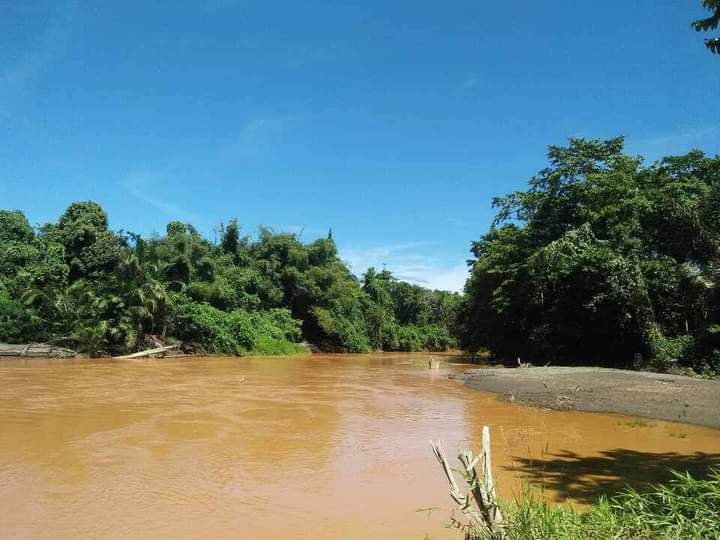
However, behind this vaulting narrative lies a different story: in East Halmahera regency in Indonesia’s North Maluku province a small river that was once ran clear is now a murky red. It tells a story of villagers who have lost their drinking water and stapple food source sago, ultimately losing their hope and future.
That river is the Sangaji River. For local residents, the river represents more than just a waterway; it’s a lifeline that supports every aspect of their survival—from drinking water and food to bathing and agricultural activities such as sago processing.
Since January 2024, however, the Sangaji River has changed. Its once-clear waters, drinkable without boiling, have become muddy and unfit for consumption. The turbidity is not merely a nuisance, but also threatens the livelihoods that residents have maintained for generations.
Bahdin, a farmer and resident of the village of Maba Sangaji, recounted how he used to bring coffee and sugar to his garden, but now he must buy bottled water. “Before, when I went to my garden, I just brought coffee and sugar,” he said. “The waters of the Sangaji River were readily available, drinkable, and ready to use for cooking. Now we have to carry gallons of water. It’s an insult. We feel like strangers in our own garden.”

The sago processing community has been hit hardest. Their trust in the Sangaji River water has eroded, even though clean water is essential for washing sago. “We feel guilty if people eat the sago we process with muddy water. We worry about how toxic the water is whether it will make people sick,” said Yasim.
Residents attempted to dig a small channel to purify the river water, but the mud was too thick and had settled for too long. Work that once flowed smoothly has come to a halt, leaving them to wait for the water to clear. Often, they can only stare helplessly at the murky current.

“We can’t force it,” Ramli said. “This is about food, about people’s health. What can we do?”
Where Did It All Start?
Residents first became suspicious when they noticed heavy equipment and materials crossing the river. The boats carried machinery and workers toward the forest upstream. A few months earlier, they discovered trash cans bearing the logo of PT Position, a nickel mining company, distributed ahead of the 2024 Legislative Elections. Initially, they assumed it was a local government initiative, but it soon became clear this marked the beginning of exploration activities.
Their suspicions were confirmed on April 18, 2025, when residents surveyed upstream. They found the customary forest completely cleared, with tributaries filled with nickel ore sediment. Red mud flowed downstream, contaminating the water and impacting their gardens.
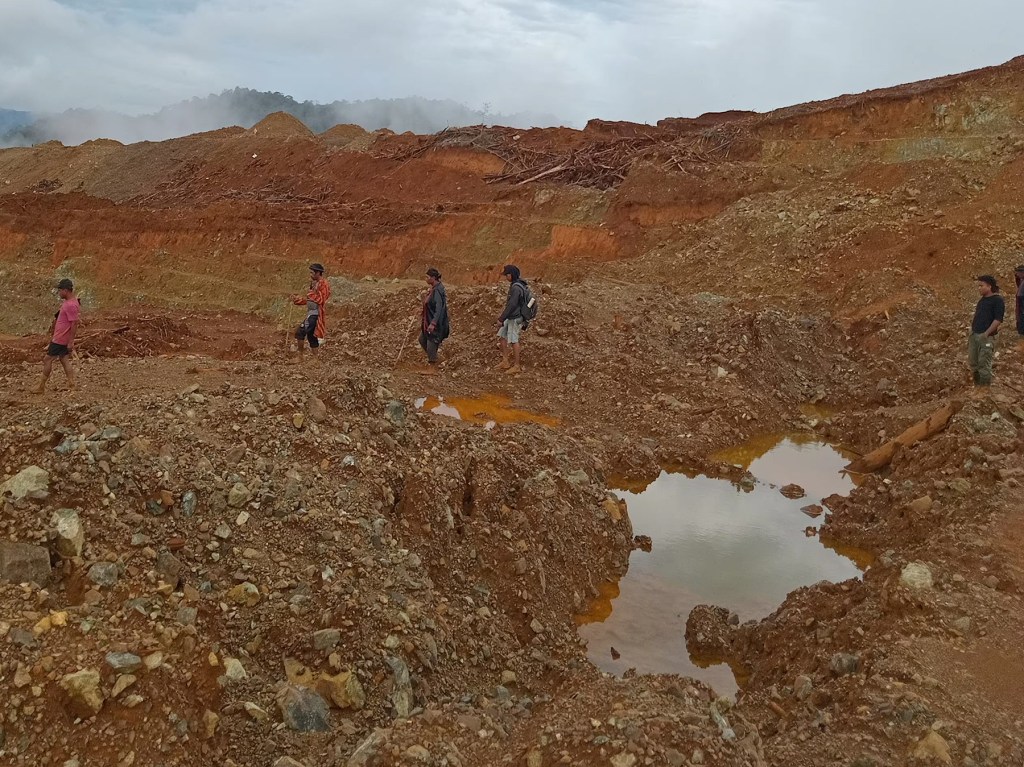
Ramli, also a farmer, observed the death of five of his nutmeg trees, three of which were bearing fruit. “It isn’t just about losing the money. This symbolized the death of hope and hard work,” he said.
“Previously, when the Sangaji River overflowed, we were happy because the flood brought organic matter, which served as natural fertilizer. Now, the floods brings red mud that is toxic to our soil and crops.”
A Wound That Touches the Entire Village
Nearly 60 percent of the residents of Maba Sangaji village depend directly on the water from the Sangaji River. Even families of civil servants cultivate gardens around the river. This destruction is not just an issue for a few; it represents a socio-ecological disaster that has paralyzed almost the entire village.
Yet, as a citizen, Yasim Ramli feels small in the face of an indifferent power structure.
The sago processing group, which normally produces four sacks per day, valued at up to IDR 1 million (around $US60), is now completely paralyzed. Activities have ceased, and income has stalled. Residents have been forced to abandon their primary source of livelihood to ensure the safety of those consuming the processed sago they used to produce.
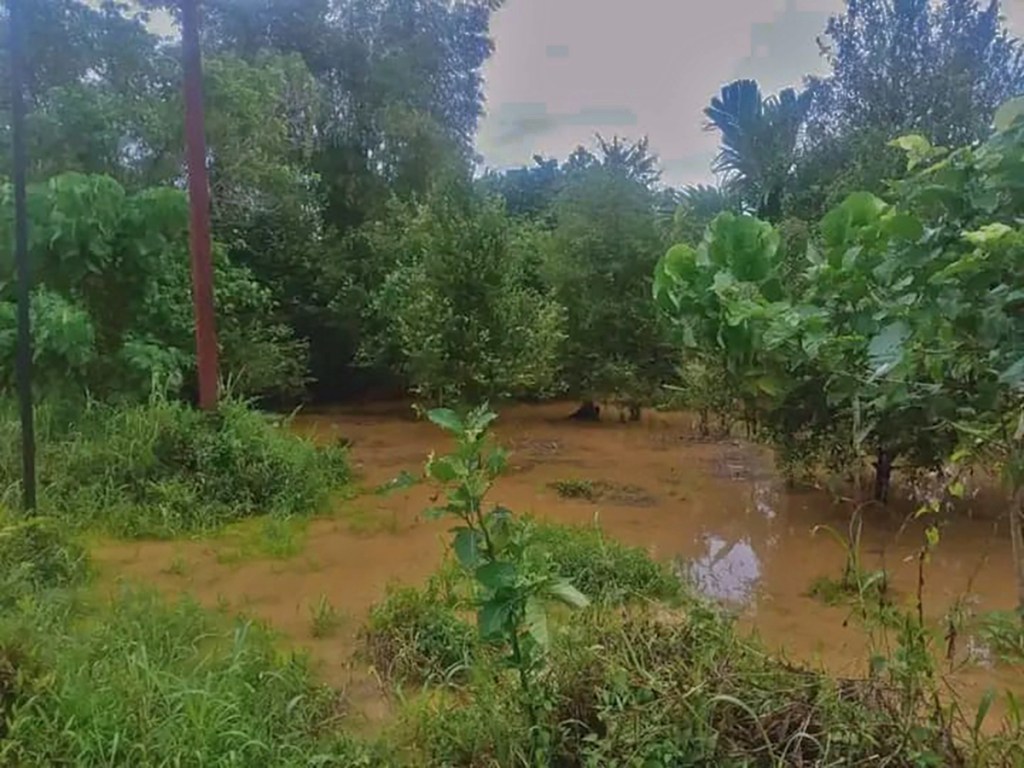
“If this were God’s will, we would pray,” Ramli said. “But this is human power. What can we do as the little people?”
The River Is Our Home
Maba Sangaji village is not an industrial area; the residents depend on the land, sago, and the river. The damage to the Sangaji River has resulted in the loss of clean water and vital ecosystems, as well as a way of life and livelihood. The harmonious relationship between people and nature, passed down from generation to generation, has been shattered.
Residents are not asking for much; they simply want the Sangaji River to return to its original state—clear, healthy, and a source of life, not a threat that poisons.

The stories of Bahdin and Yasim Ramli reflect more than simple complaints; they are the heartbreaking cries of residents who have quietly lost their homes. They have seen their gardens die, their children unable to bathe in clean water, and their jobs abandoned to maintain their dignity and safeguard others.
Bahdin even wrote a simple message on a protest billboard installed on the village bridge: “The Sangaji River is the source of life.” To outsiders, this may seem like just a slogan, but for the residents of Maba Sangaji village, it represents a profound truth—a cry from people enduring pain while the world pursues dreams of electric vehicles, a concept they never invented.
This post is based on the piece originally published as “Sangaji River: A Livelihood Buried by Nickel’s Green Dream” by Halmaheranesia.com, https://www.halmaheranesia.com/2025/10/11/sungai-sangaji-nadi-kehidupan-yang-terkubur-mimpi-hijau-nikel/. Featured image credit: Wives, families, and children of families criminalized in Maba Sangaji village, East Halmahera. In Ternate City in late June 2025 to visit their husbands and fathers detained at a Ternate police detention center for protesting. (Project M/Rabul Sawal). https://projectmultatuli.org/babak-kriminalisasi-pejuang-lingkungan-maba-sangaji-melawan-tambang-nikel/.
In related news:
- https://projectmultatuli.org/babak-kriminalisasi-pejuang-lingkungan-maba-sangaji-melawan-tambang-nikel/
- https://celebesimages.id/hari-ini-tak-ada-lagi-sagu-di-sungai-sangaji/
- https://www.halmaheranesia.com/2025/05/19/alasan-polisi-tangkap-warga-penolak-pt-position-di-halmahera/
In earlier news…
What’s the True Cost of Your Nickel? Greenpeace Pictures of the Week
Greenpeace International, 6 June 2025
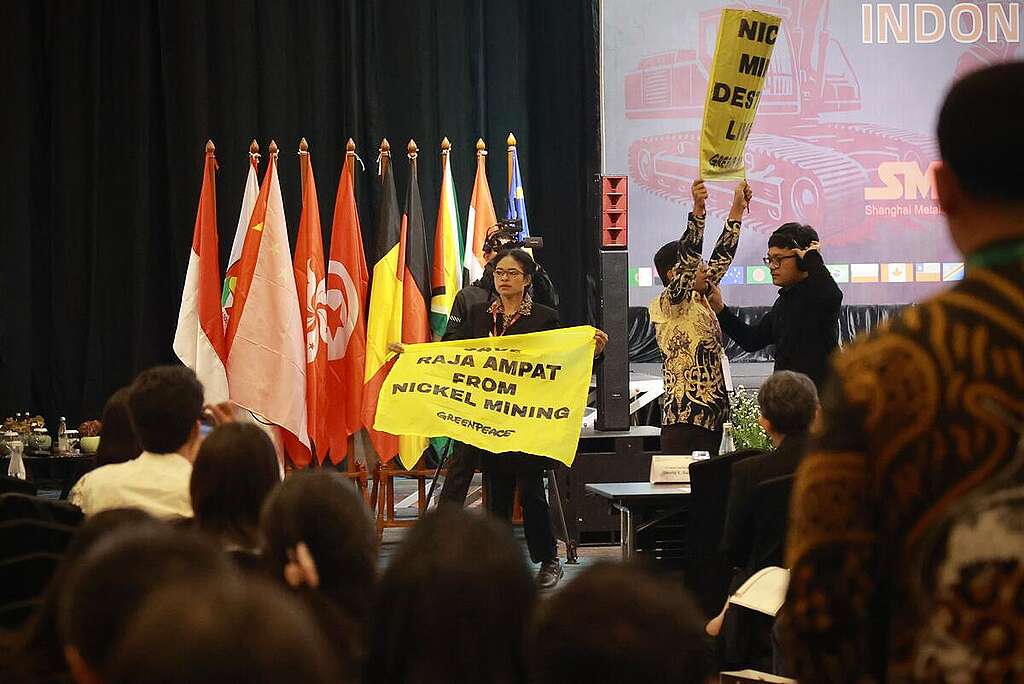
Greenpeace Indonesia activists, alongside four young West Papuans from the Raja Ampat archipelago in Eastern Indonesia, staged a peaceful protest today at the Indonesia Critical Minerals Conference to expose the devastating environmental and social consequences of nickel mining and smelting.
The activists deployed a banner reading, “What’s the True Cost of Your Nickel?” and unfurled others with messages: “Nickel Mines Destroy Lives” and “Save Raja Ampat from Nickel Mining.”
The protest extended beyond the conference hall, with Greenpeace Indonesia activists and Papuan youth displaying banners in the exhibition area outside.
Messages such as “Nikel Bukan Masa Depan” (Nickel is Not the Future) and “Save Raja Ampat the Last Paradise” were prominently displayed amidst industry booths and attendees.
This post is based on https://www.greenpeace.org/international/story/75271/greenpeace-pictures-of-the-week-23/.

In related news:
- https://nasional.kompas.com/read/2025/08/15/11583091/prabowo-dapat-laporan-ada-1063-tambang-ilegal-kerugiannya-minimal-rp-300
- MIND ID Reshuffles Board of Directors and Commissioners, Son of Former VP and Defense Force Chief Try Sutrisno Becomes Director of Risk Management, Kompas.com, 11 June 2025
- https://nasional.kompas.com/read/2025/06/11/11484641/dukung-pencabutan-izin-tambang-4-perusahaan-di-raja-ampat-ravindra-airlangga
- https://apnews.com/article/indonesia-raja-ampat-nickel-mining-suspend-a73cccb78485f7c8e3e785193d0bbede
- Criticizing Nickel Industrialization, Greenpeace Activists Hold Protest at International Nickel Conference in Jakarta, Greenpeace Indonesia (Indonesian)
- Raja Ampat: A Biodiversity Paradise Hit by a Global Dilemma, Kompas.com (Indonesian)
- First 100 Days of North Maluku Governor Sherly Tjoanda: Rising Criminalization and Widening Ecological Destruction, Mining Advocacy Network (Indonesian)
- https://jatam.org/id/lengkap/Polda-Malut-Kriminalisasi-Warga-Maba-Halmahera
- The Third Indonesia Critical Minerals Conference & Expo 2025 in Jakarta
- https://nasional.kompas.com/read/2025/06/09/01225281/tambang-nikel-di-pulau-batang-pele-raja-ampat-ada-di-hutan-lindung
- https://nasional.kompas.com/read/2025/06/09/00581871/pemerintah-sebut-tambang-nikel-pulau-kawei-raja-ampat-melebihi-batas
- https://nasional.kompas.com/read/2025/06/08/23565041/menteri-lh-izin-lingkungan-tambang-raja-ampat-diterbitkan-bupati-pada-2006
- https://nasional.kompas.com/read/2025/06/08/23310321/pemerintah-perkarakan-pencemaran-pulau-manuran-raja-ampat-ke-ranah-hukum
- https://nasional.kompas.com/read/2025/06/08/22593791/anggota-dpr-sebut-tambang-ilegal-papua-dibekingi-aparat-tni-laporkan
- https://nasional.kompas.com/read/2025/06/08/12481851/anggota-dpr-duga-penerbitan-izin-tambang-di-raja-ampat-diwarnai-kkn
- https://nasional.kompas.com/read/2025/06/08/16531901/kementerian-lingkungan-hidup-segel-tambang-nikel-pt-asp-di-raja-ampat
- The fate of the O’Hongana Manyawa indigenous people around Tesla’s supply chain in Halmahera by Viriya Singgih, BBC News Indonesia, 1 Agustus 2024
- Raffi Ahmad’s Business Tentacles: Supported by the President’s Family, Nickel Bosses, and Golkar Party Officials, By Alfian Putra Abdi, Project Multatuli, 17 October 2024
- The Apocalypse Has Arrived: Like a slow moving apocalypse, moment by moment, by Iqbal Lubis, Bollo.id, 28 October 2024
***
The Suffering Behind the War of Words Between Former Widodo Trade Minister Tom Lembong and Ministers Luhut & Bahlil
Press Release, Mining Advocacy Network (JATAM), Jan 26, 2024
Indonesia’s Investment Minister Bahlil Lahadalia and Coordinating Minister for Maritime Affairs and Investment Gen. (Retd.) Luhut Binsar Pandjaitan have issued strong responses to remarks made by Thomas Lembong, co-head of the national presidential election campaign of candidates Anies Baswedan and Muhaimin Iskandar, about Indonesia’s nickel processing policy and electric vehicle industry.
In a recent post by the podcast Total Politik, Lembong, a former Trade Minister and head of Indonesia’s Investment Coordinating Board (BKPM), criticized the extensive smelting initiatives, warning that domestic oversupply risks could depress nickel prices.(1) He also highlighted Tesla’s shift in China to Lithium Ferro Phosphate (LFP) batteries, which eliminates the need for nickel altogether.(2)
The ensuing war of words reflects a focus among Indonesia’s political elite on industrial priorities rather than the welfare of impacted communities. Neither Lembong, nor Ministers Luhut and Bahlil, have publicly acknowledged the detrimental effects of nickel downstreaming on local populations, which has left many impoverished while boosting industry profits.(3) Nickel extraction expansion has displaced communities, polluted water sources, damaged marine ecosystems, degraded forests, and triggered health crises, violence, criminalization, and workplace accidents—some resulting in fatalities.
This dire situation is evident across Indonesia’s major nickel industrial estates, from PT Indonesia Morowali Industrial Park (IMIP) in Morowali in southern Sulawesi, PT Gunbuster Nickel Industry in North Morowali, Virtue Dragon Nickel Industry in Konawe, Indonesia Weda Bay Industrial Park (IWIP) in Central Halmahera in Maluku province, to the industrial complexes on Obi Island under the Harita Group’s control.
The political and business dynamics of these clashes, set against the backdrop of Indonesia’s 2024 presidential election, reveal more than just the flaws in President Joko Widodo’s accelerated nickel downstreaming agenda. Co-ordinating Minister Luhut and Minister Bahlil’s opposition to Lembong’s criticisms could be seen as defending vested interests within Indonesia’s political-business complex.(4)

Minister Bahlil, for instance, has ties to PT Meta Mineral Pradana, a nickel mining company with two concessions in North Konawe, Southeast Sulawesi, owned by his PT Papua Bersama Unggul (90% ownership) and PT Rifa Capital (10%).
Similarly, Co-ordinating Minister Luhut’s stake connects him to PT Energi Kreasi Bersama (Electrum), a joint venture between PT GoTo Gojek Tokopedia Tbk and PT TBS Energi Utama Tbk (TOBA), a company owned by Luhut. Electrum focuses on developing an integrated electric vehicle ecosystem, from manufacturing electric motorcycles and battery technology to battery swapping stations and charging infrastructure. Through GoTo, Luhut’s interests align with Garibaldi “Boy” Thohir, a recent vocal supporter of the presidential election candidates Prabowo Subianto and President Joko Widodo’s son Gibran.(5) Boy Thohir holds shares in and sits on the Board of Commissioners of GoTo.(6)

Ultimately, the high-profile clash involving Tom Lembong, Luhut, and Bahlil appears to prioritize personal and industrial interests over the environmental and social toll of nickel extraction. The nickel debate, rather than addressing the plight of affected communities or mitigating environmental destruction, seems geared toward securing political gains in Indonesia’s 2024 presidential election.
Regardless of whether Tesla relies on Indonesian nickel, mining operations in Sulawesi, Maluku, and Papua continue unabated, with scant regard for the suffering of residents and ongoing environmental degradation.
- [1] Tom Lembong Kritik Kondisi Nikel Indonesia! #totalpolitik #tomlembong #nikel #pilpres2024
- [2] https://www.visualcapitalist.com/sp/4-benefits-of-lfp-batteries/
- [3] https://www.jatam.org/hilirisasi-nikel-untungkan-pebisnis-miskinkan-warga/
- [4] https://pemilu.jatam.org/
- [5] https://www.jatam.org/dukungan-boy-thohir-cs-ke-prabowo-gibran-pemilu-2024-dikendalikan-bohir/
- [6] https://www.gotocompany.com/about-us#board-of-commissioners
This article is based on https://jatam.org/id/lengkap/derita-warga-di-balik-saling-serang-tom-lembong-vs-luhut-bahlil
In related news:
- https://bisnis.tempo.co/read/1935811/kecelakaan-kerja-berulang-di-smelter-nikel-tak-ada-efek-jera-bagi-perusahaan
- https://metro.tempo.co/read/1934709/kejagung-klaim-penetapan-tersangka-tom-lembong-bukan-politisasi
- https://kumparan.com/kumparannews/tom-lembong-dijerat-tersangka-impor-gula-usai-kejagung-periksa-90-saksi-23oNLvdtnvf
- https://kumparan.com/kumparannews/tom-lembong-saat-digiring-dan-diborgol-ke-mobil-tahanan-menyerahkan-ke-tuhan-23oNeSyyzzs
- https://asiasociety.org/node/30643/asia-society-victoria-distinguished-fellowship
- https://www.kompas.tv/nasional/481266/respons-tom-lembong-usai-dilaporkan-ke-bawaslu-kami-hormati-proses-hukum



 Stories From Indonesia
Leave a Reply