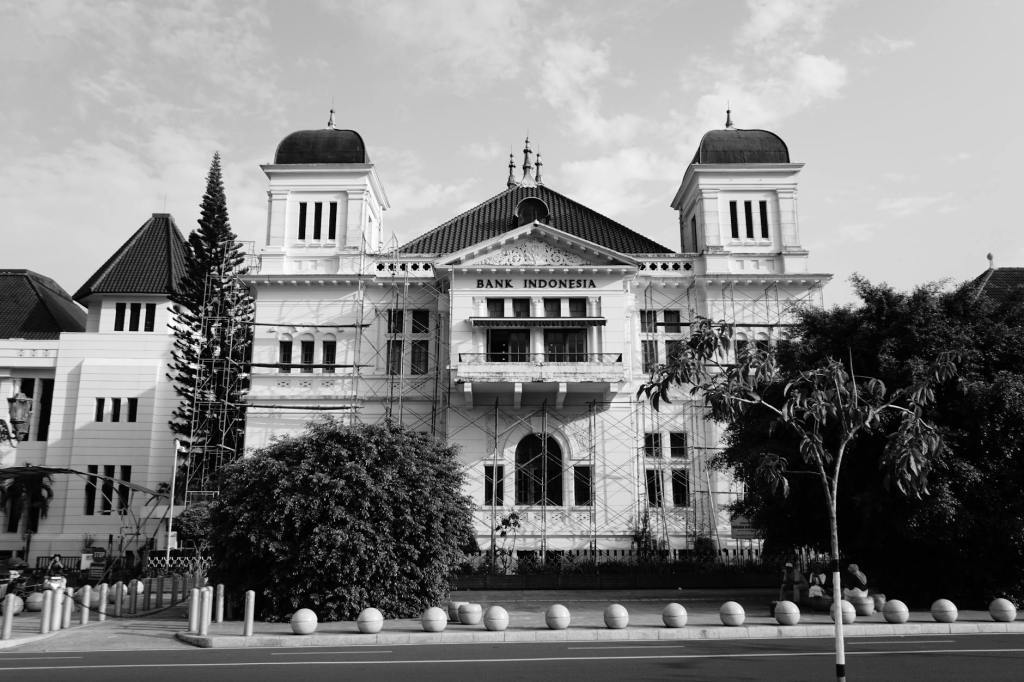
Sign of the Erosion of Bank Indonesia’s Independence, Tempo.com
Tempo Editorial, January 23, 2026
Deputy Finance Minister Thomas Djiwandono is one step closer to becoming Deputy Governor of Bank Indonesia, replacing Juda Agung, who resigned suddenly recently. Although President Prabowo Subianto has nominated two other candidates to the House of Representatives, confirmation hearings scheduled for today are largely a formality.
His elevation follows the abrupt resignation of Juda Agung, and although President Prabowo Subianto has nominated two other candidates for the position, the confirmation hearing scheduled for today by Indonesia’s House of Representatives appears largely ceremonial.
Thomas Djiwandono is the son of Soedradjad Djiwandono, who served as Governor of Bank Indonesia during the rule of former President Soeharto. He is also the nephew of current President Prabowo Subianto. President Joko Widodo appointed him Deputy Minister of Finance on July 18, 2024, shortly after Prabowo was confirmed as president elect. Following his inauguration, Prabowo reaffirmed Djiwandono’s position as Treasurer of the president’s Gerindra Party.
The current nomination suggests that the Prabowo government aims to exert tighter control over Bank Indonesia. Government intervention in monetary policy has become increasingly common, notably when Finance Minister Purbaya Yudhi Sadewa requested Bank Indonesia to lower benchmark interest rates to bolster the government’s fiscal program. Also, a burden-sharing scheme and liquidity injection policy have been rolled out to influence the central bank’s directives.
Previously, the government compelled Bank Indonesia to undertake a debt swap to extend the maturity of certain debts by buying Government Securities on the secondary market. Djiwandono’s arrival at Bank Indonesia could further facilitate government intervention in the central bank’s operations, aimed at achieving an ambitious national economic growth target of 8 percent by 2029.
Thomas Djiwandono’s trajectory toward the Deputy Governorship became evident when he made history as the first non-high-ranking central bank official to attend a Board of Governors meeting. Fiance Minister Purbaya also viewed this as an adjustment for Thomas’s joining the central bank. The presence of a government representative at a meeting of the Board of Governors raised questions about Bank Indonesia’s independence.
In a healthy economy, a central bank must maintain robust independence, free from government interference. However, Djiwandono clearly has close ties to President Prabowo, and his experience in politics is greater than his experience in monetary policy.
It is here that the independence of Bank Indonesia, which should be free from political intervention, is at stake. Yet achieving this independence was not easy; it was only achieved in 1999 after a monetary crisis devastated the Indonesian economy. The foundation of market and business confidence will be lost if the central bank’s independence is further undermined.
Signs of this can be seen in the rupiah’s recent fluctuations throughout this week after news of Prabowo’s nephew joining Bank Indonesia broke. On Tuesday, January 20, 2026, the rupiah even hit an all-time low against the US dollar, reaching Rp 16,985 per US dollar, a figure lower than the 1998 monetary crisis when it reached Rp 16,800.
Although the current depreciation of the rupiah have not yet significantly impacted inflation, which remains below Bank Indonesia’s target range, sustained falls could adversely impact sectors reliant on imported raw materials. Companies may scale back operations, potentially leading to layoffs. Also, the weaker rupiah increases fuel subsidy costs and heightens the burden of servicing the country’s foreign debt, placing further strain on the government’s budget deficit.
At a time when we need to be bolstering market confidence because of growing global uncertainty, the Prabowo regime is instead undermining the economy’s anchor.
Related news from Reuters
Indonesia’s President Prabowo has nominated his nephew as central bank deputy governor, Stefanno Sulaiman and Gayatri Suroyo reported on January 20, 2026 for Reuters.
Indonesian President Prabowo Subianto has nominated his nephew to join Indonesia’s central bank’s board of governors, his spokesperson said, amid growing concern about its independence as the government seeks more support for ambitious economic targets, reported Reuters on January 20, 2026.
According to the Reuters report, investors have worried that independent monetary policy making in Southeast Asia’s largest economy might be under pressure, as Prabowo targets economic growth of 8% by 2029 from about 5% now. The rupiah currency hit a nine-month low on Monday, amid uncertainty from a new U.S. tariff policy, concerns over Indonesia’s widening fiscal deficit, and news of the central bank nomination. Prabowo’s nephew Thomas Djiwandono, currently a deputy finance minister, is one of three nominees whose names have been submitted to Indonesia’s House of Representative, presidential spokesperson Prasetyo Hadi told reporters.
Resignation
The nomination follows the resignation of Bank Indonesia’s (BI) deputy governor Juda Agung, he said, before the end of his tenure in 2027. Finance Minister Purbaya Yudhi Sadewa said Agung will join the finance ministry, representing a swap of top officials that would not hurt the independence of either institution.
Independence
“There may have been speculations that because Thomas is going there, the (central bank’s) independence is gone. I disagree,” Purbaya said.
“Once they realise it’s not the case, (the rupiah) will strengthen,” he said, adding his ministry and Bank Indonesia will synchronise fiscal and monetary policies to spur faster economic growth.
BI confirmed in a statement that deputy governor Agung submitted his resignation on January 13. The central bank further said it would remain focused on maintaining rupiah and financial system stability to support sustainable economic growth. Djiwandono and Agung did not immediately respond to requests for comment.
Suitable Candidate
U.S.-educated Djiwandono is a former businessman and a member of the [president’s] party. The two other nominees are central bankers Solikin Juhro and Dicky Kartikoyono, said Mukhamad Misbakhun, head of the House finance committee.
“Tommy Djiwandono is someone with academic competence, bureaucratic experience and personally he is humble. He is a befitting figure for a deputy governor of Bank Indonesia,” Misbakhun said.
BI starts a two-day monetary policy meeting on Tuesday, with analysts expecting it will keep interest rates unchanged.
Michael Wan, senior currency strategist at MUFG, said unlike BI’s past cycles, the bank is unlikely to hike rates to defend the rupiah, with the focus now tilted more towards supporting growth.
“The news around President Prabowo potentially nominating his nephew to BI Board of Governors has resulted in some jitters among market participants around perceived reduction in monetary policy independence for BI,” Wan said.
Reuters reported Djiwandono’s nomination earlier on Monday, citing sources.
Each member of BI’s board, comprised of a governor and several deputy governors, has a voting right to decide key interest rate levels and determine its policy. Members are usually central bankers, economists or former executives of commercial banks appointed by the president with the approval of the House. The move comes as the country’s House of Representative discusses a bill with provisions to strengthen the central bank’s role in supporting economic growth.
This post is based on https://www.tempo.co/ekonomi/thomas-djiwandono-deputi-gubernur-bi-2109626, https://www.tempo.co/kolom/thomas-djiwandono-deputi-gubernur-bi-2109228, and https://www.reuters.com/world/asia-pacific/indonesias-prabowo-nominates-nephew-central-bank-deputy-governor-sources-say-2026-01-19/.
In related news:


Leave a Reply