
Asia-Africa Solidarity and Gaza’s Suffering
By Anies R Baswedan, Founder of the Hands-On Movement, for Republika Online, April 26, 2025
REPUBLIKA.CO.ID, BANDUNG — Seventy years ago, Bandung was illuminated not by the flames of war, but by the fervor of independence. Leaders from Asia and Africa convened not to divide the world, but to unite it. They hailed from nations that had just emerged from the grips of colonialism, carrying fresh wounds and unfulfilled dreams. Yet, they arrived with a singular resolve: that the world must change, and that transformation must start in the South, with those who had been oppressed.
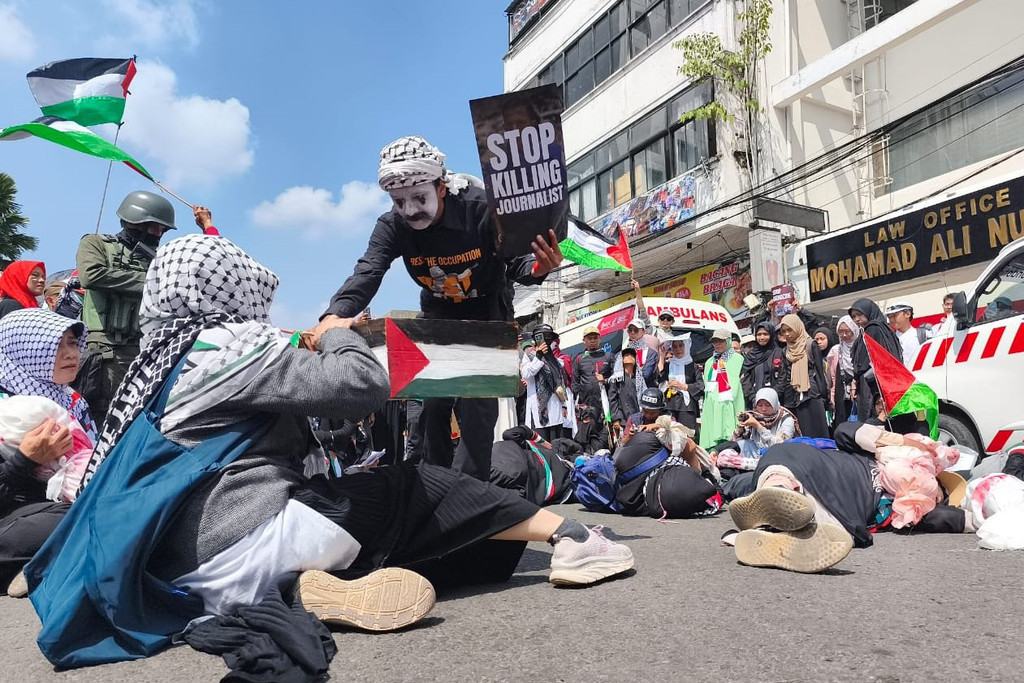
Watching street theatre action by Performing Arts Solidarity for Palestine in Bandung, Sunday August 24, 2025. https://kumparan.com/kumparannews/melihat-aksi-teatrikal-solidaritas-seni-untuk-palestina-di-bandung-25itiAbOGAA
The 1955 Asian-African Conference was more than just a diplomatic gathering; it represented a moral declaration that nations once trampled down could stand tall, addressing the world with dignity. There, words were employed not to threaten, but to invite; not to stifle, but to liberate.
Now, seven decades on, the world has yet to heal from the scars of injustice. Oppression may have transformed, but its essence remains unchanged. Guns have supplanted embargoes; artillery has taken the place of vetoes. Yet, people and land continue to be reduced to mere numbers, and humanity is often treated as negotiating chips.
Today, the name Gaza resonates with the same urgency that Bandung once did. Not because of stirring speeches, but because of cries that remain unheard. In a land long besieged and oppressed, deep wounds have reopened. The question now confronts not just the Israeli occupation, the UN Security Council, or the world’s major media, but also us, the nations of Asia and Africa. Where does the flame of Bandung burn now?

Watching street theatre action by Performing Arts Solidarity for Palestine in Bandung, Sunday August 24, 2025. https://kumparan.com/kumparannews/melihat-aksi-teatrikal-solidaritas-seni-untuk-palestina-di-bandung-25itiAbOGAA
Gaza and the New Face of Oppression
Gaza today serves as a stark mirror reflecting the lingering shadow of colonialism. This small territory, home to more than two million people, is besieged from air, sea, and land. Children deprived of joy, mothers bearing lifeless infants, homes destroyed before they are completed—each day in Gaza feels like a morning that may never reach night.
The struggles unfolding there are not merely a conflict between two sides; they represent structural inequality, a historical injustice passed down through generations. While one side boasts tanks, missiles, advanced defense systems, and international alliances, the other is silenced through the stripped of the right to claim its independence. This is genocide.

Watching street theatre action by Performing Arts Solidarity for Palestine in Bandung, Sunday August 24, 2025. https://kumparan.com/kumparannews/melihat-aksi-teatrikal-solidaritas-seni-untuk-palestina-di-bandung-25itiAbOGAA
The situation in Gaza transcends issues of religion and geopolitics; it fundamentally concerns justice. It raises the question of whether the world possesses the courage to assert that every human life holds equal value, even when their homeland is under siege.
If we regard the Asian-African Conference as a landmark in the resistance against colonialism, then Gaza is the ultimate test of that spirit. Do we still stand with the oppressed, or have we settled into a comfortable indifference disguised as diplomacy?
The Rise of Southern Voices
Not all are silent. The Global South, which once raised its voice in Bandung, is beginning to stir once more. South Africa is now before the International Court of Justice, suing Israel for genocide. Bolivia, Colombia, and Belize are severing diplomatic relations. On the streets of Rabat, Jakarta, Kuala Lumpur, Dakar, and Dhaka, people are shouting: “Free Palestine!”
While the actions of these Southern nations may not yet be unified, the spark of resistance is already ablaze. Some engage on the diplomatic front, while others mobilize through civil society movements. Many are also fighting in the digital arena, challenging the dominant narratives upheld by the mainstream media.
Solidarity now takes various forms; it is no longer confined to a single table but exists within global networks. Young people are painting murals on city walls, crafting poetry on their smartphones, and sharing data and perspectives through their social media accounts—each contributing to an impact that cannot be ignored. We are witnessing a resurgence of an ancient force: the moral strength of nations that were once oppressed.
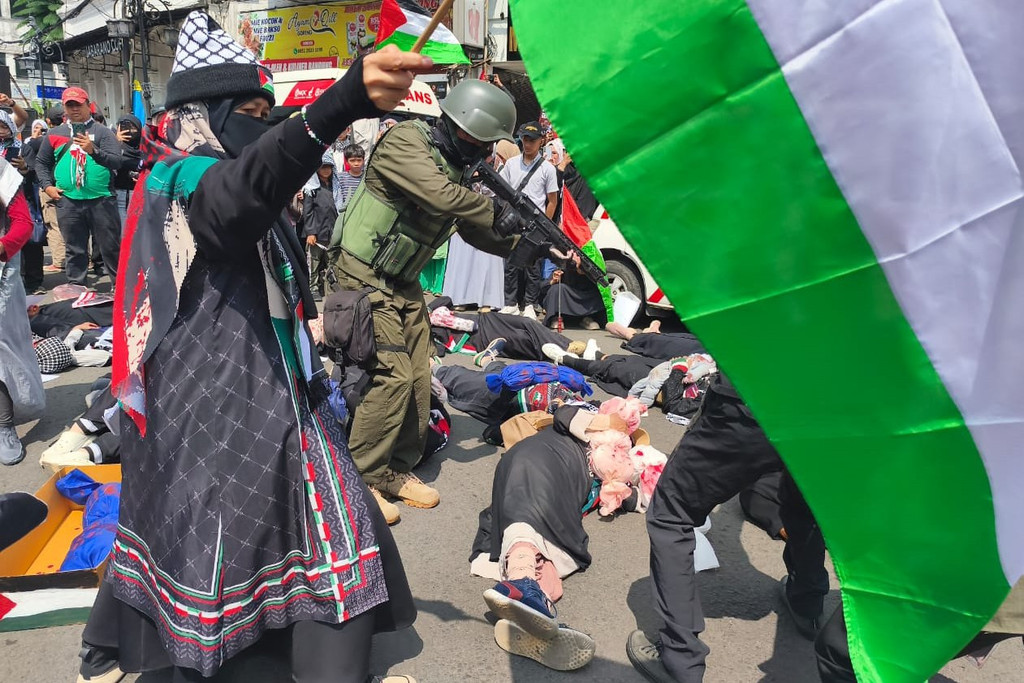
Watching street theatre action by Performing Arts Solidarity for Palestine in Bandung, Sunday August 24, 2025. https://kumparan.com/kumparannews/melihat-aksi-teatrikal-solidaritas-seni-untuk-palestina-di-bandung-25itiAbOGAA
However, solidarity must extend beyond mere symbolism; it needs to be transformed into political courage. This is the courage to not only condemn, but also to act—such as severing trade ties that compromise our values and pressuring international institutions to champion justice rather than yielding to vetoes.
It is crucial to acknowledge that Gaza represents more than just one nation. Gaza is a matter of global dignity. Voices from the South must be amplified once more, ensuring that the North understands that domination can no longer masquerade as legitimacy.
The Moral Duty of a New Generation
Today’s challenges differ significantly from those of 1955. At that time, colonialism manifested through ships and flags; now, inequality arises in the form of algorithms, global institutions, and uneven economic cooperation. Yet, the spirit of the struggle remains unchanged: it is about defending those who have no voice and about amplifying the concerns of the silenced.
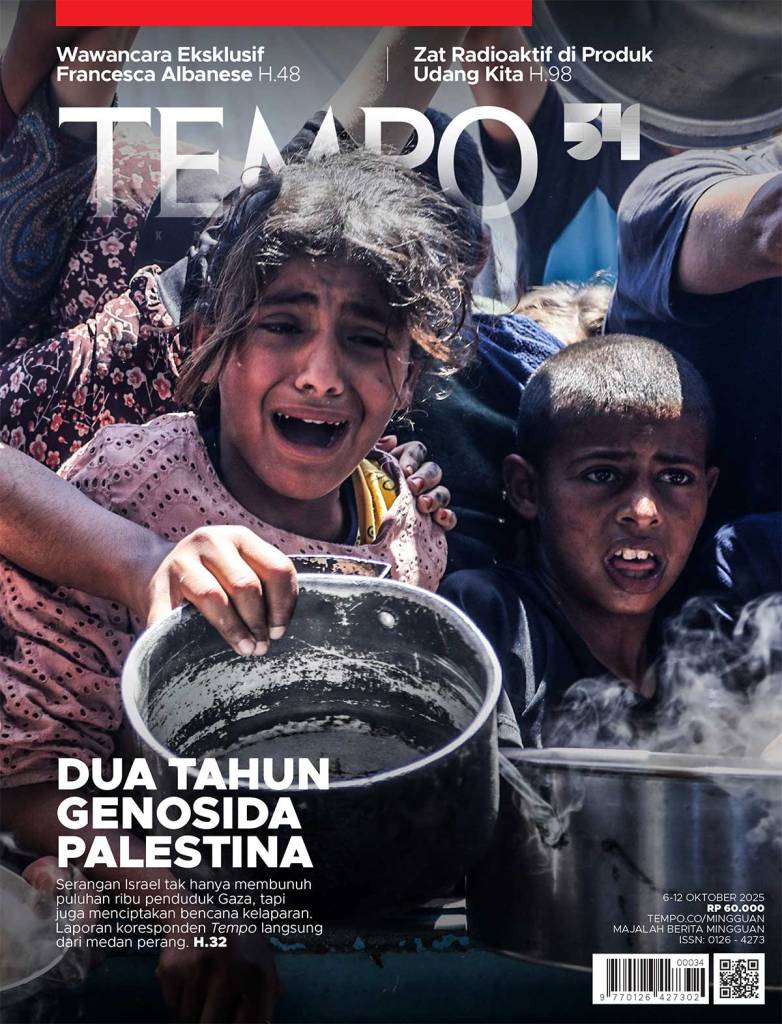
Today’s young generation is no longer merely heir to the spirit of Bandung; they are tasked with re-weaving Asian-African solidarity in a new form—one that transcends conference rooms to thrive online, within communities, and through everyday actions.
We can no longer be content as sympathizers. The world demands our active participation; we must become actors in this narrative—decisive and engaged.
Digital solidarity must be paired with tangible actions. Sharing must evolve into advocacy. A just world will not emerge spontaneously; it requires effort, expression, and vigilance. We cannot depend on world leaders to always uphold the truth; sometimes, the seeds of change spring from small voices that refuse to be muted.
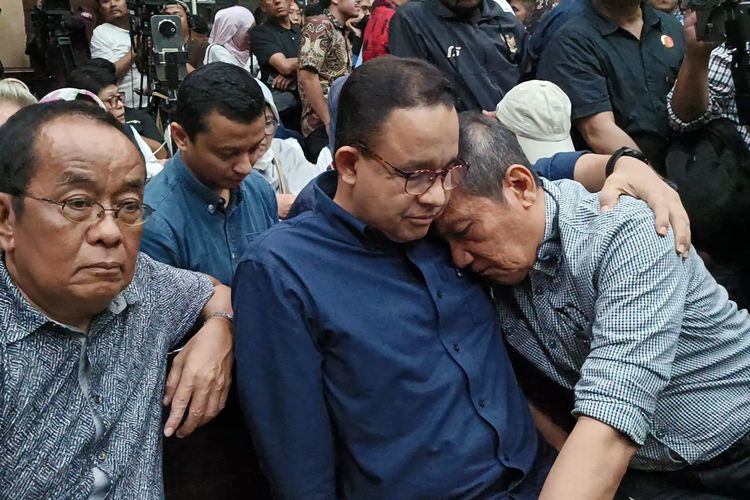
This is the call for all of us. As citizens of a nation rooted in resistance, shaped by suffering, and founded on the principles of independence, each of us has a role in rekindling that spirit of solidarity.
Teachers, instill in your students the understanding that justice is not a privilege, but a fundamental right inherent to all. Artists, channel resistance through color and sound. Students, delve deeper into your studies, spread truth, and refuse to allow false narratives to obscure real wounds.
Traders, make choices that align with your conscience; refuse to support those who exploit life. Social workers, cultivate empathy that reaches across the oceans. Writers, journalists, and speakers, use your words to connect silenced voices.
Solidarity does not have to begin in the halls of power; it flourishes in hearts that cannot endure injustice. If this nation wishes to honor its historical legacy, its citizens cannot remain mere witnesses. We must actively engage in the movement itself.
Do Not Allow the Flame to Go Out
We once stood tall in Bandung, holding our heads high while the world relied solely on strength. Now, we are called back—not by conference invitations, but by the cries of humanity trapped beneath the rubble.
We must not allow Gaza to become a mere footnote in the history of Asian-African solidarity. Our legacy should not be one of indifference, where our names are recorded as a nation that merely observed as justice was sought and lives were lost.

The children of Gaza do not need mere tweets of sympathy; they are waiting for courage. They are waiting for the Global South to rise as it once did—not only to condemn, but to resist. Not merely to watch, but to defend.
We can choose silence, but history does not honor those who remain voiceless.
If the fire of Bandung was once blazed to reject colonialism, let this generation be the one to rekindle that flame—until the light of justice shines through, in Gaza and across the globe.
This post is based on https://analisis.republika.co.id/berita/svb2vw393/solidaritas-asia-afrika-luka-gaza.
In related news:




 Stories From Indonesia
Leave a Reply