
Like those shoes never bought, the reason for pardoning will never be explained
By Adekamwa, Makassar National Institute of Public Administration College of Public Administration Polytechnic, Suara Merdeka, Aug 4, 2025
In recent days Indonesia’s digital public space has been abuzz with discussion of President Prabowo Subianto’s decision to grant abolition (or clemency) to recently-jailed former opposition presidential campaign manager, Tom Lembong, and amnesty to recently-jailed Indonesian Democratic Party of Struggle secretary-general, Hasto Kristiyanto.
The decisions are legally valid and have a strong constitutional basis. However, of particular interest is not just the decisions themselves, but how the public has responded to them. Reactions have come from academics, politicians, and members of the general public who are active on social media.
As reported by the media, President Prabowo is seen as understanding that both Tom Lembong and Hasto Kristiyanto have been victims of criminalization. The pardon granted to Lembong wipes out all the legal processes that have ensnared him. It also serves as a strong signal about the direction of the national reconciliation that the new government has been building. In his statement, President Prabowo even invited the public to remain critical, emphasizing that the country belongs to everyone, not just those in power. This open statement reflects the belief that Indonesia’s democracy still leaves room for dialogue.
However, this is where the challenge lies. Some members of the public have welcomed the decisions to pardon and to grant amnesty as a form of moral courage, while others have interpreted them as a political compromise.
In this situation the greatest challenge is not only about policy communication, but also in the public’s literacy regarding the concepts, mechanisms, and implications of pardon and amnesty themselves. The public often makes instant judgments, seeing issues as black or white.
The Complexity of Government Policy and the Need for Community Understanding
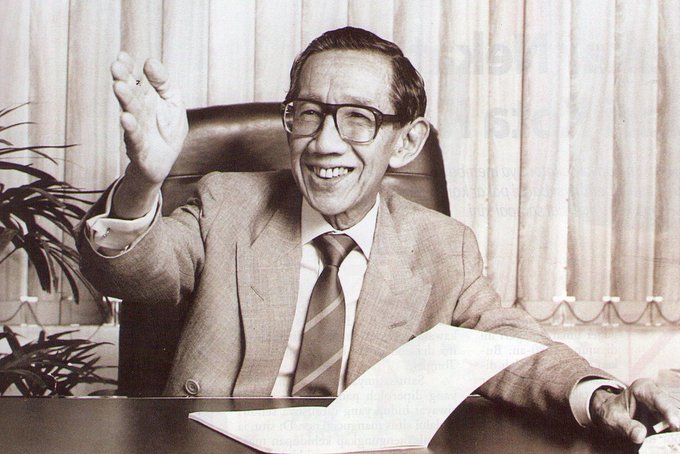
Government policies operate across a complex spectrum. Much of the public still does not understand the differences between clemency, abolition, and amnesty, either legally or socially. This lack of understanding shows that policy communication has not fully reached its educational aim. When public literacy is low, discussion spaces are easily dominated by sentiment, rather than reasoned arguments. In situations like this we long for exemplary national figures, such as former founding Vice President, Mohammad Hatta, a statesman who prioritized integrity, even in the middle of personal conflicts.
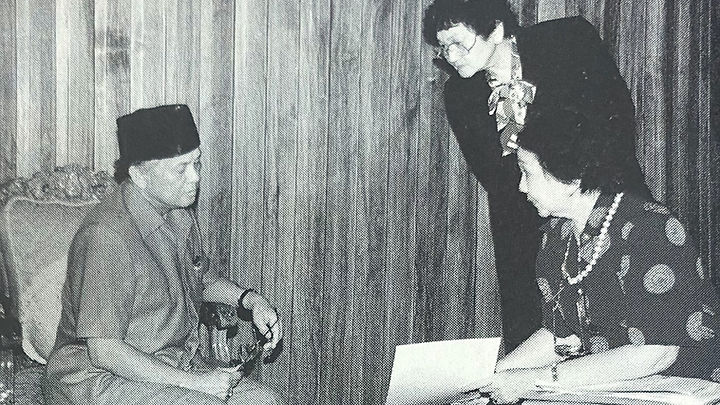
In the short documentary “For One Secret” (Demi Sebuah Rahasia) produced by the Anti-corruption Education Center of Indonesian’s anti graft agency (KPK), Mohammad Hatta refuses to disclose official secrets to his own wife. His refusal was not born out of fear, but rather was based on his commitment to ethics and public accountability. He demonstrated that true leadership means mastering oneself, even when temptations arise from one’s own family. Hatta’s stance is relevant today as public officials face a variety of pressures—political, social, and emotional. When morality becomes a commodity, commitment such as Hatta’s serves as a rare source of inspiration that does not require a stage to showcase honesty.
The episode serves as a reminder that policy transparency demands that public officials possess moral integrity and a commitment to honestly disclose data to the public. As a public relations practitioner, the present author understands that the challenge of policy communication today lies not in the quantity of information shared, but in how the community understands it.
The decision to pardon Tom Lembong could serve as a starting point for strengthening public policy literacy.
The Need for Educational Policy Communication
Relevant ministries and institutions must provide educational explanations of decisions and policy. This can be achieved through infographics, easily understandable legal narratives, or public discussions with experts, allowing society to see the issues from a more comprehensive and clearer perspective.
Certainly every policy carries the risk of misinterpretation. However, allowing confusion to grow without proper communication material will only widen the gap between the government and citizens. Between public expectations and policy design, there exists a communication space that needs to be continuously serviced. We cannot force everyone to agree, but we can ensure that the community receives complete and clear information.
Let us take a leaf from the book of Mohammad Hatta, who resisted the desire to buy his dream Bally shoes in favor of a simpler life. He never owned those shoes right to the end of his life. From this story the present writer realizes that true integrity is born from choices to remain faithful to principles. Such moral commitment should be the foundation of every form of service we undertake. God willing.
This post is based on https://www.suaramerdeka.com/opini/0415659803/sepatu-itu-tak-pernah-dibeli-abolisi-itu-tak-pernah-dijelaskan.
In related news:
Indonesian political communication expert, lecturer, author, and media commentator, Hendri Satrio, reveals the backstory behind the pros and cons of pardoning Tom Lembong and granting amnesty to Hasto Kristianto with podcast host Abraham Samad on “Abraham Samad SPEAK UP”. Hendri is the president director of Kedai Kopi.
- https://nasional.kompas.com/read/2025/08/09/21353351/putusan-prabowo-beri-ampunan-untuk-hasto-dan-tom-lembong-disebut-punya
- https://nasional.kompas.com/read/2025/08/04/06562701/pdi-p-yakin-prabowo-tak-mudah-putuskan-beri-amnesti-untuk-hasto
- https://nasional.kompas.com/read/2025/08/09/08472741/prabowo-dinilai-raih-simpati-publik-lewat-abolisi-tom-lembong
- https://www.scmp.com/week-asia/people/article/3320966/forgive-and-forget-prabowos-pardons-divide-indonesia
- https://www.suaramerdeka.com/nasional/0415653034/alasan-di-balik-pemberian-amnesti-dan-abolisi-presiden-prabowo-hasto-kristiyanto-dan-tom-lembong-langsung-bebas



Leave a Reply