Journalism is Cheap, Living is Expensive
Photo Essay by Muni Moon for Project Multatuli
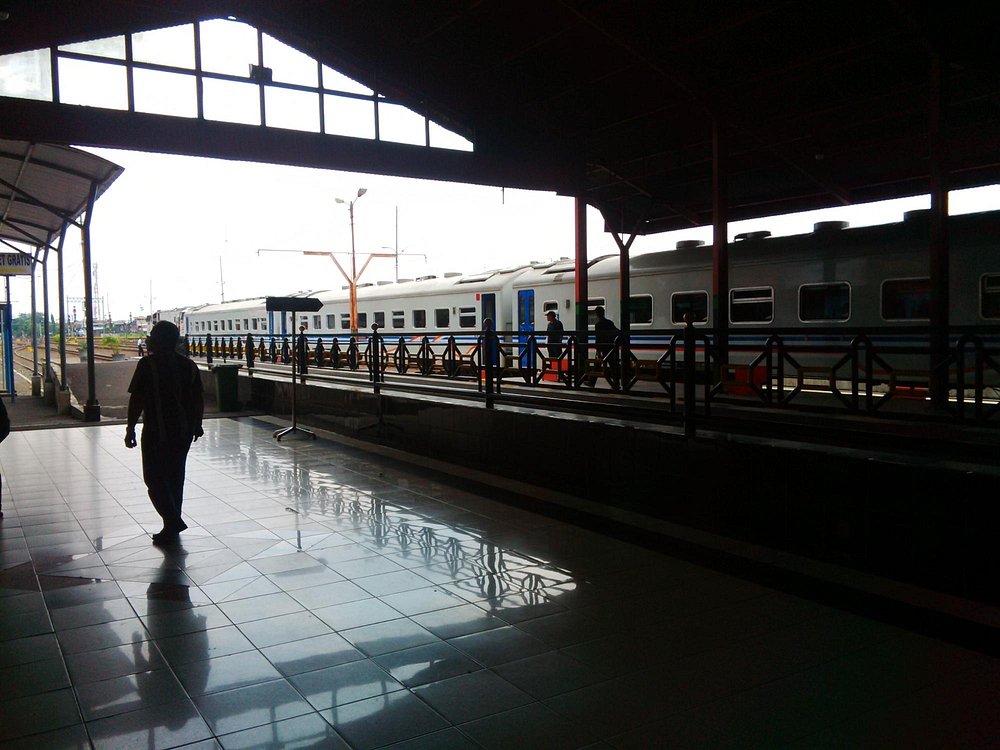
Deasy Arifah Anggraini, a journalist in East Java, was still in the parking lot near Pasar Turi railway station in the province’s capital city Surabaya, even though it was late at night. Her car engine was off, but her cell phone remained on standby. She wasn’t waiting for sources, or hunting for news directly out in the field. She was waiting for customers for online taxi rides.
This is Deasy’s daily routine: from morning until noon, she is employed as a journalist for an online media outlet in Indonesia’s East Java province (population 42 million), and at night, she drives for an online taxi service. She juggles two careers not by choice, but because her primary profession as a journalist is insufficient to cover her electricity bills, her children’s school fees, and pay for daily food.
“I work in a pressurized media company. I have to meet advertising targets and news quotas,” Deasy explains. “Now I enjoy driving more. There’s no burden.”
Despite the less-than-ideal conditions, Deasy persists in journalism because she understands the importance of the profession to the public. However, the reality of journalism is increasingly far from the ideal she once imagined.
She feels her current work in journalism is more akin to chasing deadlines, often needing to write thirty articles a day, which prevents her from creating in-depth stories.
“The feeling isn’t there. You come in, check this, check that, interview, type it up, and it’s a story. Truly in-depth journalism doesn’t exist,” she remarks.
Even more distressingly, writing has become undervalued. “Some stories pay five thousand rupiah (around 30 cents). Some pay ten thousand rupiah,” she says quietly.
At this point, she believes that intellectual and critical work is treated like piecework. It’s not just about the pay; the entire process is increasingly losing its meaning.
Throughout her career as a journalist, she has also worked as a trash scavenger, a domestic worker, and finally, an online taxi driver. She has persevered along this difficult path, fully aware of the challenges. “I realize the media can’t make you rich, but my soul is in it,” she says.
***
Early in the morning in Surabaya, Tri Rezeki Ambarwati prepares dough for spring rolls. Her hands deftly roll the thin pastry skins and fill them with bamboo shoots and chicken, then arrange them neatly on the table. Soon, the smell of hot oil fills the kitchen. Amid these activities, she holds an online meeting with her work partner and occasionally checks her phone, responding to messages from her students.
Tri isn’t just a housewife selling snacks; she’s a senior journalist, television presenter, lecturer at a private university, and spring roll vendor. She manages all these roles not out of ambition, but out of necessity.
“A journalist’s salary isn’t enough,” Tri says, without complaint. “It’s manageable, but it’s hard.”
Tri approaches journalism as a full-time job. She began her career at national television station Liputan 6 SCTV in Surabaya in 1997. During her tenure, her skills and mentality were sharpened, as she often worked in the field, reporting live from a variety of locations.
For example, during the 2002 Bali Bombings, she was assigned to provide live coverage. “I witnessed the Bali Bombings firsthand, and I’m grateful to have reported on it. The humanitarian lessons were immense,” she says.
However, that significant experience hasn’t always translated to financial well-being. At that time, she was even paid below the official minimum wage. She also never understood the salary structure, as each reporter received different pay. “We were never told about the salary range.”
After working for SCTV for about seven years, she transitioned to the national media conglomerate MNC Group. At the same time, she commenced as a lecturer in 2000. This situation became increasingly challenging, especially as she was now a single parent.
“I started teaching because I wanted to actualize myself, and also due to financial needs,” she explains.
While teaching and working as a journalist, she also sold frozen spring rolls to support her family. Even so, she still treated journalism as her primary profession. “Journalism is a primary job, not a profession that can be outsourced.”
Unfortunately, after 21 years in journalism, Tri was laid off in May 2025.
***
The welfare situation of journalists like Deasy and Tri is far from new in Indonesia’s media industries. Unfair wages, unclear employment statuses, and unreasonable work demands have long been persistent issues.
According to labor regulations, these conditions should not exist. Andre Yuris, Chairman of the Alliance of Independent Journalists (AJI) in Surabaya, pointed out the increasingly ambiguous nature of the work relationship. “The law doesn’t include the term ‘contributor’; it only mentions ‘freelancer,’” says Andre.
In practice, contributors are treated like freelancers, but lack the associated benefits. They are often required to work exclusively for one media outlet, yet they aren’t paid a living wage. They cannot negotiate prices, and they do not receive any worker protections.
“If they work exclusively for one media outlet, the question is simple: is their pay sufficient? If it’s not enough, then why are they prohibited from working for other media outlets?” Yuris questions.
In an ideal situation, contributors should work for one media outlet and receive at least the official provincial minimum wage. However, the reality is quite the opposite: they are paid per story, often without a clear contract and without social security.
“The regulations are actually adequate. The issue isn’t a lack of regulations, it’s rather the non-compliance of media companies,” Andre believes.
In her advocacy for journalists, Salawati Taher, an advocate from the Legal Aid Institute (LBH), identifies the primary issue not as the physical violence or the criminalization, but as the absence of clear employment contracts.
“Many journalists work without contracts, or even when they do have contracts, the agreements do not align with their actual work practices,” Taher explains.
The issue leads to three major problems. First, employment status is deliberately kept unclear. Journalists are labeled as contributors or freelancers, even though they work daily, receive routine assignments, and often have exclusive agreements.
“This isn’t freelance; this is casual daily labor without clear rights and obligations,” says Taher.
Second, the lack of a contract creates a vulnerability to retrenchment and unilateral layoffs. “These layoffs can occur suddenly because there is no legal foundation for them to rely on,” Taher explains.
Third, the absence of an employment contract stifles courage. When journalists’ livelihoods depend on uncertain work, exercising critical thought becomes too risky. For Taher, the diminishing value of journalism isn’t just a media industry problem; it also reflects the country’s political choices. In her view, journalists living in economic uncertainty create a favorable situation for those in power.
“Vulnerable journalists are more easily controlled. They lack the room to push back, because their own lives are not secure,” says Taher.
Andre views this practice as a form of normalizing violations. If this situation continues unchecked, not only will journalists suffer, but journalism as a whole will be adversely affected. He fears that journalism will ultimately become a tool of power, where work continues and news is published, but critical thinking is suppressed.
“They don’t need critical journalists; they need a situation that is ordered and controlled,” Andre concludes.
This post is based on Jurnalisme Murah, Hidup yang Mahal from Project Multatuli.
* Muni Moon is a photojournalist from Surabaya in Indonesia’s East Java province. In this photo essay, she examines the declining interest in journalism majors among higher education students. She investigates whether young people are more drawn to becoming content creators than journalists. Many journalists are forced to take on side jobs to make ends meet. Despite understanding that journalism does not offer them financial security, they continue to pursue the profession out of personal ideals. Featured image credit: Pasar Stasiun Turi by Aang95 via tripadvisor.co.id.

 Stories From Indonesia
Leave a Reply