
From Populist to Opportunist? The Political Moves of Indonesia’s President Joko Widodo
By Made Supriatma, November 14, 2023
President Joko Widodo’s recent moves have left many startled. As the sun begins to set on his reign, he is striving to retain power. He has taken a variety of overt and covert measures to cling to power.
There was chatter about his efforts to stay in power for a third term, despite Indonesia’s constitutional two term limit. When this failed, his aides flew the idea of extending his presidential term by two or three years, citing Indonesia’s economic distress caused by the Covid-19 pandemic, and the need to complete critical national projects such as urban development, and the relocation of the nation’s capital. This approach also faltered.
Statutory age requirement
But Jokowi (as President Joko Widodo is widely known) did not give up. This time it was son, Gibran Rakabuming Raka, the relatively new mayor of the Central Java city of Solo for just two years and ten months, who emerged as a candidate for vice-president alongside Widodo’s Defense Minister, and former army general, Prabowo Subianto. When Gibran faced the obstacle of the statutory minimum age requirement for a vice-presidential candidate, a student filed a lawsuit with Indonesia’s Constitutional Court seeking to amend the law.
Uncle Chief Justice
The fallout has been a politically charged drama. The Chief Justice of the Constitutional Court, who is also President Joko Widodo’s brother-in-law and Gibran’s uncle, was ultimately dismissed after successfully amending the statutory minimum age requirement for vice-presidential candidates. Public sentiment has been highly negative toward Gibran’s candidacy.
Throughout the episode, few have asked the question why has Joko Widodo transformed from a populist politician into one trying to take maximum advantage of every opportunity to stay in power.
The populist politician
Joko Widodo rose to power because of his populist politics, a term with different definitions, but fundamentally understood as a politics that is non- or even anti-elitist. He was the antithesis of the elite-dominated political landscape in Indonesia, representing the people. To the common people, “Jokowi” was seen as “one of us,” capable of leading and by passing the elite.
The image president
However, this did not mean that President Joko Widodo lacked elite support. Progressive urban liberals adored this native son of the city of Solo. For them Joko Widodo symbolized equal opportunity. He embodied the ideal of simple origins, progressing, holding progressive views, with a vision of advancement and someone who valued diversity highly.
Social safety net programs
He appeared remarkably unassuming, relishing in mixing with common folk at markets, farms, fish markets, and other places. The majority of the nation’s populace, captivated by this approach, found him appealing. He also consistently helped the underprivileged as part of his social safety-net programs.
Developmentalist
At the same time, Joko Widodo was a developmentalist. As a businessman, he recognized that the nation’s prosperity hinged on improving the market economy, especially through infrastructure development. He embarked on building a variety of transport facilities and revitalised infrastructure that the private sector couldn’t address.
Technocratic populist using state-owned enterprises
Unlike typical politicians, Joko Widodo didn’t hand over these infrastructure projects to the private sector. In the past, politicians would often collude with private entities securing projects, leading to inflated costs and below standard quality. He functioned as a technocratic populist, utilizing state-owned enterprises to roll out infrastructure projects. These entities, styled as “companies,” were state-owned, even raising capital by issuing bonds.
Soaring foreign debt
Overall, Indonesia’s foreign debt escalated. By the end of President Susilo Bambang Yudoyono’s term of office in 2013, Indonesia’s foreign debt stood at US$293.3 billion or Rp4,522.12 trillion. By January 2023, it had surged to US$404.87 billion, equivalent to Rp6,241.84 trillion. These figures exclude state-owned enterprise debts used for infrastructure projects.
Most presidents have formed their own political party
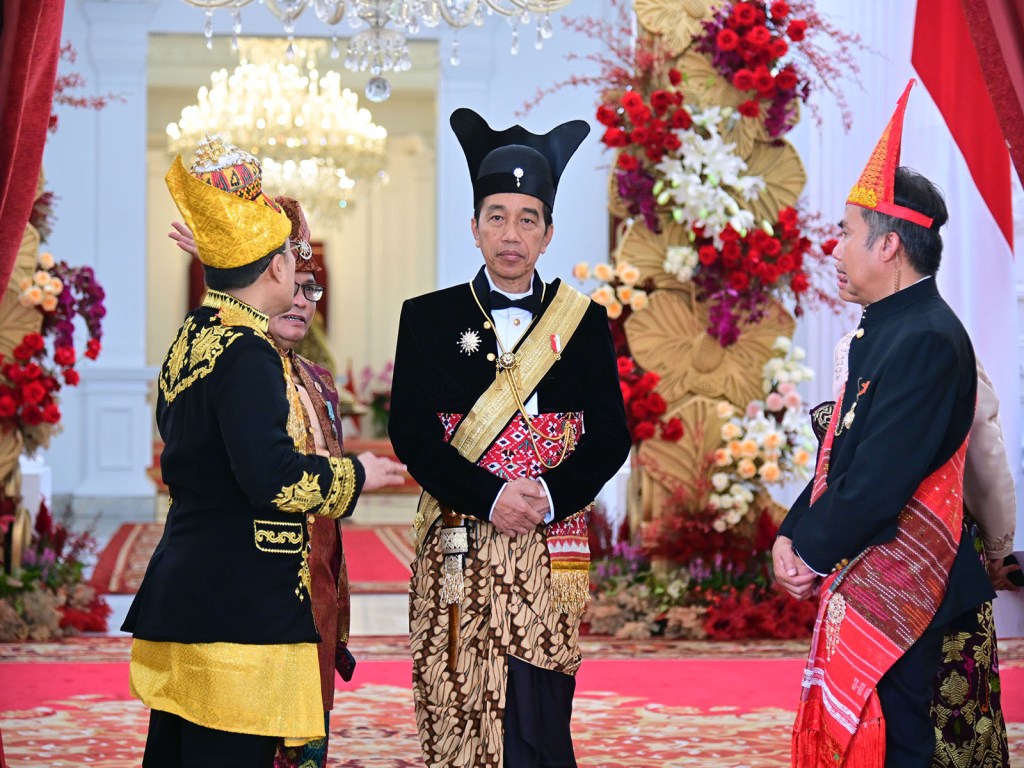
When it came to politics, Joko Widodo split from other politicians. Since the transition from authoritarian New Order President Suharto in May 1998, nearly every president since has started their own political party. President Abdurrahman Wahid (popularly known as Gus Dur) established the National Awakening Party (PKB) (later headed by Islamic democracy activist and politician Muhaimin Iskandar); Megawati founded the Indonesian Democratic Party of Struggle (PDI-P); and President Yudoyono created the Democratic Party (PD). On the other hand, Joko Widodo did not have his own party, with his political career advancing under the banner of Megawati’s PDI-P.
Refuse to establish own party
Widodo has had volunteer supporter movements, as distinct from a political party, with ideologies and officials from the national level down to the village and even neighborhood level. His activist volunteers have urged him to establish a party, a proposal he has rejected.
Political maneuvers
Joko Widodo has also excelled at political maneuvering. During his second term, he successfully brought together the majority of political parties into a coalition to support his government, and negotiated with the major political forces to secure an almost absolute majority of support for his government.
He negotiated, granting desired ministerial portfolios to the various political parties. To retain his volunteer base, Widodo has rewarded members of his campaign volunteer organizations with positions such as state-owned enterprise commissioner and deputy minister posts. Only one volunteer campaigner has become a minister, and that too came toward the end of his term in office.
Joko Widodo’s second term saw little significant upheaval. He convinced the major political parties of the importance of stability. He embraced his former political adversary, former army special forces general Prabowo Subianto, appointing him Defense Minister, effectively resurrecting Prabowo’s all but extinguished political career.

Limiting freedom of speech
In addition, Joko Widodo has tightened control over the population. Unlike President Soeharto, who enforced economic growth under military coercion, Joko Widodo has achieved this by limiting freedoms, such as freedom of speech (through the Electronic Information and Transactions (ITE) Law). In addition to controlling opposition and criticism, he has bolstered his position with social media forces (so-called buzzers and influencers) who have been ready to spin online narratives about his government’s success.
Infrastructure of repression
Joko Widodo further shielded political and economic elites through amendments to the law regulating the Corruption Eradication Commission (KPK), labor relations (through the Job Creation Law), and revisions to Indonesia’s Criminal Code. These legal regimes essentially form an “infrastructure of repression,” safeguarding elites while managing the population.
Nationalist showcase
The combination of controlling the population, and compromise with elites, yielded maximum results for Joko Widodo’s government. He operated largely unimpeded, shielded by an overwhelming approval rating. He also heightened nationalist fervor through seemingly prestigious projects, such as the Mandalika motor race, the grandeur of the G-20 summit in Bali, extravagant celebrations at the ASEAN summit in Jakarta, and more.
Joko Widodo’s second term will conclude in October 2024. His political maneuvers and unorthodox methods have raised eyebrows, especially among international observers. Indonesia’s path ahead depends on how Joko Widodo’s legacy shapes the nation’s political landscape, and if he continues to influence the next government even after he steps down.
Made Supriatma is a political analyst and academic based in Jakarta.
This post is based on Langkah Politik Jokowi: Dari Populis ke Oportunis? – Project Multatuli from Project Multatuli. Featured image credit: Excerpt from Lukisan Konoha I karya Yos Suprapto https://kumparan.com/hidayat-adhiningrat1500207974176/konoha-telanjang-di-pameran-yos-suprapto-249KDqp0170/4.
In related news:

 Stories From Indonesia
Leave a Reply