Indonesia Faces a Crisis of Role Models, As Rules Are Cast Aside
By Budiman Tanuredjo, Senior Journalist, Kompas.com, April 2, 2025
“How do colleagues overseas perceive academia in Indonesia? If they no longer trust Indonesian academics that’s a serious problem. Academics have nothing other than their good name. Once that’s gone what do they have left? That’s what’s so troubling.”
During a recent conversation on my podcast the Chancellor of the Islamic University of Indonesia in Yogyakarta, Fathul Wahid, voiced his deep concern over the state of the nation. The country is not doing well. Problems continue to pile up and there are no resolutions.
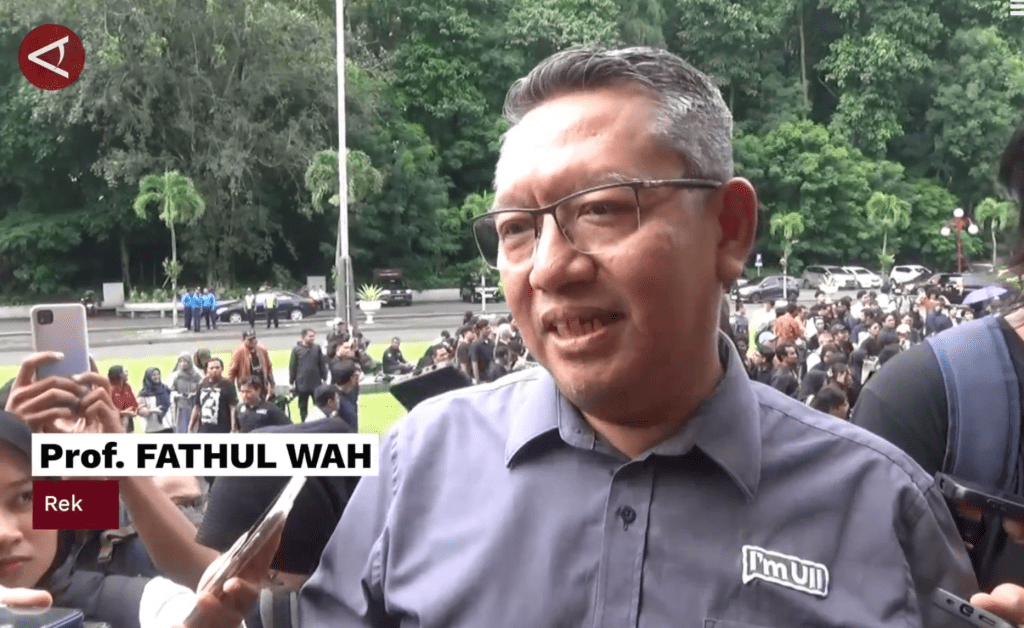
For Fathul Wahid the core of Indonesia’s troubles lies in a single loss: the disappearance of moral examples. And yet, this is a nation that once had Mohammad Hatta. It once had Agus Salim. It once had Hoegeng Iman Santoso. It once had Baharuddin Lopa.
These were figures of unshakable integrity. People who lived in alignment with their words, who drew a clear line between what was theirs and what was not. They held fast to their personal principles even while living modestly.
Today, corruption, nepotism, favoritism, and money politics aren’t just committed by those at the top—they’ve spread to those further down the ladder. Leaders, the very people expected to set examples, openly violate the rules, normalize misconduct, and even flaunt their deceit with pride.
Indonesia is running dangerously low on figures worth emulating. Once, the country had an abundance of honorable people to look up to—in civic life, in politics, and in governance. Today, laws meant to be upheld are being sidestepped. The Law on State Ministries clearly forbids ministers from holding multiple positions, yet the breaches are tolerated. Even more troubling is the failure of the legislature to act.
The House of Representatives, which is tasked with oversight, is itself suffering a breakdown. Multiple ministers and deputy ministers hold positions as [company] commissioners in state-owned enterprises, and the legislature does nothing.
The government is making a public spectacle of its ability to override the law. How did we run out of good people? According to Fathul, many public figures today simply don’t live up to their words. They say one thing then do another. They preach anti-corruption, but they turn a blind eye—or worse, they take part in the very behavior they condemn. In other words they’re hypocrites.
“That’s what’s frightening. In the end it becomes difficult to know who we can trust. And when public trust declines on a national scale it’s a sign of serious trouble,” Fathul said. A leader who can’t live up to his or her own words risks more than personal discredit—they jeopardize the credibility of the institutions they represent. If this continues, Fathul warned, it could lead the country toward a truly dangerous future.
“But as people of conscience and faith we’re taught not to despair. We have to remain optimistic and find a way forward. In my view one point of entry is through education,” he said.
By education, Fathul meant all levels—from early childhood to primary school to university. The priority, he argued, must be instilling moral values. The hope is that by the time a young person finishes their education those values are already deeply embedded.
“That becomes easier when the ecosystem outside the campus mirrors those values too—when we see improvements across multiple levels of society,” he explained.
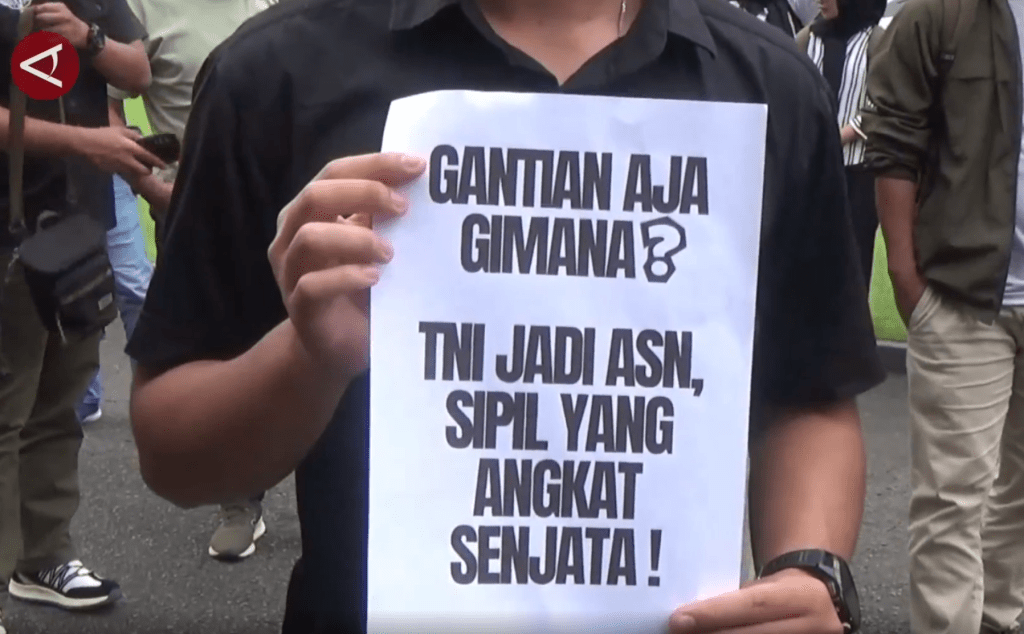
Unfortunately, not every educational institution has remained true to its mission. Some universities have already been compromised, bought out, or held hostage by private interests. The values, ethics, and morals nurtured within the educational environment must be actively protected, or the system risks decay—especially if that decay begins from within.
“Take, for example, what happened on a university campus in Jakarta recently. If that becomes a precedent, and all universities across Indonesia go the same way, just imagine how our colleagues abroad will perceive Indonesian academia. If they stop trusting Indonesian academics, that’s a serious problem.
Academics don’t have wealth. All they have is their reputation. If they sell that off, what do they have left? That’s what’s so alarming,” Fathul said.
The rot within government—whether we admit it or not—is already entrenched. That’s why substantial reforms are needed. For example, making decisions that are not only more consistent with international norms, but also more logical and acceptable to basic common sense.
The metric is simple: if a policy is truly sound and beneficial, the public won’t reject it en masse—there won’t be a flood of online petitions pushing back.
Fathul sees widespread industrialization across various sectors of life today—including politics, the legal system, and education itself. The education sector is increasingly infiltrated by the power of capital. It’s been transformed into a marketplace, a commodity.
What we’re witnessing, he argued, is educational neoliberalism. “The result is a series of approaches that to varying degrees have eroded the core values of the university. One example is the commercialization of higher education in the name of sustainability—chasing funds and the like.
What happens then? Bright students with strong intellectual potential but without financial resources lose their chance,” Fathul said.
Resisting educational neoliberalism might seem like a tall order. Still, universities can make small stands, showing that their hearts and visions remain rooted in the mission of education and the development of young people. For instance, lecturers can prioritize publishing in peer-reviewed journals indexed by Scopus.
Research shouldn’t be undertaken solely for rankings or accreditation. Instead it should contribute to knowledge, build public awareness, and ultimately improve human well-being. Universities must also ensure that economically disadvantaged communities still have access to higher education. The opportunity to pursue a university degree must remain open to all segments of society.
This article is based on https://nasional.kompas.com/read/2025/04/02/06000011/indonesia-krisis-keteladanan-aturan-dipinggirkan.

In earlier news…
Constitutional Court Reaffirms Ban on Dual Roles, Including for Deputy Ministers
JAKARTA, MKRI Public Affairs – Several deputy ministers in the Indonesia Maju Cabinet continue to hold concurrent positions as commissioners in state owned enterprises, despite a Constitutional Court ruling clarifying that such dual roles are prohibited.
In its legal reasoning for Constitutional Court Decision No. 80/PUU-XVII/2019, the Court stated that the prohibition on dual positions outlined in Article 23 of Law No. 39/2008 On State Ministries—originally directed at ministers—must also apply to deputy ministers. Although deputy ministers assist in leading ministry functions, the Court noted that, because their appointment and dismissal fall under the President’s prerogative—just like ministers—they should be regarded as high-level state officials, subject to the same legal restrictions.
Despite the ruling being read on August 27, 2020, several deputy ministers have remained in dual roles. This prompted Viktor Santoso Tandiasa, a practicing lawyer, to challenge the constitutionality of Article 23 of the State Ministries Law. The preliminary hearing for Case No. 76/PUU-XVIII/2020 was held on Monday, September 28, 2020.
Article 23 of the law states: “Ministers are prohibited from concurrently holding positions as: a. other state officials, as regulated by law; b. commissioners or directors of state-owned or private enterprises; or c. leaders of organizations funded by the State Budget (APBN) and/or Regional Budgets (APBD).”
During the hearing, led by Constitutional Justice Wahiduddin Adams, attorney Yohanes Mahatma Pambudianto, representing the petitioner, argued that even though the Court had ruled the 2019 petition “inadmissible,” its legal considerations (ratio decidendi) should still carry binding weight in interpreting the constitutionality of the current provision.
He pointed to continued instances of deputy ministers serving as [company] commissioners as evidence of role conflict that undermines ministerial integrity and the chain of command. According to the petitioner—who also served as legal counsel in the 2019 case—President Joko Widodo and the Minister for State-Owned Enterprises have failed to understand or comply with the legal force of the Constitutional Court’s ruling.
The petitioner has asked the Court to declare that Article 23 of the State Ministries Law remains constitutional but must be interpreted to include deputy ministers within the scope of the term “minister.”
Court Questions Legal Standing of Influencer
In response to the petition, Constitutional Justice Suhartoyo urged Viktor to strengthen his legal standing—particularly since Viktor identified himself as an “influencer.”
“As an influencer who often promotes constitutional awareness, you may have a wide audience,” Suhartoyo said. “But have you ever specifically addressed the issue of deputy ministers holding multiple positions? This needs to be demonstrated before the Court.”
Echoing this, Justice Manahan M.P. Sitompul asked the petitioner to more comprehensively explain his legal standing and to clearly connect the challenged norm with any constitutional harm he has personally suffered.
Panel Chair Justice Wahiduddin Adams further cautioned the petitioner to clearly define what being an “influencer” means in this context. He noted that this is a novel category in terms of legal standing, and the Court must be persuaded by detailed arguments about the constitutional injury involved.
“Don’t let this be just an effort to boost your follower count,” Wahiduddin said. “That would discredit the Court.”
Before adjourning the session, Justice Wahiduddin announced that the petitioner would have 14 days to revise and resubmit his petition. The final deadline was set for Monday, October 12, 2020.
Writer: Utami Argawati, Editor: Lulu Anjarsari, Public Relations: Raisa Ayuditha Based on https://www.mkri.id/index.php?page=web.Berita&id=16611.
In related news:
- https://nasional.kompas.com/read/2025/03/08/03150081/peringatan-dari-uii-yogyakarta-keteladanan-elite-sirna
- https://scholar.google.com/citations?user=6FWua6EAAAAJ&hl=en
- https://khazanah.republika.co.id/berita/q98ob0385/al-gazali-al-farabi-hingga-cak-nur-diskusi-mencerahkan
- https://www.tempo.co/politik/rektor-uii-sebut-presiden-prabowo-belum-sentil-soal-demokrasi-yang-anjlok-dan-masalah-korupsi-1220096
- https://www.ft.com/content/42fb76f5-1217-4ecc-8a6b-b2ba6044da99


 Stories From Indonesia
Leave a Reply