
Finalist for OCCRP’s 2024 “Person of the Year” in Organized Crime and Corruption, from Asumsi.co
By Yopi Makdori for Asumsi.co, December 31, 2024
Former Indonesian President Joko Widodo has been named one of the world’s most corrupt figures of 2024 by the Organized Crime and Corruption Reporting Project (OCCRP), a global non-profit organization dedicated to combating corruption and organized crime.
The OCCRP has listed the former Jakarta governor and Indonesia’s recently outgoing president as a finalist for its 2024 “Person of the Year” in Organized Crime and Corruption. Joko Widodo shares the dubious distinction with several other controversial global leaders, including Kenyan President William Ruto, Nigerian President Bola Ahmed Tinubu, former Bangladeshi Prime Minister Sheikh Hasina, and Indian businessman Gautam Adani.
The selection process involved input from journalists, the public, and a panel of judges, all of whom deemed Joko Widodo among the world’s most corrupt figures.
“We solicited nominations from readers, journalists, Person of the Year judges, and other members of OCCRP’s global network,” the organization said in its announcement on Tuesday, December 31, 2024.
Assad Crowned Most Corrupt Leader
This year’s title of “Most Corrupt Person of the Year” was awarded to former Syrian President Bashar al-Assad, recently ousted by opposition groups. Assad’s regime was deemed a bastion of organized crime and widespread corruption.
The OCCRP cited Assad’s centralized control, repressive governance, and reliance on a powerful security apparatus as hallmarks of his regime. During the Arab Spring uprisings of 2011, Assad’s forces were accused of extensive human rights abuses, including torture, mass killings, chemical weapon use, mass detentions, and targeting of civilians.
The Assad family, in power since 1970, was reportedly financed through the production of Captagon, an illegal drug, along with other organized crimes such as human trafficking, cigarette smuggling, artifact theft, and arms trading.
“Assad’s tenure has spread violence, narcotics, and corruption throughout the region,” said the OCCRP. A joint investigation in 2023 by the OCCRP, BBC News Arabic, Suwayda24.com, and Daraj.com revealed how Syria’s decline into a narco-state under Assad’s leadership brought his drug cartels into conflict with security forces in Jordan and Lebanon.
Alia Ibrahim, a judge and founder of Daraj.com, accused Assad of irreparably damaging Syria’s political, economic, and social fabric. “The destruction caused by Assad, both within Syria and across the Arab region, will take decades to repair,” she said.
“Beyond being a dictator like his father, Assad added an unimaginable dimension of crime and corruption, devastating countless lives even beyond his country’s borders,” Ibrahim added.
No Details on Former President Joko Widodo
Unlike Assad, the OCCRP did not provide any detailed allegations about the other finalists, including Indonesia’s recently retiring two-term president Joko Widodo.
Since 2012, the OCCRP has annually awarded its “Person of the Year” title to figures associated with organized crime and corruption. Previous recipients include Guatemalan Attorney General María Consuelo Porras in 2023, Russian President Vladimir Putin in 2014, Azerbaijani President Ilham Aliyev in 2012, and former Philippine President Rodrigo Duterte in 2017.
This post is based on https://asumsi.co/post/98664/jokowi-jadi-finalis-person-of-the-year-kejahatan-terorganisir-dan-korupsi-versi-occrp/.
In earlier news…
Attorney General’s Office Stunned by Discovery of Nearly $63 Million in Cash and 51 Kg of Gold in Ex-Supreme Court Official’s Home
By the Editorial Team at Kumparan.com, October 25, 2024
The Indonesian Attorney General’s Office (AGO) conducted a search of the home of former Supreme Court official Zarof Ricar in Jakarta, uncovering nearly IDR 1 trillion (approximately US$63 million) and 51 kilograms of gold.
The operation is linked to an investigation into an alleged bribery scheme intended to secure an acquittal for Ronald Tannur in his trial for the murder of his girlfriend Dini Sera Afriyanti. Ronald Tannur is the son of former Indonesian House of Representative legislator Edward Tannur (East Nusa Tenggara II-PKB). (https://id.wikipedia.org/wiki/Edward_Tannur)
The search of Zarof’s home, conducted on October 24, 2024, took place in two locations: Ricar’s residence in South Jakarta’s Senayan area and his accommodation at the Le Meridien Hotel in Bali. “AGO Special Crimes investigators, on October 24, 2024, searched two sites, including Zarof’s home in South Jakarta and a hotel room in Bali, conducting the operation late into the night,” said Abdul Qohar, Director of the AGO’s Special Crimes Investigation Unit, during a press briefing on Friday, October 25.
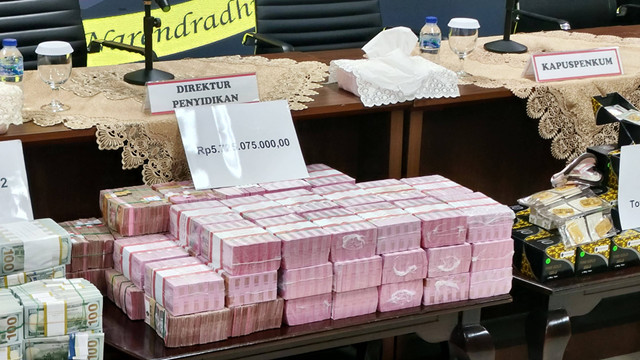
According to Qohar, investigators were astonished by the vast sum of cash they uncovered. “I have to say, even we were surprised,” he said. “We did not expect to find nearly IDR 1 trillion in cash, along with nearly 51 kilograms of gold stored in his residences.”
During the press conference, the AGO presented stacks of cash in multiple currencies, including Indonesian rupiah and US dollars, covering five different currencies. The breakdown is as follows:
- Hong Kong Dollar (HKD): 483,320 HKD (equivalent to approximately IDR 975.5 million, at IDR 2,018 per HKD)
- Euro (EUR): 71,200 EUR (around IDR 1.2 billion, at IDR 16,976 per EUR)
- US Dollar (USD): 1,897,362 USD (about IDR 29.8 billion, at IDR 15,683 per USD)
- Indonesian Rupiah (IDR): 5.7 billion IDR
- Singapore Dollar (SGD): 74,494,427 SGD (equivalent to IDR 885 billion, at IDR 11,880 per SGD)
- Gold: 51 kilograms of Antam-certified gold bars
Investigators suspect the funds and gold were part of illicit payments, including bribes and gratuities received by Zarof, allegedly for facilitating appeals in a variety of court cases, including Tannur’s. Qohar noted, “During his tenure as Head of the [Supreme Court’s] Research and Development, Education and Training Agency, Zarof is alleged to have accepted the illicit payments.”
According to Qohar, all of the assets uncovered—valued at approximately IDR 920.9 billion (US$58 million)—will be subject to further legal examination. Zarof Ricar’s most recent official role was as the head of the Supreme Court’s Research and Development, Education, and Training Agency. He was also given a credit as an executive producer of the recently released film, Sang Pengadil (The Judge).
Tannur Bribery Case
Zarof is alleged to have been promised IDR 1 billion (US$63,000) as a “facilitation fee” by Tannur’s lawyer, Lisa Rachmat, in exchange for expediting the appeal process and influencing the court’s decision. The aim was to ensure Tannur’s acquittal, upholding the ruling from the initial trial. Furthermore, Rachmat is suspected of allocating an additional IDR 5 billion (US$315,000) to bribe the judges handling the case, with funds allegedly to be delivered through Zarof.
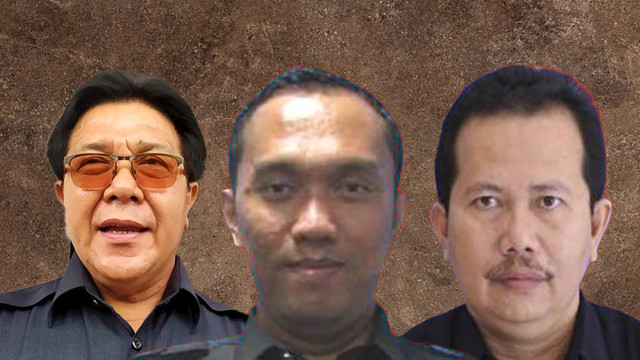
However, the appeal decision did not favor Tannur, who was ultimately sentenced to five years in prison by the Supreme Court on October 22, 2024. The Indonesian Supreme Court has not yet commented on the case, and Zarof has not made any public statements since being arrested.
This post is based on https://kumparan.com/kumparannews/kejagung-kaget-temukan-uang-nyaris-rp-1-t-and-emas-51-kg-di-rumah-eks-pejabat-ma-23mnxvvc88a/full.
In related news:
- https://nasional.kompas.com/read/2024/12/12/10483991/misteri-perjumpaan-zarof-ricar-dan-hakim-agung-soesilo
- https://jakartaglobe.id/news/prosecutors-seize-rp-20-billion-from-judges-who-acquitted-murder-suspect-ronald-tannur
- https://www.thestar.com.my/aseanplus/aseanplus-news/2024/10/29/attorney-general039s-offfice-rearrests-ex-lawmaker039s-son-after-top-court-annuls-surabaya-murder-acquittal
- https://www.thejakartapost.com/indonesia/2024/10/27/ex-supreme-court-official-arrested-for-bribery-over-surabaya-murder-acquittal.html
- https://metro.tempo.co/read/1895756/kronologi-kasus-ronald-tannur-bunuh-dini-di-2023-kini-divonis-bebas-pn-surabaya
- https://metro.tempo.co/read/1898137/profil-edward-tannur-ayah-ronald-tannur-yang-dinonaktifkan-sebagai-anggota-dpr-dan-pkb
- https://metro.tempo.co/read/1898007/vonis-bebas-ronald-tannur-memantik-sederet-respons-pakar-dan-pegiat-hukum
- https://tirto.id/ronald-tannur-divonis-bebas-keluarga-dini-sera-mencari-keadilan-g18U
- https://tirto.id/q/gregorius-ronald-tannur-AU9P
- https://en.wikipedia.org/wiki/Edward_Tannur
***
Why the Corruption Eradication Commission (KPK) Leaders’ Selection Panel Has to Have Integrity, Koran Tempo
By Eka Yudha Saputra from Koran Tempo, May 18, 2024
Various groups have urged Indonesia’s President to appoint a selection panel tasked with nominating leaders for the country’s anti-corruption commission who have integrity, to ensure the leaders nominated are not problematic.
SEVERAL former leaders of Indonesia’s Corruption Eradication Commission will jointly present criteria for appointment to the selection panel tasked with nominating candidates to lead the country’s Corruption Eradication Committee (KPK) from 2024 to 2029 to President Joko Widodo. They will pass their view by letter to President Joko Widodo today.
KPK commissioner from 2015 to 2019, Mr. Saut Situmorang, said the letter was an expression of concern from former KPK commissioners regarding the current state of corruption eradication and the fate of the KPK. The fate of the KPK is reflected in the Indonesian Corruption Perception Index score for 2023, according to Transparency International, which stands at 34, from a rating range of 0 to 100. Indonesia’s ranking also fell from 110 to 115.
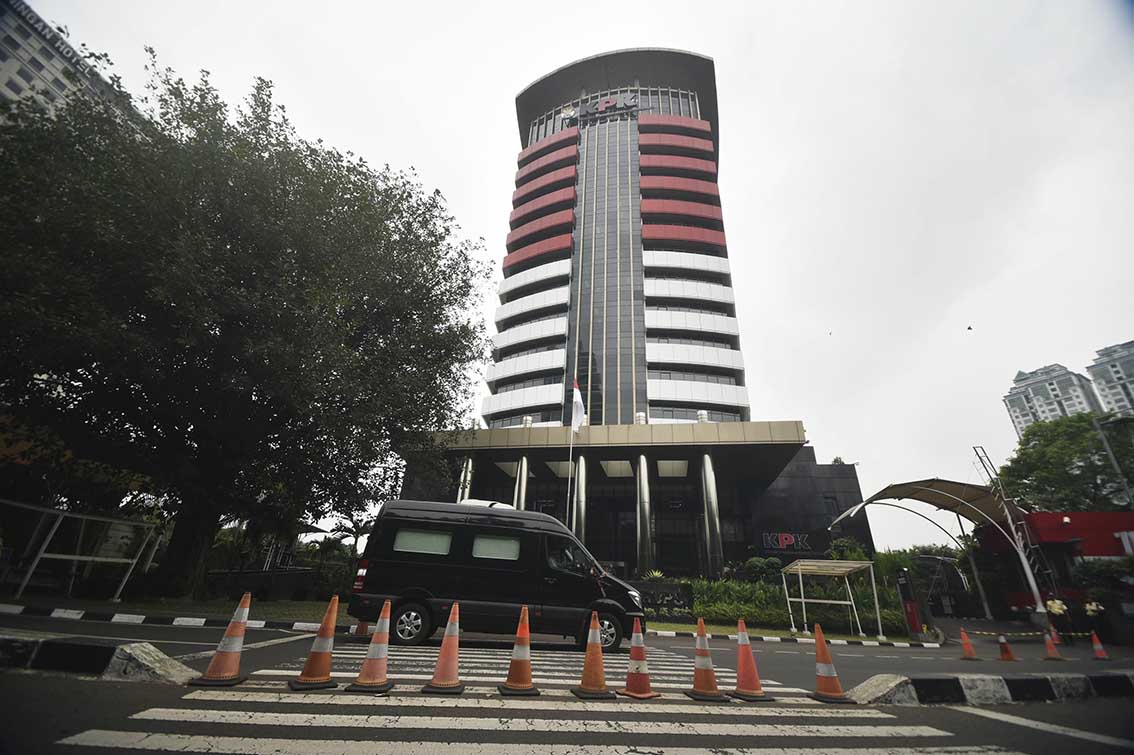
As a result, Mr. Saut hopes that future KPK leaders will be people with integrity. In order to produce quality anti-corruption commission leaders, Mr. Saut also urged the President to choose a leadership selection panel team who have integrity.
“Integrity is indeed gray. “It’s hard for us to be sure,” said Mr. Saut, on May 17 2024.
In their letter, a draft copy of which has been obtained by Tempo magazine, the former KPK leaders will ask President Widodo to take into consideration the competency, track record, and independence of proposed members of the selection panel in order to avoid conflicts of interest in selecting potential anti-corruption commission commissioners. Select panel members must also understand the condition of the Corruption Eradication Commission and the current state of the fight against corruption. In this way, the selection panel can work on the basis of the factual reality of the current problem.
According to the plan, President Widodo will form a selection panel for nominees for KPK leaders at the latest by the beginning of next month, or six months before the end of the terms of office of current KPK leaders. The term of office of KPK leaders for the 2019-2024 period will end in December 2024.
The selection panel will select a top ten nominees for KPK leaders to be submitted to the President. Then the President will submit names to Indonesia’s House of Representatives to appoint five KPK commissioners for the next period.
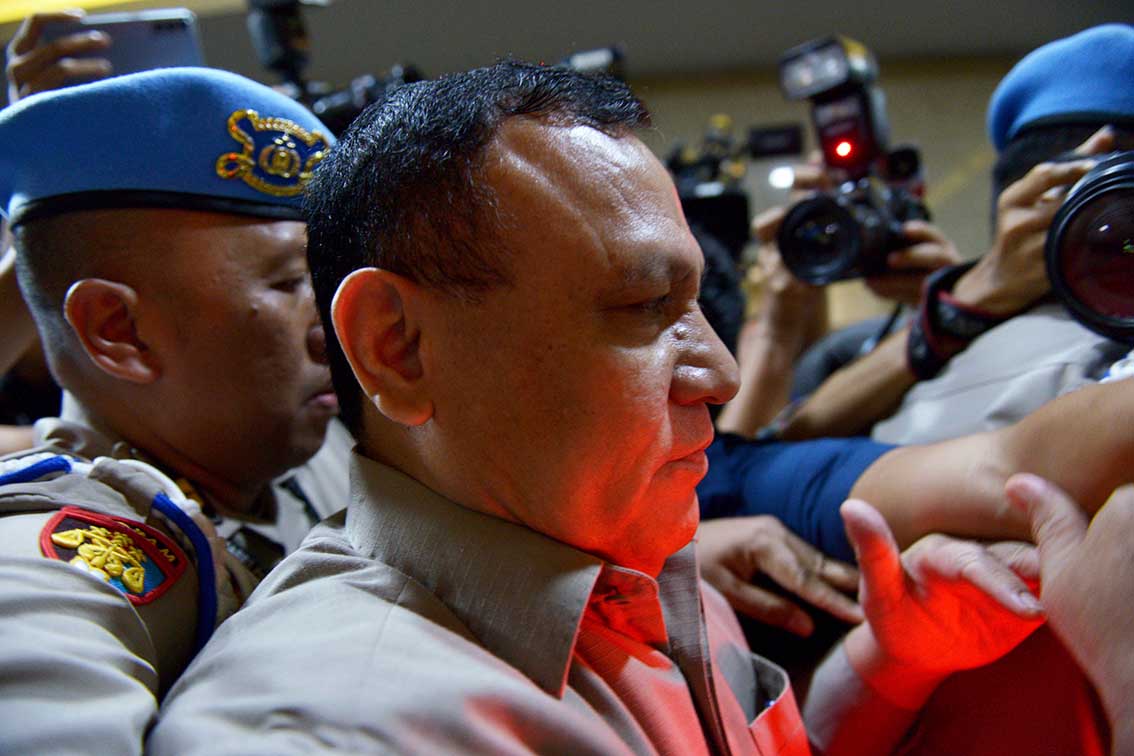
In previous selections, the selection panel produced KPK leaders who lacked integrity. Three of the five KPK leaders selected have been involved in violations of the code of ethics, namely Mr. Firli Bahuri, Ms. Lili Pintauli Siregar, and Mr. Nurul Ghufron. Ms. Lili even resigned before the KPK Supervisory Board announceed the verdict of her ethical violation inquiry. Meanwhile, Mr. Firli has been recommended for dismissal because he was involved in a corruption case. Meanwhile, Mr. Ghufron is currently under investigation hearings for alleged ethical violations at the KPK Supervisory Board.
Also read: Op-Ed: Our Legislative Seats Are Expensive, Tempo
The selection panel for KPK leadership candidates in 2019 consists of Ms. Yenti Ganarsih (chair), Mr. Indriyanto Senoadji (deputy chair), as well as Ms. Harkristuti Harkrisnowo, Mr. Hamdi Moeloek, Mr. Marcus Priyo, Mr. Hendardi, Mr. Al Araf, Ms. Diani Sadia, and Mr. Mualimin Abdi. Ms. Yenti is a lecturer at the Faculty of Law at Trisakti University, Mr. Indriyanto is a professor of criminal law at the University of Indonesia, Ms. Harkristuti is an expert in criminal law, Mr. Hamdi is a psychologist from the University of Indonesia, and Mr. Marcus is an expert in criminal law from Gadjah Mada University. Then Hendardi is the founder of the Setara Institute, Mr. Al Araf is the Director of democracy think tank Imparsial, Ms. Diani is on the expert staff at the National Development Planning Agency, and Mr. Mualimin is the Director General of Human Rights at the Ministry of Law and Human Rights.
Researcher from the think tank and advocacy non-governmental organization Indonesia Corruption Watch (ICW), Mr. Kurnia Ramadhana, believes the selection for KPK leaders in 2019 should not be repeated in this selection. He also offered three criteria for the selection panel to avoid them producing problematic KPK leaders. The three criteria are that members of the selection panel have to be legally and ethically clean, have competence in relation to the current state corruption eradication and the condition of the Commission, and not be affiliated with particular groups, government agencies or political parties.
Mr. Kurnia emphasized that the independence of the selection panel is especially crucial because they will be searching for independent figures to fill the positions of KPK leaders and members of the KPK Supervisory Board for the next five years.
“The primary gateway to creating this situation lies with the selection panel. “Because of that, the composition of the selection panel should be dominated by independent stakeholders, namely from civil society organizations,” said Mr. Kurnia.
He also questioned the government’s plan to fill the panel with a composition of five people from government agencies and four from civil society organizations. Mr. Kurnia suspects that the Corruption Eradication Committee Law is the government’s reason for increasing government agency members on the panel composition. However, he asked the President to understand the KPK’s unusual position.
“One way to return the Corruption Eradication Commission to a normal situation is to include leaders and a Supervisory Board with integrity,” said Mr. Kurnia.
Researcher from the Gadjah Mada University Anti-Corruption Study Center (Pukat UGM), Mr. Zaenur Rohman, said the President should choose members for the selection panel who are free from political interests and have a clean track record. Mr. Zaenur hopes that the former Mayor of Solo will not choose a selection panel based on the goal of maintaining political interests as he ends his term of office as Indonesia’s President in October.
“The selected panel must also be willing to accept and consider public input so that problematic KPK leaders are no longer nominated as has happened in the past,” said Mr. Zaenur.
Researcher from civil society organization Transparency International Indonesia, Mr. Alvin Nicola, said that the selection process for the KPK’s next leadership nominees was designed not to pay attention to the principles of accountability and community participation. He said Article 30 paragraph 2 of the Corruption Eradication Commission Law systematically emphasized the dominance of the government or executive and House of Representatives over the anti-corruption agency.
“Because of the strong attraction of interests, it is not surprising that the selection process actually produced a KPK leadership product that was full of problems,” said Mr. Alvin.
Also read: Op-Ed: Megawati and the Corruption Eradication Commission
Researcher from the Center for Law and Policy Studies (PSHK), Mr. Muhammad Nur Ramadhan, said that actually there are many figures with high integrity who could be nominated as members of the selection panel. But he doubts President Widodo will choose them.
“In my opinion, the government deliberately did not choose these names because they cannot be compromised,” said Mr. Ramadhan.
Mr. Ramadhan recalled the condition of the previous panel for proposing KPK leadership nominees. At that time the selection process was not transparent. The panel also did not want to listen to public input and insisted on selecting a number of names of potential leaders who lacked integrity.
He also highlighted plans for the composition of the panel which will be dominated by representatives from government agencies. “This is not a good thing for the KPK leadership selection process. “The issue of government interference will be the most important concern if this composition is maintained,” he said.
Former senior KPK investigator, Mr. Novel Baswedan, said the government should reflect carefully on the current condition of the KPK’s leaders. He said that the failure to produce KPK leaders with integrity began with the poor selection of the selection panel.
Mr. Novel also referred to the importance of transparency and accountability in the selection process for KPK leadership nominees.
“We are worried that there will be a process of people being dropped in, or that someone will be stage managed, to become the leader of the Corruption Eradication Committee,” said Mr. Novel. He also hopes that President Widodo will select a panel that has integrity and is committed to recruiting quality and ethical KPK leaders.
This article is based on https://koran.tempo.co/read/nasional/488493/jokowi-utak-atik-pansel-kpk.
In related news:
- https://antikorupsi.org/id/jokowi-masuk-nominasi-pemimpin-terkorup-icw-kena-doxing-dan-kami-tidak-takut
- https://regional.kompas.com/read/2025/01/08/141718378/dirinya-dilaporkan-ke-kpk-jokowi-enggak-apa-apa
- https://x.com/MurtadhaOne1/status/1875157478801088830?t=LuU9UYr6QtTStC9HtX9owQ&s=19
- https://youtu.be/gvuRpPYGF7s?feature=shared
- https://www.tempo.co/politik/feri-amsari-bilang-occrp-punya-alasan-kuat-memasukkan-jokowi-dalam-daftar-pemimpin-korup–1188782
- https://tirto.id/mengkaji-alasan-occrp-masukkan-jokowi-dalam-nominasi-terkorup-g66Y
- https://nasional.kompas.com/read/2025/01/01/20243511/kritik-occrp-pakar-hukum-nominasikan-tokoh-korup-tanpa-bukti-adalah-fitnah
- https://nasional.kompas.com/read/2025/01/01/18463651/politikus-nasdem-occrp-merilis-lewat-polling-bukan-data-dan-fakta
- https://www.tempo.co/politik/jadi-finalis-kejahatan-terorganisasi-dan-korupsi-2024-jokowi-yang-dikorupsi-apa-dibuktikan-saja-1188263
- https://metro.tempo.co/read/1934376/eks-penyidik-kpk-minta-zarof-ricar-dijadikan-whistleblower-untuk-bongkar-mafia-peradilan
- https://x.com/RadioElshinta/status/1846103217366880546
- https://nasional.kompas.com/read/2024/06/23/10194131/inklusivitas-gender-jadi-pembahasan-pansel-capim-kpk
- https://nasional.kompas.com/read/2024/05/19/21044411/jokowi-masih-godok-susunan-anggota-pansel-capim-kpk

 Stories From Indonesia
Leave a Reply