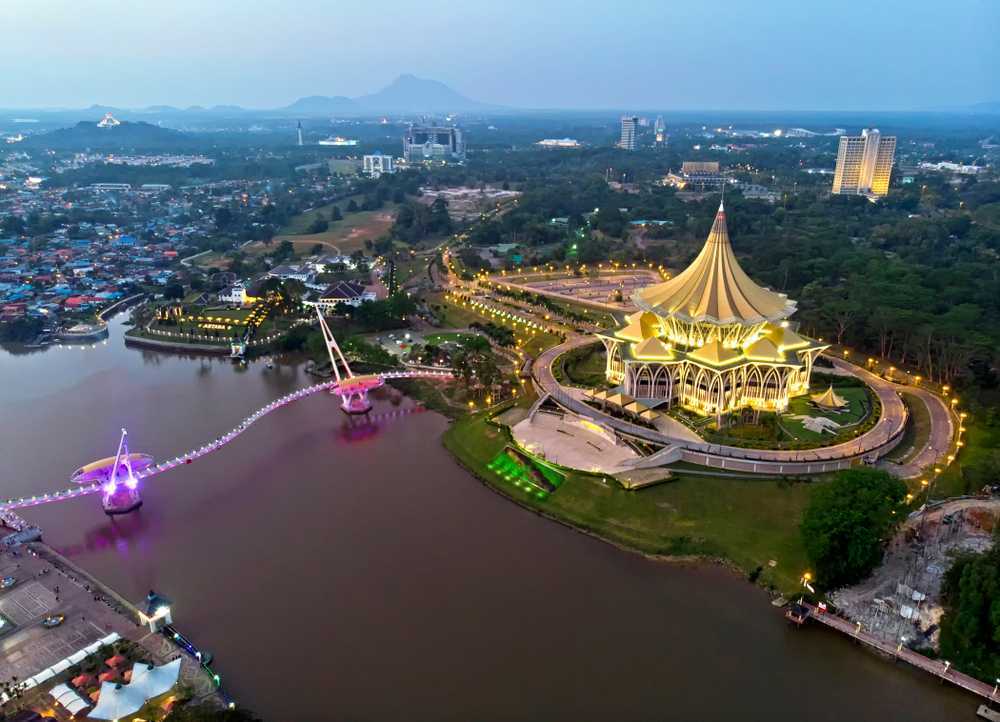
Autonomy in Sarawak and Sabah: Different Paths and Diverging Outcomes, Trends in Southeast Asia 2024 No 28, ISEAS – Yusof Ishak Institute, Singapore
By Arnold Puyok, ISEAS – Yusof Ishak Institute, Singapore
Executive Summary
- When Malaysia was formed in 1963, the Borneo states of Sarawak and Sabah were granted special provisions under the Malaysian Agreement 1963 (MA63) to safeguard their autonomy.
- However, centralization measures pursued by the federal government over time have eroded these rights, particularly pertaining to education, development spending and revenue sharing.
- Despite being on the same island and sharing a history distinct from Peninsular Malaysia, Sarawak and Sabah have evolved very differently in asserting their autonomy. Sarawak has managed to attain a greater degree of self-government, while Sabah has been more influenced by priorities pursued by Peninsular Malaysia.
- These varying outcomes are due to three differences between the two states: distinct historical developments in the run-up to independence; varying degrees of political control attained by the parties in power; and different priorities pursued by state leaders.
- This Trends in Southeast Asia explores the different political trajectories of Sarawak and Sabah through a structured comparison of the two states across these three aspects. Sarawak’s combination of sub-nationalism, dominant state-level coalition, and astute political leadership has enabled the state to push the boundaries much further than its neighbour.
- The downfall of the erstwhile-dominant Barisan Nasional coalition has increased the room for manoeuvre of Borneo-based groupings, heralding a new power relationship between West and East Malaysia. Sarawak is well-poised to push for further privileges and prerogatives. Should it want to push for more autonomy and resources, Sabah will need to emulate key aspects of its neighbour’s strategy.
Excerpts…
Language
…Adenan made significant strides in asserting Sarawak’s cultural
and linguistic identity. One of his key initiatives was adopting English,
alongside Bahasa Malaysia, as an official language in the state’s
administration.
National Model
…Taib believed Sarawak politics should mirror Peninsular Malaysia’s model, where “a dominant Islamic-led native party” held power alongside compliant Chinese partners.
Islam
…One of Taib’s most notable contributions was his decision not to declare Islam the official religion of Sarawak. This was a crucial move in ensuring that Sarawak remained secular, which has helped maintain peace and stability in a state that has a significant non-Muslim population, including the Dayak and other indigenous communities.
…[Mustapha Harun] made Bahasa Melayu the official state language and elevated Islam to the status of the official religion, significantly altering Sabah’s socio-political landscape and reducing the influence of the non-Muslim indigenous population.
Education
…One of the defining features of Abang Jo’s administration has been his commitment to enhancing Sarawak’s education system. One of the bold moves under Abang Jo’s leadership was the introduction of an international curriculum that is integrative of English alongside Bahasa Malaysia, with the establishment of five international schools adopting the Cambridge syllabus. Abang Jo’s
commitment to education culminated in the announcement of plans for
free tertiary education in state-owned institutions by 2025 or 2026.
Legacy of Colonialism
..Sabah’s transition to a British protectorate in 1888 and to a Crown
Colony in 1946 did little to change this trajectory. The lack of consistent
local governance and the fragmented nature of colonial rule meant that
Sabah entered the Malaysian Federation without the strong institutional
foundations or cohesive identity that Sarawak had developed.
Resource Control
..The establishment of initiatives such as Petros, the push for resource
control, and the preservation of secular governance under Taib further
solidified the state’s autonomy..
The Author
Arnold Puyok was Visiting Senior Fellow at the ISEAS – Yusof Ishak Institute, Singapore. He is a Senior Lecturer in Politics and Government Studies at the Faculty of Social Sciences and Humanities, Universiti Malaysia Sarawak (UNIMAS). Read the whole work here at this link. Hard copies can be purchased via https://bookshop.iseas.edu.sg/ from 11 December 2024.
In related news:
- Presidential Handover: Interventions in the 2024 Regional Elections, Tempo
- Journal Article: Political Accountability of Regional Government Heads in Indonesia, Constitutional Review
- Fatalities, Accidents, Suppression and Criminalization: The Fate of Workers at the PT GNI Nickel Smelter By Project Multatuli Pt1
- Human Rights: UN In Dialogue With Indonesia
- The Lowy Institute’s 2023 Asia Power Index
- Elections: Party Funding Reform: Presidential Hopeful Anies Baswedan Vows to Overhaul Political Party Financing
- Energy Transition: Will forests in Borneo be gutted for ‘green’ energy? From Mongabay.com
- Journal Article: Silsilah Raja-Raja Brunei By Annabel Teh Gallop
- Palm oil: scourge of the earth, or wonder crop? The Conversation

 Stories From Indonesia
Leave a Reply