Editorial: The Politicization of Former Trade Minister Tom Lembong’s Arrest
From Tempo.co, November 10, 2024
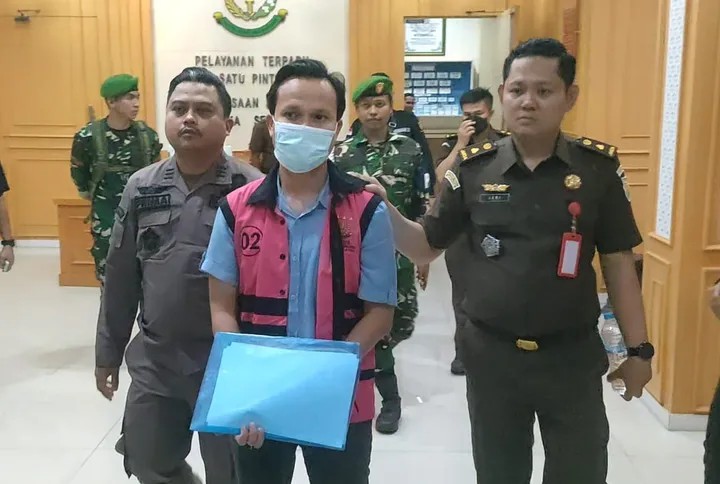
The arrest of one Widodo-era Trade Minister, and government critic, Tom Lembong, raises troubling questions. Given the lack of evidence of corruption to justify the arrest, political motives appear to be overshadowing the rule of law.
The Indonesian Attorney General’s Office seems to have increasingly abandoned the principle of equal treatment under the law. Under the government of President Joko Widodo, the office has frequently acted as a “hammer” against those opposed to government interests. The naming of Thomas Trikasih Lembong, known as Tom Lembong, as a suspect in a sugar importation corruption investigation indicates that this practice is being continued under the government of recently-inaugurated President Prabowo Subianto.
Tom Lembong, who served as President Joko Widodo’s Trade Minister from 2015 to 2016, is accused of improperly authorizing the importation of 105,000 tons of sugar. Prosecutors allege the decision cost state revenue approximately 400 billion rupiah (around US$25.6 million), representing the profits notionally earned by eight private sector importing companies. Prosecutors argue that these profits would have gone to the state revenue if state-owned enterprise trading companies had conducted the importations.
Selective Pursuit of Justice
Equality under the law appears to be missing, as prosecutors have limited their investigation to Lembong’s tenure as Trade Minister. Similar policies during the tenures of other Widodo government Trade Ministers have not been investigated. During the two terms of President Joko Widodo, six individuals served as Trade Minister, including Rachmat Gobel (Nasdem Party), Enggartiasto Lukita (Nasdem Party), Agus Suparmanto (National Awakening Party), Muhammad Lutfi, and Zulkifli Hasan (National Mandate Party). All authorized sugar importations of varying quantities.
Moreover, prosecutors have selectively utilized findings from a 2017 audit by the national Audit Board of Indonesia (BPK). The audit report, covering the tenures of Trade Ministers Rachmat Gobel, Tom Lembong, and Enggartiasto Lukita, identified irregularities in the importation of 1.96 million tons of sugar. The audit noted that the importations were not coordinated by the Coordinating Ministry for Economic Affairs, lacked technical approvals from the Ministry of Agriculture, and were unsupported by data relating to sugar requirements.
Vague Charges
Lembong is charged under Articles 2(1) and 3 of Indonesia’s Anti-Corruption Law, provisions often used to indict officials accused of making decisions that allegedly cause government financial losses. These articles are notoriously flexible, encompassing acts that enrich individuals or corporations by exploiting their positions, resulting in financial harm to state revenue.
Legal Case or Political Theater?
Prosecutors have yet to present compelling evidence, such as a clear money trail, to justify Lembong’s arrest. This has fueled suspicions that the case may be politically motivated—a hallmark of the Joko Widodo’s government.
Lembong initially played a central role in Joko Widodo’s 2014 presidential election campaign, which led to his appointments as Head of the Investment Coordinating Board, and later as Trade Minister. However, after being dismissed from cabinet in 2016, he aligned himself with other sidelined officials, including Anies Baswedan, then the Minister of Education. Lembong has since supported Anies, now a presidential election candidate for 2024.
During the campaign, Lembong was embroiled in debates with team of candidate Prabowo Subianto, particularly on nickel downstreaming policies. Candidate Subianto’s vice-presidential running Gibran, the son of President Joko Widodo, explicitly mentioned Lembong during a vice-presidential debate on January 21, 2024. Speculation has arisen that Lembong’s arrest is linked to these political tensions.
Upholding Justice, Not Politics
Prosecutors have to present robust evidence in court. If their cases rests solely on procedural errors, the Attorney General’s Office risks becoming a political instrument. This concern deepens should similar accusations are not leveled at other former trade minister who implemented identical importation policies.
President Prabowo Subianto, as the Attorney General’s superior, must ensure that the justice system under his government remains impartial and untainted by political influence.
This post is based on https://www.tempo.co/kolom/penahanan-tom-lembong-1166151.
In related news:
- https://www.thejakartapost.com/indonesia/2024/10/30/former-minister-thomas-lembong-arrested-in-sugar-import-graft-case.html
- https://www.reuters.com/world/asia-pacific/indonesia-arrests-former-trade-minister-sugar-import-graft-case-2024-10-30/
- https://storiesfromindonesia.com/2024/10/30/transition-after-12-month-investigation-no-money-trail-to-former-widodo-minister-in-sugar-corruption-probe-admits-ago/
- https://storiesfromindonesia.com/2024/10/29/energy-transition-the-suffering-behind-the-war-of-words-between-tom-lembong-and-ministers-luhut-bahlil/
- https://storiesfromindonesia.com/2024/10/29/transition-arrest-of-former-widodo-trade-minister-tom-lembong-is-not-political-claims-indonesias-ago/
- https://storiesfromindonesia.com/2024/11/19/transition-widodo-trade-minister-tom-lembong-framed-former-nation-deputy-police-chief/


 Stories From Indonesia
Leave a Reply