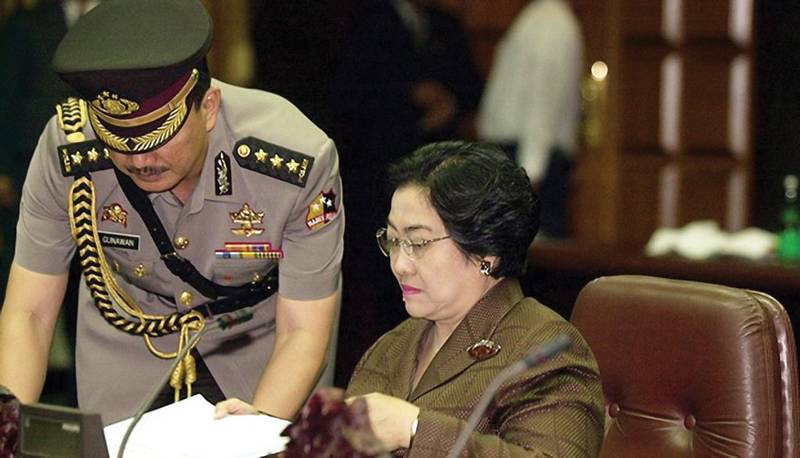
Profile of Budi Gunawan: Education and Career Journey, October 18, 2024 from Kumparan.com
Budi Gunawan’s story is one of a young man with high ambitions who rose to prominence as a key figure in Indonesia’s security and intelligence landscape. His strong educational background and extensive experience in law enforcement have made him a significant player in safeguarding Indonesia’s national security. His rising star reflects dedication and commitment to his responsibilities, making him a role model for the younger generation.
Intelligence
General (Police) (Retd.) Prof. Dr. Budi Gunawan, SH, M.Si., Ph.D., has served as the head of Indonesia’s State Intelligence Agency (BIN) since September 9, 2016. He also holds the position of Chairman of the Indonesian E-Sports Federation (PB ESI). Before taking on his current role, Gunawan served as Deputy Chief of the Indonesian National Police (Wakapolri), working alongside previous national Chiefs of Police Badrodin Haiti and Tito Karnavian. He is the second police officer to lead BIN, following his predecessor, Sutanto.
Budi Gunawan is widely regarded as an experienced figure in both law enforcement and intelligence. As the head of BIN, he oversees the collection and analysis of vital intelligence necessary for national security. Under his leadership, the agency has actively addressed key security challenges, including terrorism and cyber threats.
E-Sports
In addition to his role in intelligence, Gunawan is also involved in the growing e-sports industry in Indonesia as Chairman of PB ESI. He is dedicated to advancing the development of electronic sports, which have gained immense popularity among the nation’s youth. His involvement in e-sports reflects his support for modern sports and technological progress in the country.
Education
As reported by the website p2k.stekom.ac.id, Budi Gunawan is recognized for his academic excellence, both in police training and general education. He earned the distinction of being the top graduate of the Police Staff and Leadership School (Sespimpol) in 1988, as well as at the National Resilience Institute (Lemhannas) in 2005. These prestigious programs significantly bolstered his capabilities in law enforcement and national security.
Budi Gunawan also holds a doctorate in law from Trisakti University, where he graduated summa cum laude. His commitment to education and academic achievement has been the cornerstone of his career, deeply influencing the policies he has shaped throughout his tenure.
With a strong academic foundation, Budi Gunawan has been well-equipped to address the challenges within the fields of policing and intelligence. His success across various educational institutions underscores his dedication to continuous learning and skill enhancement.
This academic-driven approach is evident in the decisions he makes and the public policies he crafts. His educational background and scholarly achievements have not only shaped his career but also informed his leadership style, enhancing his contributions to the institutions he has led.
Thus, Budi Gunawan’s education and academic accomplishments stand as essential pillars in his career journey, which continues to evolve in both law enforcement and intelligence.
Career Journey of Budi Gunawan
Budi Gunawan began his career in the Indonesian National Police (Polri), holding various key positions throughout his tenure. These roles have included Karobinkar SSDM, Kaselapa Lemdiklat, provincial Chief of Police for Jambi, Head of the Legal Division, Head of the Professional Accountability Division, provincial Chief of Bali Police, and Head of the national Police Education and Training Institute. His notable contributions in the police force culminated in his appointment as national Deputy Chief of Police (Wakapolri), where his expertise and leadership were widely recognized.
Budi’s rapid rise in the ranks made him one of the youngest generals in the Indonesian National Police. During President Megawati Soekarnoputri’s administration, he served as Aide-de-Camp to Vice President Megawati Soekarnoputri from 1999 to 2000 and later as Aide-de-Camp to President Megawati Soekarnoputri from 2000 to 2004.
In 2015, President Joko Widodo nominated Budi Gunawan as the sole candidate for national Chief of Police. However, his nomination faced significant legal hurdles, as he was implicated in allegations of possessing suspiciously large bank accounts, leading to him being declared a suspect in an investigation by Indonesia’s Corruption Eradication Commission (KPK). Despite these serious charges, Budi successfully defended his innocence, winning a pre-trial court challenge to the declaration and clearing his name.
On September 9, 2016, President Joko Widodo officially appointed Budi Gunawan as the Chief of the national State Intelligence Agency (BIN), making him the second police officer, after General (Police) Sutanto, to lead the institution. Under his leadership, BIN underwent substantial modernization and transformation, with Budi spearheading the creation of several new divisions to address contemporary security threats.
Among these initiatives was the establishment of the Deputy for Cyber Intelligence and the Deputy for Apparatus Security Intelligence. In response to the growing threats of viruses and bio-chemical weapons, he also formed the Medical Intelligence Division, known as “Wangsa Avatara,” which focuses on monitoring, detecting, and responding to biological threats.
These proactive measures reflect Budi Gunawan’s forward-thinking approach to addressing the complexities of modern security. The new divisions significantly enhanced Indonesia’s intelligence capabilities in facing evolving global challenges.
Intelligence Education and Training
In addition to operational reforms, Budi invested heavily in education and training for intelligence professionals. He transformed the State Intelligence College (STIN) into a “Smart Campus” and elevated BIN’s Training and Education Center into a world-class institution, equipped with modern facilities and professional staff. In recognition of his contributions, he was awarded the title of Professor at STIN in 2018.
Under Budi Gunawan’s leadership, BIN has played a more active role in supporting government programs and responding to public needs. His agency’s involvement has been crucial in addressing the COVID-19 pandemic, disaster relief efforts, and resolving conflicts in Papua, further cementing his legacy as a visionary leader in Indonesia’s intelligence community.
Contributions Beyond Intelligence and Law Enforcement
Budi Gunawan’s contributions extend well beyond the realms of intelligence and law enforcement. He has been a driving force behind initiatives that promote national unity and youth empowerment. Among his notable efforts is the establishment of the Asrama Mahasiswa Nusantara (AMN) and the Papua Youth Creative Hub (PYCH), both aimed at fostering cultural understanding and providing development opportunities for young people.
AMN is a network of student dormitories built in several educational cities across Indonesia. These dorms bring together students from all provinces, creating an environment where they can learn from each other’s diverse cultures and backgrounds. This initiative aims to reduce ethnic, religious, and racial tensions (SARA) and misunderstandings in Indonesia’s plural society. PYCH, on the other hand, is designed to empower Papua’s youth through various training programs, including entrepreneurship, livestock farming, and other skill-building activities. This initiative helps young people become self-sufficient and contribute to the development of Papua.
Budi Gunawan’s commitment to education and academia is further reflected in his frequent guest lectures and seminars at various universities across Indonesia. As an author, he has also contributed to public discourse on issues ranging from law enforcement to national security through his numerous writings.
Since 2020, Budi has held the position of Chairman of Indonesia’s E-Sports Association (PB ESI), where he has played a key role in promoting and developing the e-sports industry in the country. Throughout his career, Budi Gunawan has received more than 25 awards from various institutions, underscoring his dedication to public service and his positive influence on society.
Budi Gunawan’s Career Timeline
Budi Gunawan’s career history is both impressive and extensive, reflecting his contributions to the police force and national intelligence. According to p2k.stekom.ac.id, Budi began his career as district Chief of the Tanjung Karang Barat Police in Bandar Lampung. He went on to serve as Head of Traffic in Palembang and Chief of Bogor City Police. Other notable positions include Deputy Director of Traffic in Lampung and Chief of the Vehicle Registration Unit in the National Police Traffic Corps.
From 1999 to 2001, Budi served as Aide-de-Camp to Vice President Megawati Soekarnoputri, and later, from 2001 to 2004, as Aide-de-Camp to President Megawati. He then served as the head of Human Resources Development in the Indonesian National Police (2004–2006) and later as the Executive Officer of the Police Education and Training Institute (2006–2008). He continued to rise in the ranks, becoming provincial Chief of Jambi Police (2008–2009), Head of Legal Affairs in the National Police (2009–2010), and Head of the Professional Accountability Division (2010–2012). In 2012, he was appointed provincial Chief of Bali Police and later Director of the national Police Education and Training Institute (2012–2015).
His career reached new heights when he was named national Deputy Chief of the National Police (2015–2016) before assuming his current position as Chief of the State Intelligence Agency (BIN) in 2016. Also, since 2018, Budi Gunawan has held the title of Professor at the State Intelligence College (STIN) and has served as Chairman of the Indonesian E-Sports Association (PB ESI) for the 2020–2024 term.
Budi Gunawan’s diverse and dedicated career reflects his steadfast commitment to law enforcement and national security in Indonesia. (KIKI) Disclaimer: The profile presented is based on publicly available information and does not necessarily reflect the views or opinions of the editorial team at Kumparan.com.
This article is based on https://kumparan.com/profil-tokoh/profil-budi-gunawan-pendidikan-dan-perjalanan-kariernya-23jfNmoMjtN/full.
***
In earlier news…
The Attorney General’s Role as Dominus Litis in Conflict Between the Corruption Eradication Commission and the Indonesian National Police
By Adery Ardhan Saputro, SH, Researcher at the Indonesian Justice Monitoring Community at the University of Indonesia’s Faculty of Law (MaPPI FHUI), February 5, 2015
Introduction
The ongoing conflict between two Indonesian law enforcement agencies, the Corruption Eradication Commission (KPK) and the Indonesian National Police (Polri), was ignited by the KPK’s decision to name Police Commissioner General Budi Gunawan a suspect in a corruption investigation. It is noteworthy that at the time, Gunawan was also a candidate for appointment to the position of national police chief, as announced by President Joko Widodo and approved by Indonesia’s House of Representatives Commission III.
Subsequently, the Indonesian National Police declared KPK Deputy Head Bambang Widjojanto a suspect in a criminal investigation related to allegations he obtained false statements from a witness (in breach of Articles 242 and 55 of Indonesia’s Criminal Code) during a case before the Constitutional Court. The case involved a dispute over the 2010 election of the District Head of West Kotawaringin regency in Central Kalimantan province. (https://rfkhumanrights.org/person/bambang-widjojanto/)
Widjojanto’s arrest triggered strong reactions from anti-corruption activists and the public, who gathered at the KPK’s national office and vehemently protested what was widely perceived as an arbitrary abuse of power by the police. The resulting wave of protests and controversy even destabilized the country. Head of the Indonesian Armed Forces’ public relations unit Major General Fuad Basya announced that “the military is prepared to secure the KPK’s offices should the Police decide to raid the Commission.” Meanwhile, President Joko Widodo refrained from taking any significant action, claiming to fear accusations of improper intervention in a law enforcement matter.
Friction
Friction between investigative agencies is not unique to Indonesia, as other countries, like the United States, have seen disputes over the authority to investigate cases between agencies such as the Federal Bureau of Investigation (FBI) and the US Drug Enforcement Administration (DEA). However, these disputes do not typically lead to serious problems in the US because of the hierarchical authority of both agencies under the US Attorney General. The US Attorney General plays a pivotal role in the American criminal justice system, and a controversy similar to the current “KPK vs. POLRI” debate would be unlikely to occur in the United States.
The Role and Responsibilities of the Attorney General in Indonesia’s Code of Criminal Procedure
In the Indonesian context, although the Attorney General’s Office is generally considered the dominus litis, it has not played a decisive role as a mediator in this controversy, clearly indicated by the statement from the head of the Attorney General’s public information office, Tony Spontana. According to Spontana, “We are guided solely by the Code of Criminal Procedure, and we do not wish to become embroiled in the polemic. The Attorney General’s Office is currently preparing to issue a directive appointing an investigating prosecutor to monitor developments in the investigation.”
Attorney General’s Restricted Authority
From Spontana’s statement, several conclusions can be drawn. 1. The Attorney General’s Office can only monitor and issue directives based on the outcome of a case file examination prepared by the Police. 2. The Code of Criminal Procedure prohibits the Attorney General’s Office from directly participating in a police investigation. 3. As per the Code of Criminal Procedure, the relationship between the police as investigators and the Attorney General’s Office is limited to functional coordination. So Spontana’s argument aligns with the principles of the Code of Criminal Procedure. This means that the Attorney General’s authority is restricted to monitoring police investigations and does not extend to supervising police investigations into a case. The principle of functional differentiation embedded in the Code of Criminal Procedure underlies the recurrent friction between the two investigative agencies.
Value of Evidence
When it comes to the police case against KPK Commissioner Bambang Widjojanto, the principle of functional differentiation is likely to lead to significant issues in the future, particularly for the Attorney General’s Office. An Attorney General’s Office that conducts investigations solely on the basis of case files, without being allowed to carry out direct investigations, can hinder the presentation of evidence in court proceedings. Once the case file for the Bambang Widjojanto investigation is considered complete by the Attorney General’s Office, it would issue a P21 Form based on the evidence obtained during the investigation. During the trial phase, if it turned out that some evidence was obtained unlawfully, or that witness statements have been coerced, this could lead to suboptimal provision of evidence by the prosecution and a reduction in the evidence available to establish the guilt of an accused.
So there is a need for a stronger connection between public prosecutors and cases involving accused individuals, extending beyond merely examining case files or providing guidance to investigators. Prosecutors should be able to conduct investigations directly (opsporing) or, at the very least, conduct follow-up investigations (nasporing) related to inquiries already undertaken by investigators. This would enable prosecutors to determine how evidence has been obtained, and whether a suspect is truly worth prosecuting.
Start to Finish
In contrast, the Attorney General’s Office’s position and duties as dominus litis are clearly defined in the provisions of the Revised Indonesian Code (Herziene Indonesisch Reglement or HIR). While the HIR was in effect, an investigation was an integral part of a prosecution. This authority established the Prosecuting Investigator as both the coordinator of an investigation and someone with the ability to conduct their own investigations. Consequently, the Attorney General’s Office played a crucial role in the entire process of criminal law enforcement from start to finish.
Despite the repeal of the HIR by the Code of Criminal Procedure, the Attorney General’s Office’s authority to conduct investigations (opsporing) was indirectly reaffirmed. This is due to Article 27, paragraph (1), subparagraph (d) of Law No. 5/1991 regarding the Attorney General’s Office, which states that: “(1) In the area of crime, the attorney general’s office has the task of and authority to: …(d) complete a particular case file and for this, supplementary inquiries can be conducted before being transferred to the court which, in their conduct, are coordinated by the investigator.”
This provision explicitly states that the attorney general has the authority to conduct additional inquiries (nasporing). It confirms that the attorney general continues to be the agency in control of a case even during the investigation stage. Article 30, paragraph (1), subparagraph (d) of Law 16/2004 concerning the Indonesian Attorney General also supports this authority. Therefore, the attorney general does have the power to carry out additional inquiries (nasporing) and, as a result, the authority to ensure that investigators’ work is conducted properly.
Though the Criminal Procedure Code appears to limit the attorney general’s role to functional coordination in investigations conducted by the police, Article 30, paragraph (1), subparagraph (d) of Law No. 16/2004 enables the Attorney General’s Office to go beyond monitoring the results of police investigations and examining case files based solely on witness testimony. In reality, the Attorney General’s Office can play a more significant role in KPK Commissioner Bambang Widjojanto’s case through additional inquiries into relevant witnesses or suspects.
However, there are still problems in Indonesia’s criminal justice system, as exemplified by potential conflicts between law enforcement agencies when handling investigations. The current dispute reveals that the differentiation and independence of each law enforcement agency in handling cases represent a conceptual mistake. Therefore, changes are needed in Indonesia’s criminal justice system to reduce friction between law enforcement institutions.
Reforming the Integrated Criminal Justice System
The proposed Criminal Procedure Code Bill has accommodated changes in the roles and duties of the Attorney General’s Office. This is evident in Article 46, paragraphs (3) and (4).
Article 46, paragraph (3): If the public prosecutor identifies deficiencies in a case file, they may request the investigator to conduct additional investigations by issuing direct instructions or conduct additional inquiries before transferring the case to the court, with the implementation coordinated with the investigator.
Article 46, paragraph (4): In subsequent case inquiries, if necessary for legal action to facilitate court hearings or the execution of judicial decisions, the public prosecutor can take legal action themselves or request investigation assistance.
These two articles confirm that the public prosecutor assumes control of a case at the investigation stage, even if the case is managed by a different agency. However, it should be noted that despite the expanded authority of the attorney general in coordinating investigations, the Bill does not transform the attorney general into a mediator in cases where there is a clash of sectoral egos among law enforcement agencies.
To address this problem solutions can be sought by looking at criminal justice systems in other countries. For instance: 1. In the Netherlands, the coordination between the police and prosecutors is governed by the Special Powers of Investigation Act (Wet Bijzondere opsporingsbevoegdheden or BOB), which designates the public prosecutor’s office as the agency leading a criminal investigation. 2. Changing the hierarchy and position of the attorney general in Indonesia to resemble the system in the United States, where the attorney general simultaneously serves as the Minister of Justice representing the highest authority in controlling a case and utilizes a single investigation warrant (Surat Perintah Pemeriksaan or SPP).
It is hoped that the dispute between the Corruption Eradication Commission and the Indonesian National Police will serve as a catalyst for improvements in Indonesia’s criminal justice system. Furthermore, it is expected that it will demonstrate the role of the Indonesian Attorney General as the dominus litis agency with authority over criminal cases. Ultimately, reforming the criminal justice system and its future operation should be grounded solely in legal perspectives, devoid of political influences. October 22, 2015
This article is base on https://mappifhui.org/peran-kejaksaan-ri-sebagai-dominus-litis-dalam-kekisruhan-kpk-vs-polri.
***
Two “Gunawans” in the General’s Accounts
By Bagja Hidayat, Dewi Suci (Jakarta), Servio Maranda (Pangkalpinang), Iqbal Lazuardi (Bandung) for Tempo Magazine, January 19, 2015
Hundreds of billions of rupiah have flowed in and out of Budi Gunawan’s accounts since 2004. A portion of the money has been linked to accounts opened using falsified ID cards, allegedly connected to bribery for promotions and protection of criminal figures.
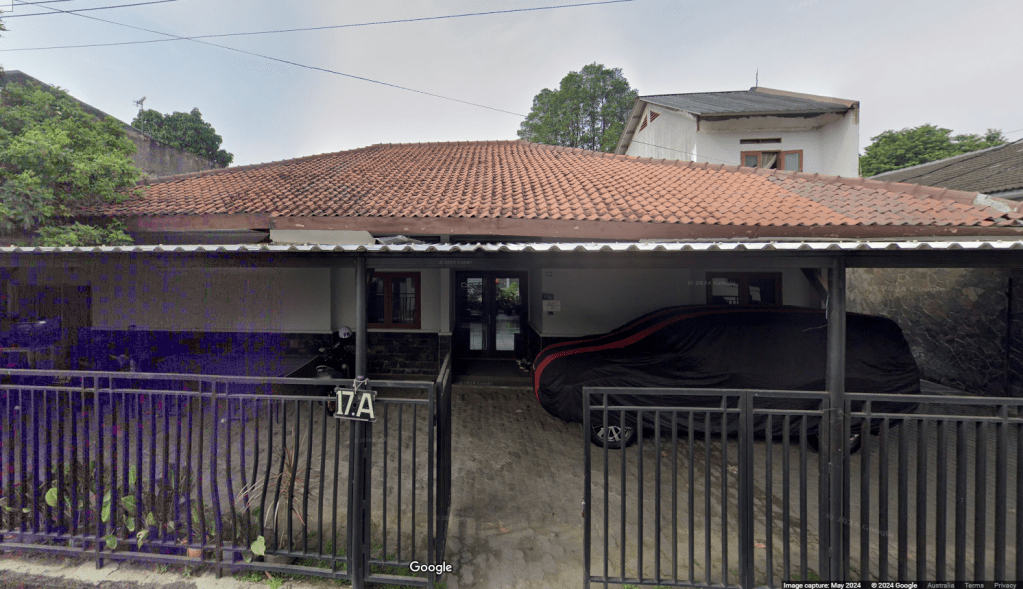
On September 5, 2008, a person using the name “Gunawan” opened two bank accounts at the Warung Buncit branch of Bank Central Asia (BCA) and Bank Negara Indonesia (BNI) in South Jakarta, providing an address at Jalan Duren Tiga Selatan VII Number 17A, a modest rental property. Despite not listing any clear employment, this “Gunawan” deposited IDR5 billion (approximately USD350,000) into each account. Investigators later found that this “Gunawan” was linked to none other than Budi Gunawan, a high-ranking Indonesian police officer who at the time was the Chief of Police in the Sumatran province of Jambi with the rank of (Police) Brigadier General.
The suspicions of Indonesia’s Corruption Eradication Commission (KPK) grew when it was discovered that the ID used to open these accounts carried a photo of Budi Gunawan himself. Investigators suspect that these transactions were alleged to be part of a larger pattern of bribery and financial misconduct involving the General, who has since been declared a suspect by the Corruption Eradication Commission, only days after President Joko Widodo officially nominated him to the national legislature as the sole candidate for the position of national Chief of Police.
Suspicious Transactions Dating Back to 2004
Nearly five years earlier, the Financial Transactions Reports and Analysis Center (PPATK) had flagged suspicious transactions linked to Budi Gunawan’s accounts. Despite his modest official salary of around IDR7 million per month (roughly USD500), billions of rupiah flowed into his personal accounts over an extended period. Shortly after these transfers were flagged, Gunawan closed the accounts, further raising red flags for investigators.
Exploring the “Gunawan” Alias
Tempo magazine’s investigation into the address listed for “Gunawan” led to a rental property priced at IDR2.2 million per month (around USD150). In 2008, Iie Tiara, an aide to Budi Gunawan who managed several of his transactions, lived at the property. Local residents were well aware that Gunawan, by then a Police Commissioner General, owned the property.
Authorities suspect that the alias “Gunawan” was used to conceal the true origin of the funds, which began moving around the same time that the PPATK raised concerns about four of Budi’s other accounts. In one of these accounts, opened in August 2005, Gunawan deposited a staggering IDR29 billion (USD2 million). Further investigation revealed that these funds were then transferred to various other accounts, including one belonging to his eldest son, Muhammad Herviano Widyatama, who received an initial deposit of IRD25 billion (USD1.75 million).
Flow of Money Between Family Members
Throughout 2007 and 2008, large sums of money were transferred between accounts belonging to Gunawan, his son Herviano, and their associate Iie Tiara. In December 2007, for instance, Herviano’s account received three separate transfers totaling IRD13.9 billion from Yuliana, a finance manager at PT Sumber Jaya Indah, a tin mining company. Another transfer of IRD7.5 billion came in from Sintawati, Gunawan’s sister, allegedly to fund a hotel development project in Bandung.
Allegations of Bribery and Corruption
A source with knowledge of the KPK investigation told Tempo magazine that the funds in Gunawan’s accounts likely stemmed from a variety of illegal activities, including bribery related to promotions within the police force, protection payments from criminal enterprises, and kickbacks from government contracts. One notable transfer occurred in 2004, when Inspector General Firman Gani, then the East Java provincial Chief of Police, allegedly transferred IDR5.5 billion to Gunawan’s account in exchange for a promotion to Chief of Jakarta’s Metropolitan Police. A subsequent police order formalizing the promotion was issued just days later.
Additional funds were regularly transferred by other police officials, many of whom were later promoted to senior positions. One such official, Syahtria Sitepu, now an Inspector General, transferred a total of IRD1.5 billion to Gunawan’s account while serving as Director of Traffic in the North Sumatra Provincial Police between 2004 and 2006.
Business Ties with Criminal Networks
Investigators also discovered ties between Gunawan’s financial activities and several business entities, including PT Masindo Lintas Pratama, a property development company that transferred IRD1.5 billion to Herviano’s account in 2006. Masindo’s owners had links to prominent figures in the police force, and the company had secured lucrative contracts with the Traffic Police Department.
Questionable Sources of Wealth
Despite these significant financial flows, Gunawan’s official salary in 2008 was only IRD7 million per month, which later increased to IRD28.2 million per month by 2013. His official wealth declaration listed assets worth billions of rupiah, including 34 properties spread across Jakarta and West Java. However, the sources of much of his wealth remain under scrutiny.
Facing Legal Consequences
Budi Gunawan has repeatedly denied any wrongdoing and declined requests for interviews. Despite claiming that all his transactions were legitimate, the Corruption Eradication Commission has taken a different stance, and the General now faces the possibility of a maximum life sentence for corruption. He has also been barred from leaving the country as the investigation continues.
This article is based on https://majalah.tempo.co/read/laporan-utama/147323/dua-gunawan-di-rekening-sang-jenderal. Featured image credit: Budi Gunawan when Adjutant to President Megawati Soekarnoputri https://tokoh.id/biografi/1-ensiklopedi/budi-gunawan-jejak-polisi-pembaharu/.
In related news:
- https://nasional.kompas.com/read/2025/09/08/15582791/profil-budi-gunawan-menko-polkam-yang-kena-reshuffle-presiden-prabowo
- https://nasional.kompas.com/read/2025/09/01/12473101/di-mana-menko-polkam-budi-gunawan
- https://youtu.be/mdFoGtiO2zg?feature=shared
- https://majalah.tempo.co/edisi/2729/2024-10-20
- Prabowo Inaugurates Red and White Cabinet Members Tomorrow https://nasional.tempo.co/read/1931084/prabowo-lantik-anggota-kabinet-merah-putih-besok
- Muzani on whether BG will join Prabowo’s cabinet: He’s an expert in his field https://m.kumparan.com/kumparannews/muzani-soal-bg-bakal-masuk-kabinet-prabowo-dia-ahli-di-bidangnya-23kho4mL426
- Budi Gunawan summoned to Hambalang, Hasto: Not as part of PDIP https://tirto.id/budi-gunawan-dipanggil-ke-hambalang-hasto-bukan-bagian-pdip-g4Uh
- Budi Gunawan Turns Up At Hambalang, PDIP: Not As Envoy For Megawati https://tirto.id/budi-gunawan-hadir-di-hambalang-pdip-bukan-utusan-megawati-g4Ny
- https://id.m.wikipedia.org/wiki/Budi_Gunawan
- Talking Indonesia podcast: Corruption in Indonesia from the University of Melbourne
- https://soundcloud.com/talking-indonesia/professor-jimly-asshiddiqie-corruption-in-indonesia-1
- https://soundcloud.com/talking-indonesia/sugar-scandal-of-1926-and-the-history-of-corruption-in-indonesia-uji-nugroho-winardi
- https://news.detik.com/berita/d-2805720/sepi-aktivitas-ini-profil-pabrik-yang-setor-rp-19-m-ke-rekening-komjen-budi
- https://www.sec.gov/Archives/edgar/data/1467858/000146785819000095/ex10112312018cmr.htm


 Stories From Indonesia
Leave a Reply