Fatalities, Work Accidents, Union Suppression and Worker Criminalization: The Fate of Indonesian and Chinese Workers at the PT GNI Nickel Smelter Pt7
By Permata Adinda and Muammar Fikrie for Project Multatuli, May 26, 2023
“We are all working class“
Accidents at PT GNI are not isolated incidents but rather emblematic of the downstream nickel industry concentrated on Sulawesi Island.
Lala, a 32-year-old worker from Morowali, shares her experience working at the Indonesia Morowali Industrial Park (IMIP) and PT Wanxiang Nickel Indonesia, both located on the coast of the Trans Sulawesi Highway.
At IMIP, Lala works in the molding division, dealing with the casting of nickel ore in liquid form. She has to endure thick black smoke. “I wear a head cover with a respirator mask on it. But it only lasts a few hours. Even 30 minutes when the smoke is heavy. Even with that, my nose still fills with it. The smoke is very soft.”
Lala contracted typhoid fever for a month, but did not undergo inpatient treatment. The company disqualified her because she couldn’t provide a medical certificate from the hospital. She suspects her illness was related to her work. She often felt exhausted and experienced shortness of breath.
In her division, work is divided into three shifts consisting of three teams. In one week, Lala works the morning shift. The next week, the afternoon shift. The following week, the night shift. “I can assure you, we work every day. There’s off time, but it’s usually rotated by the department. So, it’s not certain.”
Lala has witnessed several accidents. Like the Chinese worker whose leg was broken from a heavy load, or the Indonesian worker whose hand was crushed by a reversing forklift truck. A colleague’s foot blistered and was crushed after being exposed to hot molten nickel ore.
“The standard is, pants should be tucked into shoes. But, after lunch break, he forgot. He hurriedly went to the molding, and the liquid got into his shoes.”
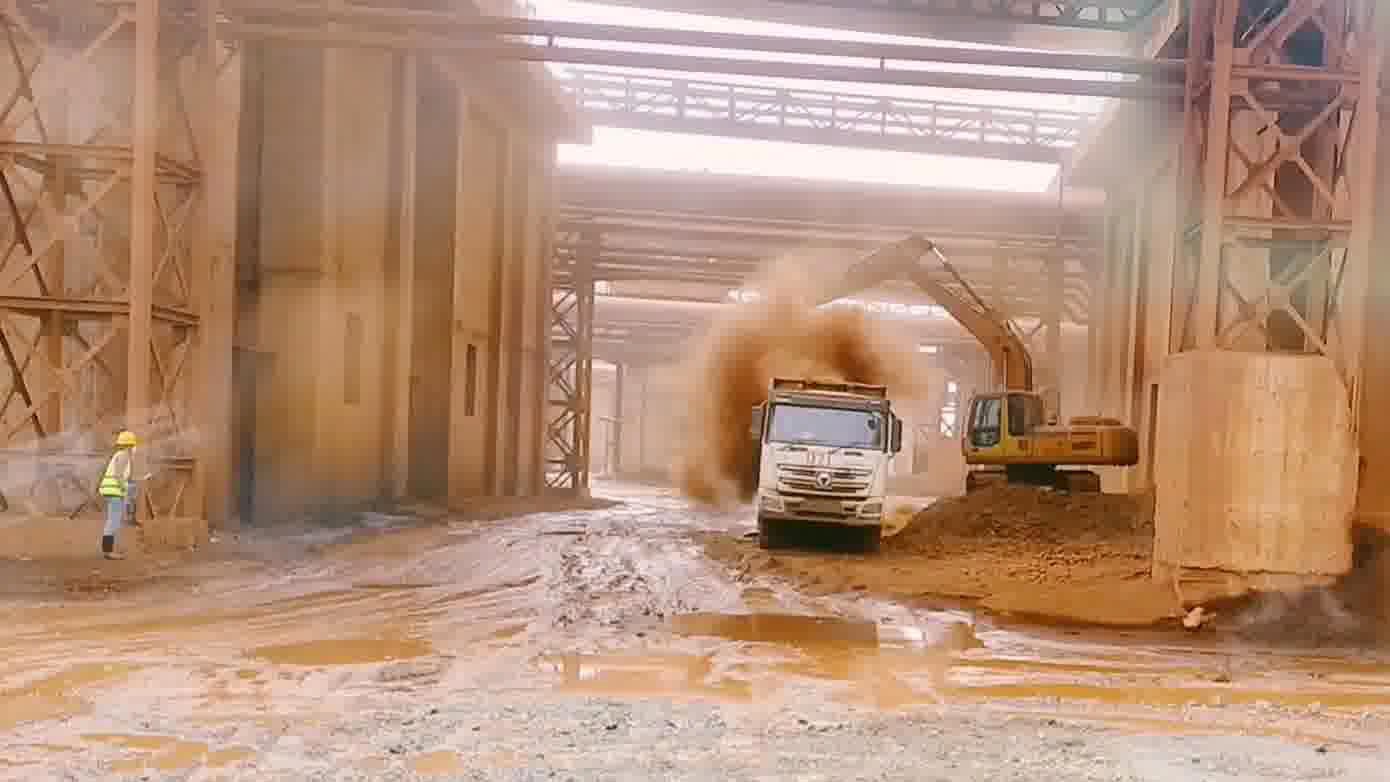
There are also ‘minor’ accidents that are not considered work-related accidents by the company’s safety department. For example, despite wearing thicker protective uniforms compared to workers in other divisions, the uniform is not fire-resistant. Splashes of hot liquid can still penetrate the folds of the clothes. Her arms and back blistered or burned. She complained to the safety department, but the only answer was, “If it’s like that, it’s not considered an accident.”
Lala worked at IMIP for one and a half years. Now she works as a dump truck driver at PT Wanxiang Nickel Indonesia. Still, her work feels heavy. “But I can’t imagine the work of production workers. They only have off time at night. When I was at IMIP with the three-shift three-team system, it was already very heavy, what about the people here?”
Trend Asia, an organization in Jakarta advocating on energy transition topics, once monitored the news. Their findings: there were 68 work accident incidents in nickel smelter plants in Sulawesi and Maluku, 76 workers were injured and 57 died.

Smelter Name; Number of Incidents; Work Related Deaths; Suspected Suicides; Injuries; Incidents; Location (Project M/Zulfikar Arief) https://projectmultatuli.org/kematian-kecelakaan-kerja-pemberangusan-serikat-kriminalisasi-nasib-pekerja-indonesia-dan-tiongkok-di-industri-smelter-nikel-pt-gni/
According to Arianto Sangadji, former Executive Director of the Tanah Merdeka Foundation (YTM) in Palu, various work accident cases in nickel smelter plants can not be separated from the issue of production costs being pushed as low as possible. The implication is that labor wages are pushed as low as possible and the conditions with regard to worker safety are haphazard.
“Corporations don’t really care about occupational safety. They want to quickly expand and gather profits, by downplaying the issue of occupational safety,” said Arianto, who wrote a paper titled “Natural Resource Governance in Central Sulawesi: The Experience of Nickel-Based Industry in Morowali” in 2020, published by the Corruption Eradication Commission and the Auriga Nusantara Foundation.
On the other hand, he added, industrialization in Sulawesi is not as smooth as the industrialization process in Java. Most grassroots movements in Sulawesi grew from farmers’ resistance to land disputes with plantations or mining companies.
However, in the last 10 years, since the nickel processing industry has entered Indonesia through Chinese investment, industrial growth in Central Sulawesi and several other regions in Sulawesi has occurred rapidly and massively.
In 2022, Central Sulawesi became the province with the largest foreign direct investment (FDI) of all other provinces in Indonesia. The realization amount reached USD7.5 billion, or the equivalent of IDR112.23 trillion; surpassing West Java, North Maluku, and even DKI Jakarta provinces.
Arianto mentioned that the investment value is inseparable from the transition of nickel processing industries, originally only in China, then moving to Indonesia. Worldwide, only China and Indonesia produce nickel pig iron (NPI).
NPI becomes the cheapest raw material option for producing stainless steel. In addition to having the world’s largest nickel ore reserves, which also serve as raw materials for electric vehicle batteries, Indonesia is attractive because of the cheapest NPI production costs.
In 2017, for example, the production cost of NPI in China was USD7,300-9,600/ton. While in Indonesia, it was USD5,200-7,100 USD/ton.
The production costs include occupational safety. So, if a company sets high occupational safety standards, production costs will increase. The more profitable alternative is to impose the production costs on workers by not providing them with Personal Protective Equipment (PPE) and other safety standards that are appropriate.
“By having to provide standard clothing, the company has to bear the cost itself. One way to lower production costs is to allow workers to wear their sandals or jeans.”
Arianto mentioned that the nickel smelter industry needs to be seen as a capital-intensive and natural resource-based industry. Capital intensive in the sense that the nominal investment is very expensive, running into trillions of rupiah. And resource-based, in the sense that the reserves of nickel ore minerals are limited to certain areas, including Sulawesi and Maluku.

This industry is different from sectors such as the garment or textile industries, for example, which are footloose, meaning they have options to relocate. “The garment industry in greater Jakarta, for example, if they face large labor movement demands, or government policies on regional wages that are too high, they can relocate to other areas. Say to Central Java, or even outside Java,” said Arianto.
“But, in cases like in Morowali, protests will be met harshly. If you want to move, where are you going to go? It’s impossible to go to Malaysia or Thailand which don’t have nickel ore reserves.”
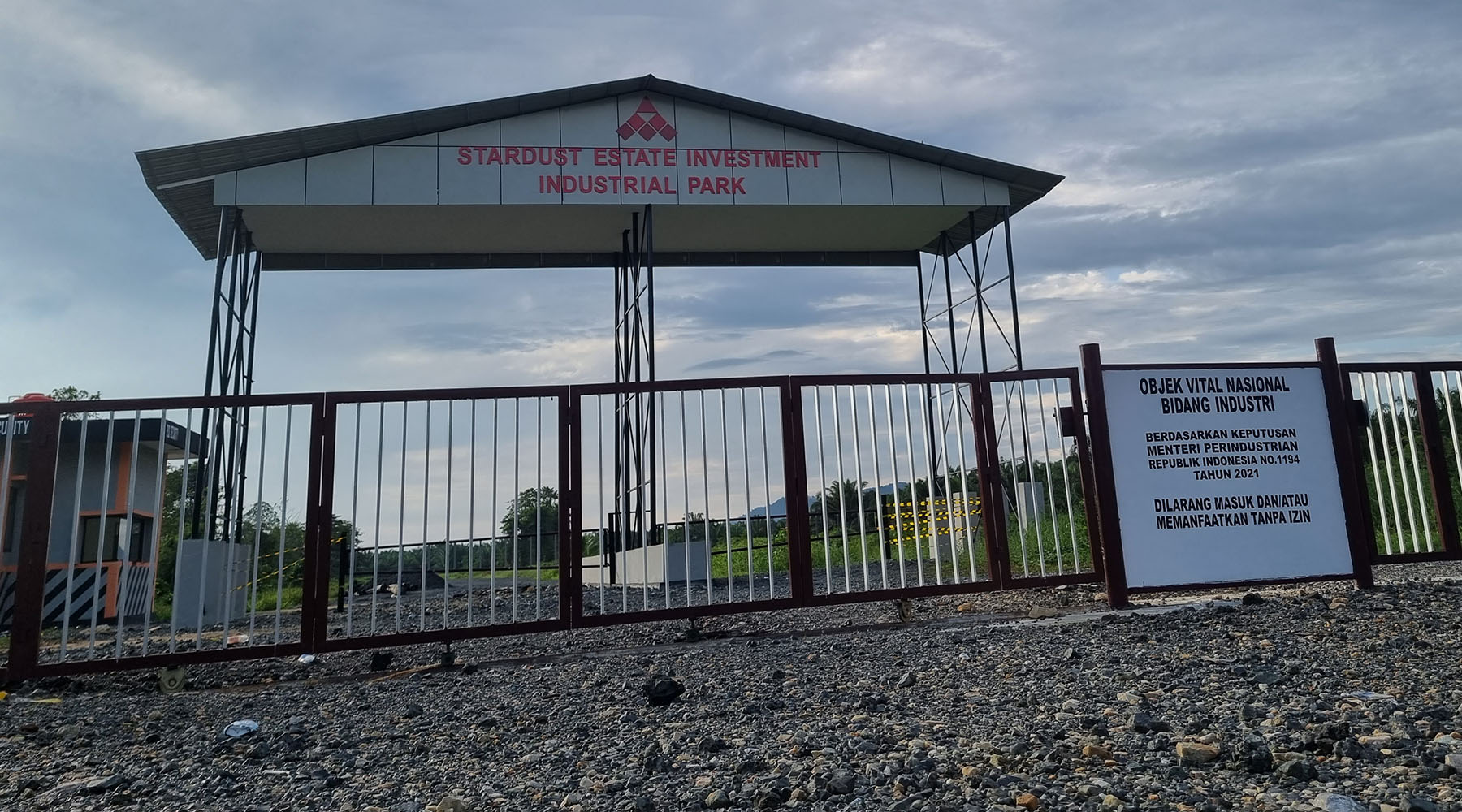
As a result, the Indonesian government has designated nickel smelter industrial estates as “vital national objects” and become National Strategic Projects to ensure investment security. Labor protests or disputes with local communities are considered “threats”.
“Making workers the enemy, in the sense that they can easily be kicked out as workers, that’s because of the character of an industry that is not easily moved and its capital-intensive nature,” explained Arianto.
“So, the level of protection for the industrial estates by the state is very high. Including through regulations that make it easier for capital to control labor groups, for example, with very flexible employment contract mechanisms.”
Corporate control over workers can be seen from, for example, the companies’ response in union busting and control over Chinese workers. Furthermore, the Labor (Omnibus) Law made by the Joko Widodo government makes it easier for companies to terminate workers who are considered rebellious. One way is by offering increasingly short contract statuses.
“In terms of capital interests, with such alienated conditions, they will be easier to control. They will become very passive subjects; easily managed and repressed. I think cases of suicide among Chinese workers indicate that they also face high psychological pressure due to poor working conditions and extreme levels of exploitation,” explained Arianto.
Anti-China/Chinese sentiment among Indonesian workers and residents in industrial estates can also be strong. This sentiment can not be separated from the propagation of identity politics at the national level. For example, during the 2019 presidential election, the issue of Chinese workers in Indonesia dominated and was deliberately fanned by certain groups.
“The racial issue is perpetuated repeatedly by people in Jakarta with these sentiments actually encouraged by the elite and even by intellectuals,” continued Arianto.
The perpetuation of racial issues in local communities also benefits the companies. Cases of labor violations and work accidents are buried while the issue of “horizontal conflict” between Indonesian and Chinese workers intensifies.
“Some benefit from the result that more security forces are deployed to prevent so-called ‘potential riots’,” said Arianto.
Instead of focusing on heightening identity politics, Arianto emphasizes that the employment situation at PT GNI and nickel smelter industry estates in Indonesia should be approached from a class perspective. One way is to build awareness that Indonesian workers and Chinese workers are both parts of the working class who are being exploited by capital owners.
Nevertheless, labor union demands have influenced the decisions of companies to improve the safety and security conditions of workers.
At IMIP, protests in 2020 about the company’s policies regarding the COVID-19 pandemic, wages, and occupational safety led to the firing of several union leaders. However, gradually, the demands of the labor unions were met. At PT GNI, the company began distributing PPE uniforms to workers and reducing arbitrary wage cuts.
“I think what’s happening at PT GNI now is more or less the same as what happened at IMIP in the past,” said Arianto. “If you look at the history of IMIP, occupational safety became one of the important demands of the labor movement there. I think that’s what made IMIP gradually improve. Not because they had good intentions, but because of the pressure or movement of labor from below.”
So there is a need to organize the Indonesian and Chinese workers through unions. “This is not an easy task. There are language barriers and all kinds of issues. However, I think there should be an effort to inject class consciousness.”
“Forget about passports. Not because we’re Chinese or because we’re Indonesian, but because we are workers,” emphasized Arianto. (Continued..)
This article is based on https://projectmultatuli.org/kematian-kecelakaan-kerja-pemberangusan-serikat-kriminalisasi-nasib-pekerja-indonesia-dan-tiongkok-di-industri-smelter-nikel-pt-gni/.
Featured image credit: Tropical Rainforest in Indonesia By Rhett Ayers Butler https://www.butlernature.com/2022/01/04/whats-the-outlook-for-tropical-rainforests-in-2022/
In related news:
- Profile of PT GNI in North Morowali where 2 workers died during clashes
- https://www.kompas.com/tag/bentrok-pekerja?page=2
- https://www.tempo.co/search?q=GNI
- https://bisnis.tempo.co/read/1814128/perusahaan-smelter-nikel-dari-cina-ini-profil-pt-tiss-morowali-dan-pt-gni
- https://nasional.tempo.co/read/1815466/dua-kebakaran-tungku-smelter-dalam-sepekan-di-morowali-kronologi-kejadian-di-pt-itss-dan-pt-gni
- https://go.kompas.com/read/2023/01/17/093724774/riot-at-chinese-funded-nickel-plant-in-indonesia-kills-two
- https://bisnis.tempo.co/read/1460228/kembangkan-smelter-nikel-antam-gandeng-alchemist-metal-gunbuster-nickel and https://storiesfromindonesia.com/2024/02/08/elections-china-downstream-the-tentacles-of-indonesias-nickel-oligarchy-by-project-multatuli-part-3/
- https://www.thejakartapost.com/business/2021/12/29/china-backed-3b-nickel-smelter-starts-up-in-morowali.html
- https://news.metal.com/newscontent/101726334/the-third-phase-of-delong-industrial-park-in-indonesia-has-been-signed
- https://thediplomat.com/2023/01/chinese-and-indonesian-workers-clash-at-indonesian-nickel-plant/
- https://www.cnbcindonesia.com/news/20221229122014-4-401135/pabrik-nikel-di-morowali-kebakaran-pemiliknya-asal-china
- https://money.kompas.com/read/2023/10/02/153100126/ciptakan-lingkungan-kerja-harmonis-pt-gunbuster-nickel-industry-gelar-seminar?page=all
- https://www.reuters.com/article/idUSKBN2J60NW/

Footnotes:

 Stories From Indonesia
Leave a Reply